Key Points
- Some voters say that voting is a duty in reaction to Netanyahu’s policies and military campaigns
- Neither major political bloc was projected to secure the 61 seats needed for a parliamentary majority without additional support
- Arab citizens make up about 21 per cent of Israel’s population
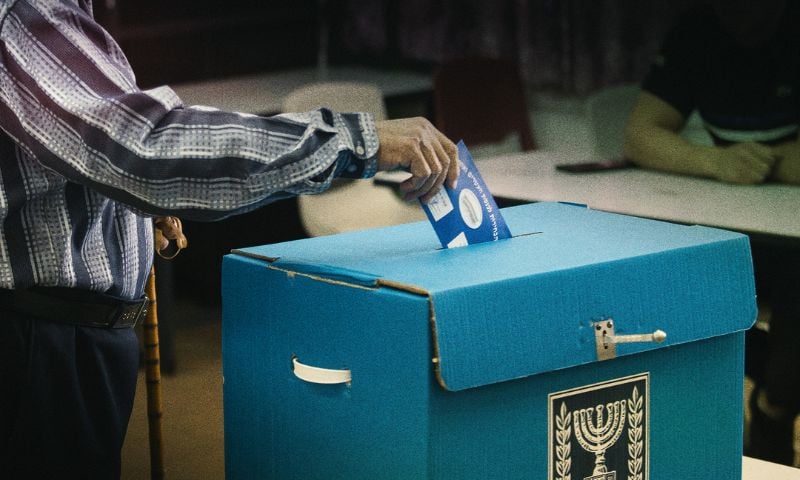
ISLAMABAD: Arab Israeli voters could play a crucial role in determining whether Prime Minister Benjamin Netanyahu remains in power as Israel votes on Tuesday (today).
Campaigners are urging higher turnout in a community that has traditionally had lower election participation rates than the rest of the population.
A report by France 24 highlighted the sense of responsibility felt by some Arab voters, who view the election as an opportunity to challenge Netanyahu’s policies and the wars pursued under his leadership.
Their participation could matter not only to Arab-led parties winning seats but also to the rival political blocs in forming the next government.
Arab citizens account for about 21 per cent of Israel’s population, representing more than two million people.
Although their electoral influence depends on turnout and the vote split among competing parties, a significant increase in participation could affect the balance in the 120-member Knesset, Israel’s parliament.
Pre-election polling suggested that neither Netanyahu’s right-wing and religious allies nor the opposition bloc led by former military chief Gadi Eisenkot would secure the 61 seats required for a majority.
Arab-led parties were projected to win around 14 seats, potentially giving them considerable leverage in post-election negotiations.
The election is the first since the Hamas-led attack on Israel on October 7, 2023, and the subsequent wars in Gaza, Lebanon and Iran.
Netanyahu’s opponents have questioned his government’s handling of security failures, its military policies and the absence of a state commission of inquiry into the October 7 attack.
READ ALSO: Israel’s Main Political Parties: Who Is Competing in the Election?
For some Arab voters, the election also concerns issues closer to home, including rising crime, organised violence, discrimination and what community leaders describe as political marginalisation.
They argue that stronger participation could give Arab representatives greater influence over public policy and the allocation of government resources.
Yet frustration with successive governments has also discouraged some of the community members from voting. Some question whether participation can change their lives, particularly when Arab political parties have struggled to secure a formal role in governing coalitions.
Mansour Abbas, leader of the United Arab List, known as Ra’am, has argued that Arab voters can help bring about a change of government.
He has sought to position his party for a possible role in future governing arrangements.
Ahmad Tibi, associated with the Joint List’s Hadash-Ta’al faction, has suggested that Arab parties could instead support an opposition-led government from outside a formal coalition.
Such an arrangement could influence parliamentary decisions without joining the government itself.
However, cooperation remains uncertain. Eisenkot has ruled out forming a government with Arab parties, citing ideological differences, including their positions on Hamas.
Other opposition parties have also expressed reservations about formal cooperation with Arab-led political groups.
Pollsters estimate Arab voter turnout could reach about 63 per cent, compared to 56 per cent in the 2022 election.
The final participation rate remains uncertain as the voting is underway.
Campaigners mobilise young voters
Campaigners have sought to mobilise young voters and persuade those disillusioned with politics that abstention could leave decisions about their future in the hands of others.
Higher turnout could strengthen Arab representation and alter the calculations facing Netanyahu’s allies and their opponents.
Even a strong showing by Arab parties would not automatically remove Netanyahu from office.
For Arab Israeli voters who regard participation as a civic responsibility, the election offers a chance to influence a political system.
Their representatives have often remained outside governing coalitions. Whether that participation translates into a change of government will depend on the ballot count and the negotiations that follow.