ISLAMABAD: A voice is more than a means of communication. It carries identity, emotion, memory and personality. A familiar voice can reassure a child, convey authority or make a loved one feel close even across thousands of miles.
But what happens when that voice can be reproduced without the person ever speaking?
Advances in artificial intelligence have made it possible to generate remarkably convincing synthetic speech from recordings of real people. A technology once largely confined to research laboratories is now accessible through commercial platforms, bringing opportunities for creativity and communication alongside concerns about fraud, impersonation and personal rights.
The question is no longer simply whether machines can sound human. It is who has the right to decide how a human voice is used.
When a familiar voice becomes a digital copy
Imagine receiving a telephone call from a family member asking urgently for money. The voice sounds familiar. The accent, pauses and emotional tone seem genuine. Yet the person speaking may not be your relative at all.
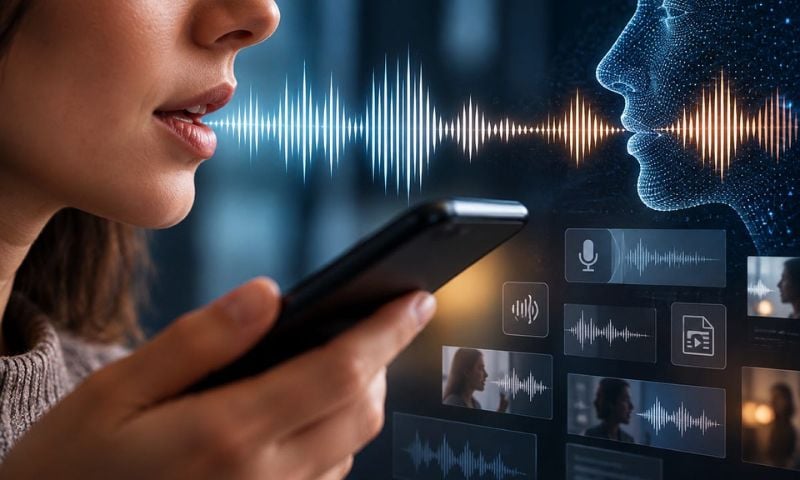
AI voice-cloning systems can analyse recordings of human speech and generate new sentences that resemble the original speaker. Some services can produce convincing results from relatively short audio samples.
The technology has legitimate applications. Film producers can use it for dubbing, publishers can create audiobooks, and people who lose the ability to speak may be able to communicate using synthetic versions of their own voices.
But the same capability can also be exploited.
A 2025 investigation by Consumer Reports examined voice-cloning products from six companies and found that most lacked meaningful safeguards against potential misuse.
The organisation warned that the technology could enable fraudsters to impersonate relatives, celebrities and public figures.
The danger lies in the emotional trust people place in voices. A familiar voice can persuade someone to act before they question whether the speaker is genuine.
Can someone legally own a voice?
The question of voice ownership is more complicated than it first appears.
A recorded performance may be protected by copyright, but the distinctive characteristics of a person’s voice are not necessarily protected in the same way.
Copyright generally protects original creative expression and recordings rather than a person’s natural vocal identity.
That distinction creates a legal difficulty: someone may have rights over a particular recording without having exclusive copyright ownership of the voice heard in it.
A 2026 UK government report on copyright and artificial intelligence acknowledged that a digital replica imitating someone’s voice would not necessarily infringe copyright unless it reproduced protected material.
ALSO READ: Musk’s Support for $3.5 Trillion SpaceX-Tesla Merger Raises Legal Concerns
This means the law may treat copying a recording differently from generating entirely new words in a recognisable voice.
Other protections, including privacy, publicity rights, data protection and laws against impersonation, may apply depending on the country and circumstances.
The central legal question is therefore not simply who owns a voice, but who has the authority to reproduce, distribute and commercially exploit its digital likeness.
Artists and ordinary people face the same question
For musicians, actors, broadcasters and voice-over artists, a recognisable voice is both a personal characteristic and a professional asset.
A singer’s voice can become closely associated with a particular style, while a news presenter’s delivery may build years of audience trust.
AI can potentially reproduce these characteristics without requiring the original performer to record new material.
The consequences extend beyond lost earnings. A synthetic voice could make someone appear to endorse a product, express a political opinion or deliver a statement they never made.
In March 2024, the US state of Tennessee enacted the Ensuring Likeness Voice and Image Security Act, commonly known as the ELVIS Act, extending legal protections against certain unauthorised uses of a person’s voice.
The legislation was designed partly to address concerns among musicians and other creative professionals about AI-generated impersonation.
However, the issue is not confined to celebrities.
Teachers, journalists, business executives and ordinary social media users may all have publicly accessible recordings of their speech.
A person who has never entered a recording studio may nevertheless have left enough audio online for their voice to become a target for imitation.
Governments begin confronting digital impersonation
Regulators are increasingly recognising that existing intellectual property laws do not fully address AI-generated identities.
In July 2024, the US Copyright Office recommended federal legislation to protect individuals against the unauthorised distribution of realistic digital replicas.
The office warned that the problem affected not only entertainment and politics but also private citizens.
The European Union has taken a different approach by introducing transparency requirements under its Artificial Intelligence Act.
The law includes obligations concerning the disclosure of AI-generated or manipulated material qualifying as a deepfake, subject to specified exceptions and implementation timelines.
According to the European Commission, these requirements are intended to help people recognise artificial content and reduce the risks of deception and manipulation.
Yet disclosure does not necessarily solve the underlying ownership question.
A synthetic recording may be clearly labelled as AI-generated while still using a person’s recognisable voice without their permission.
Consent could become the defining issue
As voice-cloning technology becomes more widespread, consent is emerging as one of the most important questions in the debate.
Should a person have to give explicit permission before their voice is digitally recreated? Should that permission apply to a single project, or allow a company to generate unlimited recordings?
And if someone agrees to license their voice, should they retain the right to withdraw permission later?
These questions become particularly difficult when recordings are used to train AI systems or when a synthetic voice is distributed across multiple platforms.
For creative professionals, clear contracts could specify how their voices may be used, how long permission lasts and whether they receive compensation.
For ordinary individuals, meaningful protection may depend on accessible reporting procedures, effective identity verification and restrictions on unauthorised impersonation.
The challenge is to preserve legitimate uses of synthetic speech without allowing technological convenience to override personal autonomy.
A future where hearing is no longer believing
For generations, the human voice has served as a powerful signal of identity.
People recognise loved ones by their laughter, remember public figures through their speeches and develop trust in broadcasters through familiar voices.
Artificial intelligence is changing that relationship.
A voice can now be separated from the person who originally produced it, reproduced digitally and made to say words that were never spoken.
The technology offers considerable possibilities, particularly for accessibility, education, entertainment and communication. But its benefits depend on how responsibly it is developed and used.
As governments, technology companies and courts confront the legal questions, the public faces a more immediate challenge: learning that even a familiar voice may require verification.
Ultimately, the question of who owns a voice may not have one universal legal answer.
But a broader principle is becoming increasingly important: the ability to recreate someone’s voice should not automatically confer the right to use it.
In an age when artificial intelligence can make almost anyone appear to speak, the freedom to decide what is said in one’s own voice may become one of the defining questions of digital identity.