Key Points
- Asia’s glaciers are shrinking as global temperatures rise.
- The Hindu Kush Himalayas contain more than 63,700 glaciers.
- Glacier ice loss across the region has accelerated since 2000.
- Melting glaciers may initially increase river flows before supplies decline.
- Glacial lake outburst floods threaten mountain communities and infrastructure.
- Pakistan’s Indus River system depends partly on snow and glacier melt.
- Agriculture and food security face growing risks from changing water supplies.
- Nearly two billion people could be affected by changes across mountain river systems.
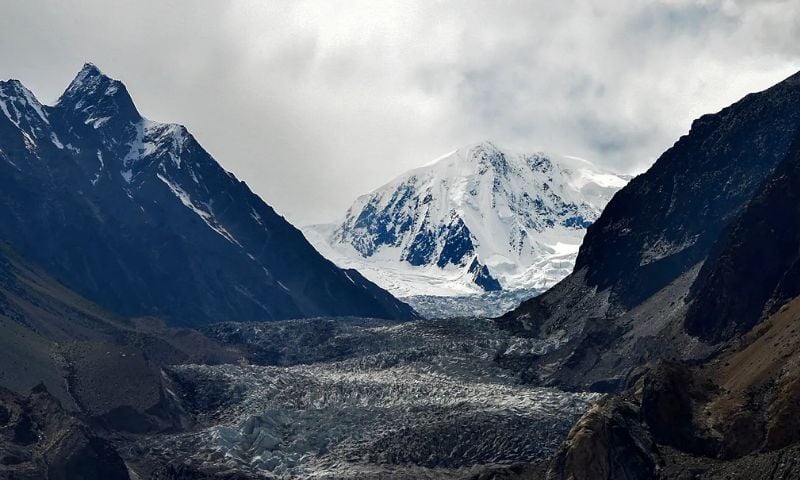
High above Asia’s crowded cities and fertile plains, a profound transformation is underway — one that could reshape the future of an entire continent.
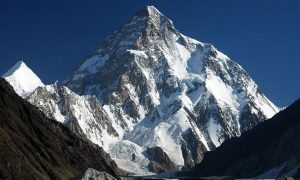
Across the Himalayas, Hindu Kush, Karakoram and surrounding mountain ranges, glaciers that have stored frozen water for centuries are shrinking as global temperatures rise.
Their disappearance may seem remote from the everyday lives of people in Karachi, Lahore, New Delhi or Dhaka. Yet the rivers flowing through these regions are connected to the snow and ice of Asia’s great mountain systems.
For millions of farmers, mountain communities and households, the consequences could be profound.
The danger is not simply that rivers might eventually carry less water. Long before that happens, accelerating ice loss can fuel dangerous floods, destabilise mountain slopes and make seasonal river flows increasingly unpredictable.
Scientists describe these mountains as Asia’s water towers. As they lose ice, an urgent question looms: what happens when the natural reservoirs feeding some of the world’s most important rivers begin to disappear?
Frozen reserves on the decline
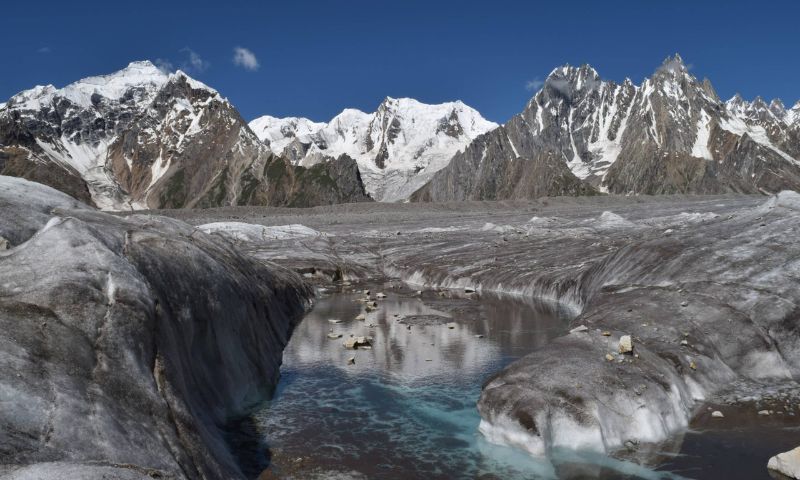
The Hindu Kush Himalayan region contains one of the world’s largest concentrations of glacier ice outside the polar regions.
Its mountain systems feed major rivers, including the Indus, Ganges and Brahmaputra, supporting communities across South and Central Asia.
According to the International Centre for Integrated Mountain Development (ICIMOD), the wider Hindu Kush Himalayan region contains more than 63,700 glaciers covering approximately 55,782 square kilometres.
In March 2026, the organisation reported that the rate of glacier ice loss across the region had doubled since 2000. Its research also documented cumulative ice thinning of up to 27 metres since 1975.
Together, these findings add to a growing body of evidence that climate change is transforming the mountain environment at the pace that leaves many communities struggling to keep up.
The World Meteorological Organization’s State of the Climate in Asia 2025 report, published in June 2026, found that all 23 monitored glaciers in High Mountain Asia lost mass during the latest glaciological year. Higher temperatures and insufficient winter snowfall contributed to the losses.
These observations do not mean every glacier is shrinking at the same rate. Glacier behaviour varies considerably across mountain ranges, elevations and local climatic conditions.
Nevertheless, the overall picture is clear: across much of Asia, the ice that has sustained rivers and communities for generations is retreating.
The rising risk downstream
The glacier crisis presents a paradox: melting ice can initially bring more water, even as it threatens future supplies. At first, rising temperatures can increase the volume of meltwater entering rivers. That additional water may temporarily boost flows, particularly during warmer months. However, the same process reduces the amount of ice available to melt in future years.
Scientists call the turning point peak water: the stage at which annual glacier meltwater runoff reaches its maximum before beginning a longer-term decline.
ICIMOD projects that meltwater availability could peak around the middle of this century before declining, although the timing will differ between river basins.
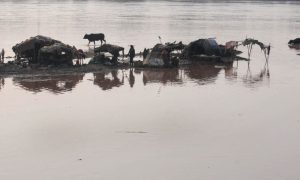
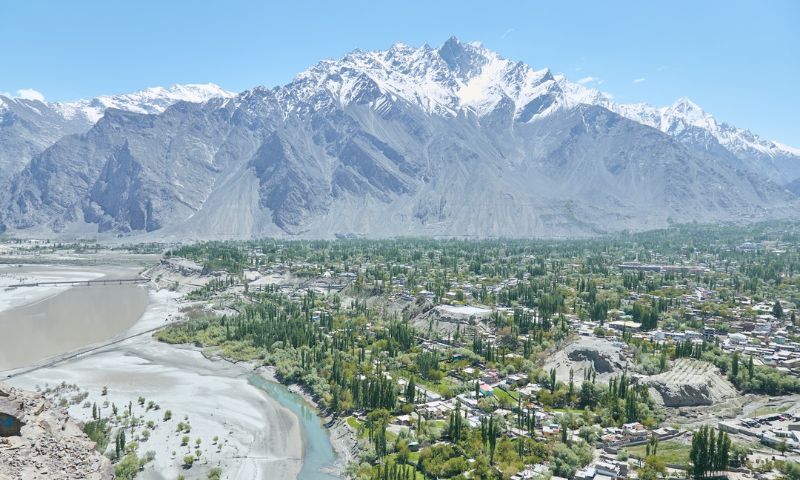
Meanwhile, melting ice can leave behind lakes held in place by unstable natural barriers made of rock and sediment. If those barriers fail, enormous quantities of water and debris can surge downstream in what scientists call a glacial lake outburst flood (Glof). In a matter of hours, such torrents can sweep away roads and bridges, inundate farmland and devastate settlements. For these communities, the danger is twofold: too much water in the short term and potentially too little in the years ahead.
A nation on thin ice
Pakistan is among the countries with a particularly strong connection to the future of mountain glaciers. The Indus River system is essential to its agriculture, hydropower generation and water supplies.
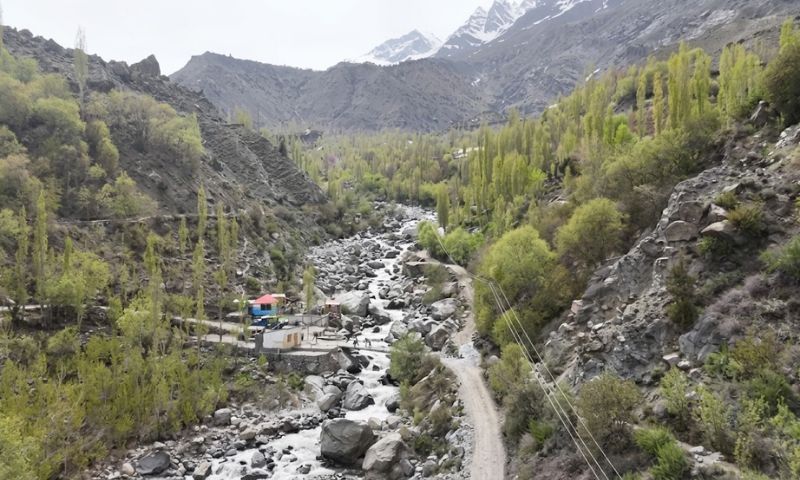
Snow and glacier melt from the Hindu Kush, Karakoram and Himalayan mountains help sustain river flows, especially during parts of the year when rainfall is limited.
The repercussions could, therefore, reach far beyond the northern mountain districts, extending downstream to the irrigated agricultural heartlands that underpin Pakistan’s food production and rural economy.
Glacial lake outburst floods already pose risks in parts of Gilgit-Baltistan and Khyber Pakhtunkhwa.
As temperatures rise, changing glacier conditions can increase hazards for communities, roads and infrastructure. However, Pakistan’s future water security will not depend on glacier loss alone. Population growth, groundwater depletion, irrigation efficiency, reservoir management and changing rainfall patterns will also influence water availability.
This leaves Pakistan facing a challenge on two fronts: preparing for climate-driven changes while tackling longstanding weaknesses in water management. Failure to address either could compound the pressure on an already stretched water system.
Will Asia’s river run dry?
The possibility of disappearing glaciers raises an alarming question: could some of Asia’s most important rivers eventually dry up?
Scientists caution against such a simple conclusion.
The Indus, Ganges and Brahmaputra receive water from several sources, including rainfall, seasonal snowmelt and glacier melt. Their dependence on these sources varies by river basin and season.
The Ganges and Brahmaputra, for example, receive substantial monsoon rainfall, while glacier and snowmelt are especially important for certain upstream areas and dry-season flows.
As glaciers shrink, many river systems are expected to experience changes in the timing and reliability of water supplies rather than simply stop flowing.
A major scientific review published in Nature Reviews Earth & Environment found that glacier runoff in the Himalayas and Karakoram is likely to peak in coming decades before declining.
The researchers also warned that river systems could become more dependent on rainfall as glaciers lose their ability to regulate seasonal flows.
The result could be a double-edged threat: greater exposure to floods when rainfall is intense and heightened water stress when prolonged dry spells take hold.
For communities that depend on predictable water supplies, greater uncertainty may be almost as damaging as an overall decline.
Farms caught in the crossfire
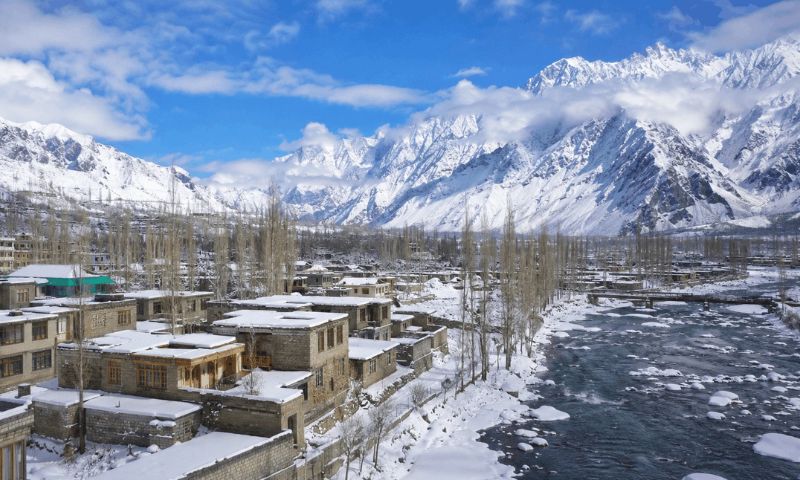
The effects of glacier retreat could reach millions of people who have never seen a glacier.
Across South Asia, agriculture depends on reliable access to water for crops, livestock and rural livelihoods. If seasonal river flows become less predictable, farmers may face growing difficulties planning irrigation and cultivation.
Too much water at the wrong time can destroy crops, while shortages during critical growing seasons can leave farmers counting the cost of failed harvests.
Hydropower systems may also face challenges as river flows become more variable and sediment loads change. The consequences could extend to food prices, electricity generation and the wider economy.
According to ICIMOD’s major 2023 assessment, changes to the Hindu Kush Himalayan snow and ice systems have implications for nearly two billion people living in mountain areas and downstream regions.
That figure represents the population potentially exposed to changes across interconnected river systems, not a prediction that everyone will lose access to water.
Even so, the sheer scale of the population at risk makes one thing clear: glacier retreat is far more than an environmental concern. It is a development and economic challenge with potentially far-reaching consequences.
Slowing the melting clock
Scientists say the extent of future glacier loss depends significantly on how much the planet warms.
ICIMOD’s 2023 assessment warned that glaciers in the Hindu Kush Himalayan region could lose up to 80 per cent of their current volume by 2100 under high-emissions trajectories.
This figure is a projection based on a particular climate scenario, not a foregone conclusion.
The Intergovernmental Panel on Climate Change has similarly concluded that substantial glacier losses are expected across High Mountain Asia this century, with the scale varying according to future warming.
Reducing greenhouse gas emissions can slow the pace of ice loss and preserve more glacier mass. But cutting emissions is only part of the equation; countries must also prepare for changes that are already underway.
Countries must improve glacier monitoring, strengthen flood early-warning systems and identify settlements exposed to dangerous glacial lakes. Better water storage, more efficient irrigation and climate-resilient infrastructure will also become increasingly important. Because major Asian rivers cross national boundaries, regional cooperation on scientific data, water management and disaster preparedness could help countries respond more effectively.
Before the ice runs out
Asia’s glaciers will not disappear overnight.
Some may survive for centuries, particularly at higher elevations, while smaller and lower-altitude glaciers face much greater risks. Yet the clock is ticking, and the consequences of today’s decisions could reverberate across generations.
For mountain communities, the immediate danger may come from floods and unstable landscapes. For farmers downstream, the greater challenge could emerge through changing seasonal water supplies. For governments, the task will involve protecting lives, managing scarce resources and preparing infrastructure for an increasingly uncertain climate.
The mountains have sustained communities across Asia for centuries. Now that ice is disappearing. The question is no longer whether climate change is affecting Asia’s glaciers. Scientific observations have established that it is.
The question is whether governments and societies can rise to the challenge before the loss of these frozen reservoirs puts even more lives, livelihoods and economies at risk.