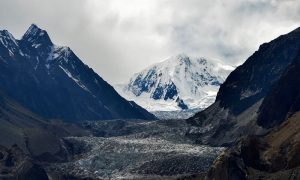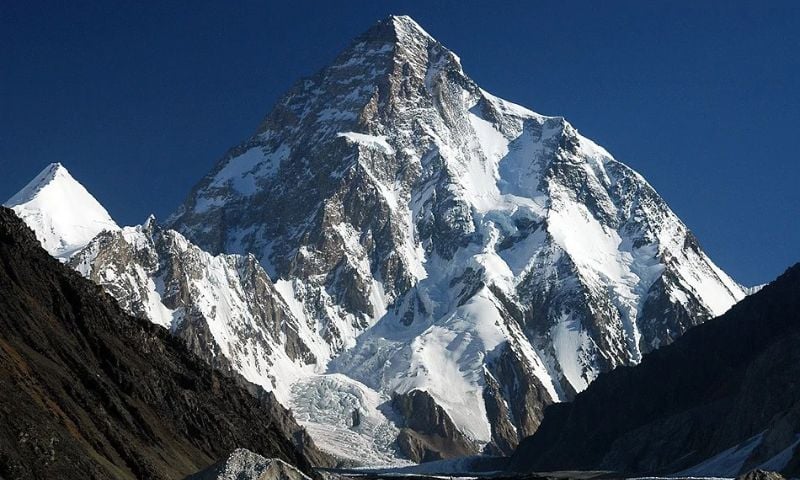
The world is home to 14 extraordinary mountains that rise above 8,000 metres (26,247 feet) above sea level, collectively known as the eight-thousanders.
Located in the Himalayan and Karakoram mountain ranges of Asia, these towering peaks represent some of the most remarkable natural wonders on Earth.
Pakistan holds a special place among these mountain landscapes, hosting five of the world’s 14 eight-thousanders. These include K2, the world’s second-highest mountain; Nanga Parbat; Gasherbrum I; Broad Peak; and Gasherbrum II.
Four of these peaks are situated in the Karakoram Range, while Nanga Parbat rises in the western Himalayas. Beyond their breathtaking beauty, these mountains symbolise Pakistan’s rich natural heritage and attract mountaineers and adventurers from across the globe.
For mountaineers around the world, summiting these majestic mountains is the ultimate dream—a pursuit that demands extraordinary courage, unwavering determination, and immense physical endurance.
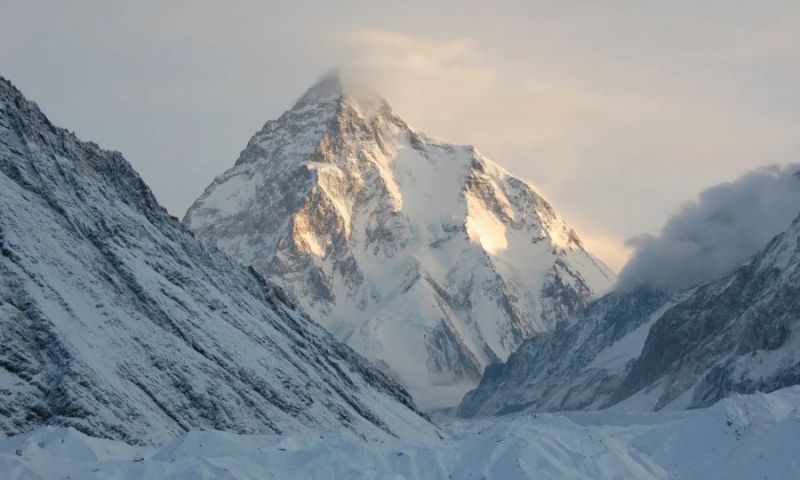
K2
K2, the world’s second-highest mountain after Mount Everest, stands at an elevation of 8,611 metres (28,251 feet) in Pakistan’s Gilgit-Baltistan region.
It is the highest peak of the Karakoram Range and the tallest mountain in Pakistan. Also known by names such as Chhogori, Qogir, Ketu, Kechu, and Mount Godwin-Austen, K2 lies along the Pakistan–China border and is renowned for its imposing beauty and formidable climbing conditions.
The traditional approach to K2 Base Camp begins in Skardu, which is connected to Islamabad by road and air. From Skardu, the journey continues through the Shigar Valley, Dassu, and Askole before following the spectacular Baltoro Glacier to Concordia, a celebrated meeting point of some of the region’s most magnificent peaks. From there, climbers proceed towards K2 Base Camp, where the mountain’s immense scale becomes unmistakable.
On 31 July 1954, Italian mountaineers Achille Compagnoni and Lino Lacedelli became the first people to reach K2’s summit, marking a historic milestone in mountaineering.
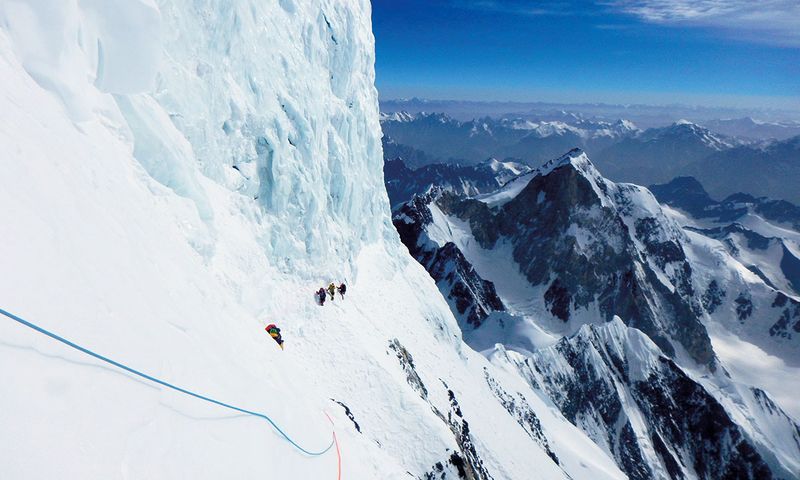
Despite advances in climbing equipment and techniques, K2 has retained its reputation as one of the world’s most dangerous mountains. Its steep slopes, unpredictable weather, avalanches, and technical climbing challenges have claimed numerous lives. By August 2023, approximately 800 climbers had reached the summit, while 96 deaths had been recorded during attempted ascents, according to historical estimates.
Most successful ascents take place in July and August, when weather conditions are generally more favourable. However, K2’s extreme environment makes every expedition a demanding undertaking.
In January 2021, a team of ten Nepali climbers, including Nirmal Purja and Mingma Gyalje Sherpa, achieved the first winter ascent of K2, completing a feat that had eluded mountaineers for decades. K2’s eastern face, meanwhile, remains unclimbed, largely because of the serious hazards posed by unstable snow and ice formations.
Beyond its impressive height, K2 represents the ultimate test of human endurance and determination. Its combination of extraordinary beauty and exceptional danger has earned it a special place in the world of mountaineering, making the dream of standing on its summit both an ambition of a lifetime and one of the greatest challenges a climber can undertake.
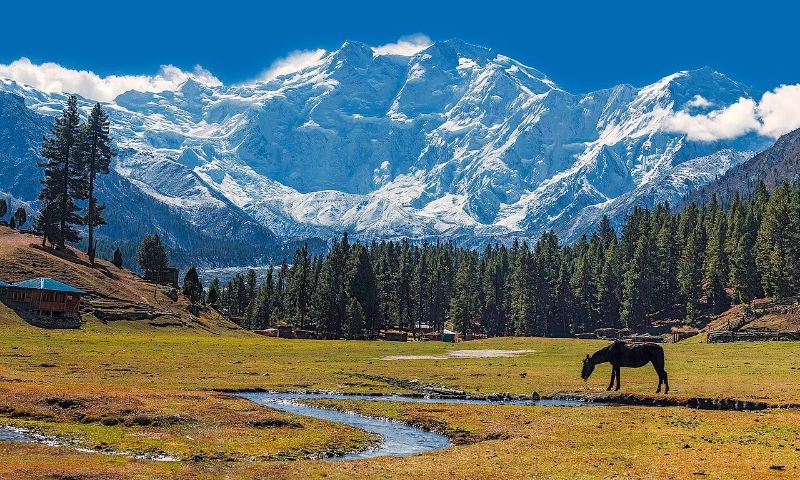
Nanga Parbat
Nanga Parbat is the ninth-highest mountain in the world, rising to an elevation of 8,126 metres (26,660 feet) above sea level. Located in Pakistan’s Gilgit-Baltistan region, just southeast of the northernmost bend of the Indus River, it is the westernmost major peak of the Himalayan mountain range. Its imposing presence marks the western edge of the Himalayas, making it one of the most geographically significant mountains in the region.
As one of the world’s 14 eight-thousanders, Nanga Parbat stands out for its immense height, dramatic slopes, and extraordinary prominence above the surrounding landscape. Its steep faces, unpredictable weather, and technically demanding climbing routes have made it one of the most formidable challenges in mountaineering.
The mountain is widely known as the “Killer Mountain” because of the numerous climber fatalities associated with attempts to reach its summit and the extreme conditions that test even the most experienced mountaineers.
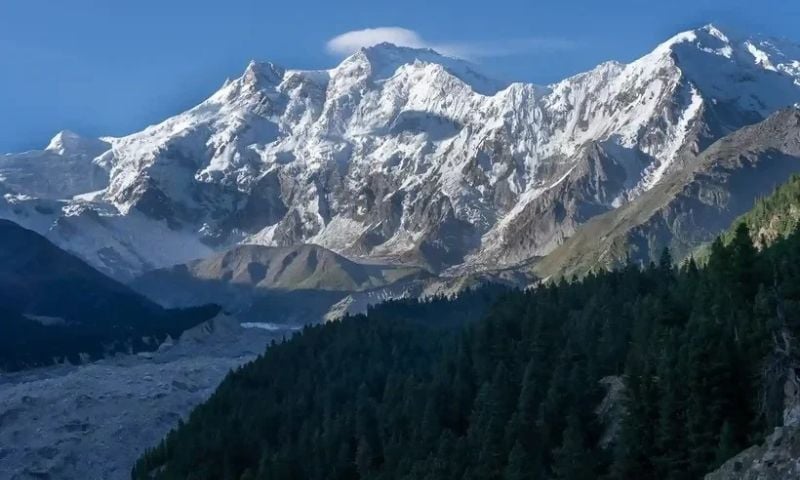
On its southern side lies the spectacular Rupal Face, often described as the highest mountain face in the world, soaring approximately 4,600 metres (15,090 feet) above its base. This immense wall of rock, ice, and snow presents a breathtaking sight and one of the most formidable challenges in high-altitude mountaineering.
Nanga Parbat was first successfully summited on 3 July 1953 by Austrian mountaineer Hermann Buhl, who reached the peak via the Rakhiot Flank, also known as the East Ridge.
Buhl’s successful ascent marked a historic milestone in mountaineering, particularly given the mountain’s deadly reputation.
The first successful winter ascent of Nanga Parbat was achieved on 26 February 2016 by a team of three mountaineers: Pakistan’s Muhammad Ali Sadpara, Spain’s Alex Txikon, and Italy’s Simone Moro.
Their remarkable achievement marked a historic milestone in high-altitude mountaineering, as they conquered one of the world’s most formidable peaks in the harsh conditions of winter, overcoming extreme cold, severe weather, and immense physical challenges.
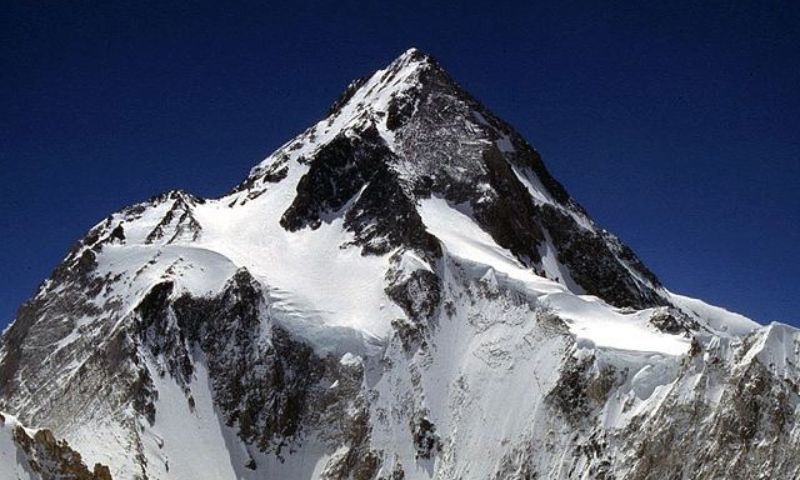
Gasherbrum I
Gasherbrum I, originally designated K5 and also known as Hidden Peak, is the 11th-highest mountain in the world, rising to an elevation of 8,080 metres (26,510 feet) above sea level.
It is situated along the Pakistan–China border, in the Shigar District of Gilgit-Baltistan in Pakistan. The mountain forms part of the magnificent Gasherbrum Massif in the Karakoram Range, renowned for its towering summits, vast glaciers, and rugged alpine landscape.
The first successful ascent of Gasherbrum I took place on 5 July 1958, when American mountaineers Pete Schoening and Andy Kauffman reached its summit as members of an eight-person American expedition led by Nicholas B. Clinch.
Their achievement marked a significant milestone in the exploration of the world’s highest mountains and established Gasherbrum I as one of the remarkable peaks of the Karakoram.
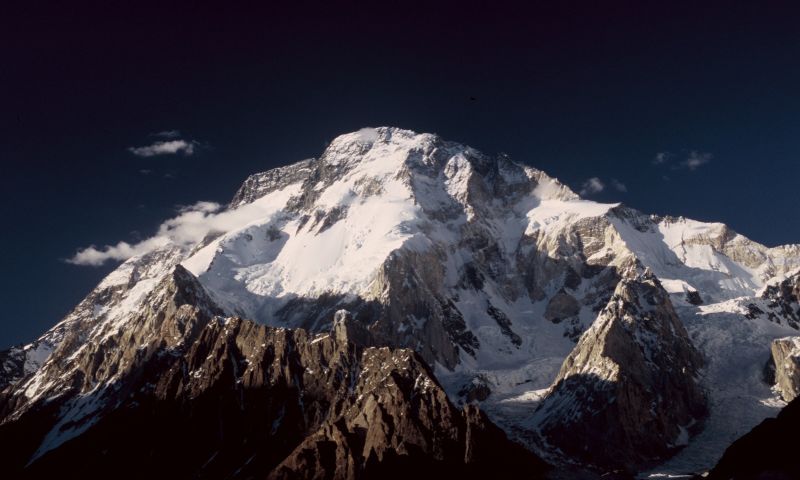
Broad Peak
Broad Peak, standing at an elevation of 8,051 metres (26,414 feet), is the 12th-highest mountain in the world.
Located in the mighty Karakoram Range along the Pakistan–China border, it lies within the mountainous regions of Gilgit-Baltistan in Pakistan and Xinjiang in China. The mountain is renowned for its expansive summit ridge, which stretches for a considerable distance and distinguishes it from many other towering peaks in the region.
The first successful ascent of Broad Peak took place between 8 and 9 June 1957, when Austrian mountaineers Fritz Wintersteller, Marcus Schmuck, Kurt Diemberger, and Hermann Buhl reached the summit as members of an expedition led by Schmuck.
Broad Peak is famous for its unusually wide summit ridge, which gives the mountain its name and distinguishes it from many other eight-thousanders.
Unlike sharp, pointed peaks, Broad Peak has an extensive summit ridge stretching between several high points, creating its distinctive profile.
Broad Peak lies close to K2 in the Karakoram Range. Both mountains can be seen from the spectacular Concordia area of Gilgit-Baltistan, where several major glaciers and towering peaks converge.
On 30 July 2026, a devastating avalanche struck a group of ten climbers attempting to reach the summit on the slope between Camp 2 and Camp 3.
Gasherbrum II
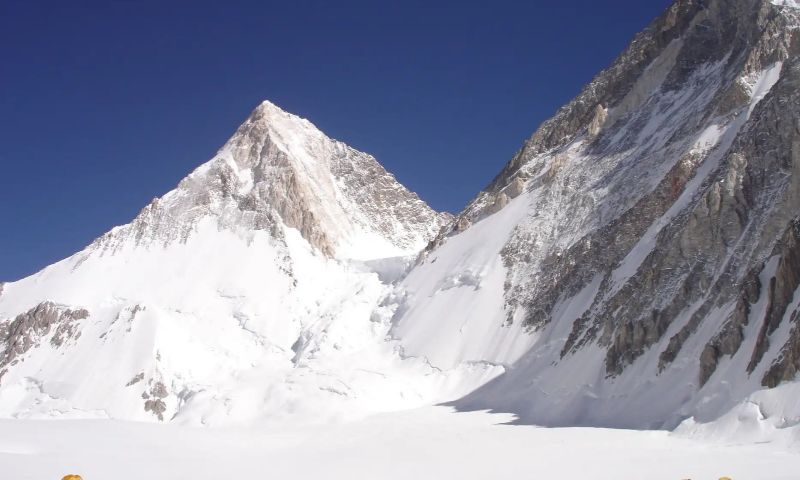
Gasherbrum II, also known as K4, is the 13th-highest mountain in the world, rising to an elevation of 8,035 metres (26,362 feet) above sea level.
Located in the mighty Karakoram Range along the border between Gilgit-Baltistan, Pakistan, and Xinjiang, China, it is the third-highest peak of the Gasherbrum massif. Surrounded by some of the world’s most spectacular high-altitude landscapes, the mountain stands near the head of the Baltoro Glacier, a major feature of Pakistan’s mountainous terrain.
The mountain was first successfully climbed on 7 July 1956 by Austrian mountaineers Fritz Moravec, Josef Larch and Hans Willenpart via the southwest ridge. Their achievement was particularly remarkable because an avalanche had buried their supplies at an earlier camp, forcing them to continue with limited resources.
Gasherbrum II is widely regarded as one of the more accessible eight-thousanders in the Karakoram, although its extreme altitude, glaciers, harsh weather and risk of avalanches make it a formidable mountaineering challenge.
The usual climbing season is summer, when international expeditions attempt to reach its summit. Its dramatic scenery and proximity to other towering peaks of the Karakoram make it an important destination for high-altitude mountaineering in Pakistan.