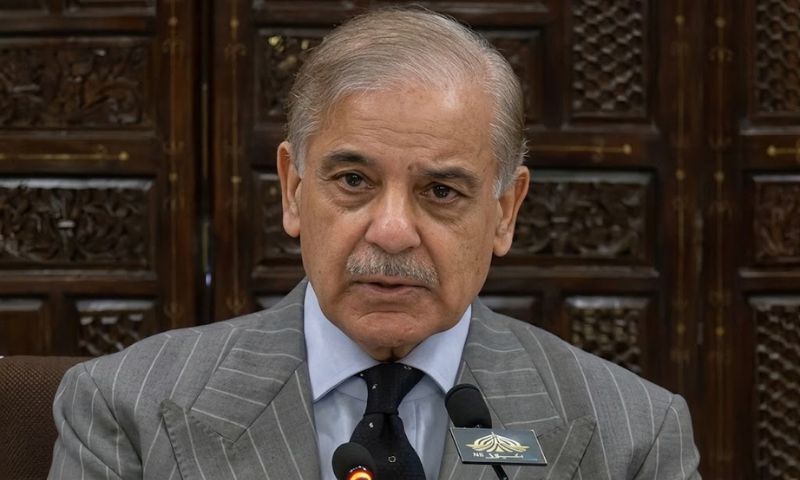
PESHAWAR: Pakistan Prime Minister Shehbaz Sharif on Thursday blamed the previous Pakistan Tehreek-e-Insaf (PTI) government for allowing militants to return to Khyber Pakhtunkhwa, reversing years of counterterrorism gains, while pledging to work with the military leadership to restore peace, accelerate development and improve living conditions in the province.
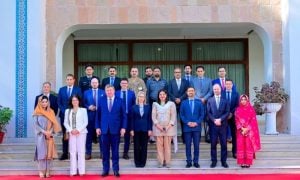
He chaired a high-level meeting attended by Field Marshal Asim Munir, KP Governor Faisal Karim Kundi and several federal ministers, and senior political and military officials.
The meeting reviewed the province’s security situation, counterterrorism measures and plans to restore lasting peace. The prime minister was also briefed on the imposition of emergency measures in 12 districts.
Sharif defended the imposition of governor’s rule and emergency measures, saying the federal government could no longer allow bloodshed to continue.
Prime Minister @CMShehbaz is addressing a meeting of the Apex Committee in Peshawar
@PakPMO #News #RadioPakistan
https://t.co/MhtGHwOAgN— Radio Pakistan (@RadioPakistan) October 22, 2026
He accused the previous provincial administration of neglecting counterterrorism institutions, leaving 5,000 police positions vacant and failing to equip security forces adequately despite receiving approximately Rs800 billion in counterterrorism funding since 2010.
Sharif pledged to work with the country’s military leadership to restore peace, accelerate development and improve living conditions in Khyber Pakhtunkhwa, as his government faces mounting security challenges in the province.
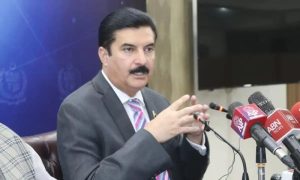
“I promise that the federal government, working with the military leadership, will resolve the problems faced by the people of Khyber Pakhtunkhwa,” Sharif said at a high-level security meeting in Peshawar on Thursday.
He vowed to bring back an era of peace, prosperity and development, saying his government would work to turn the aspirations of the province’s people into reality.
Sharif said the federal government had been left with difficult choices after consulting President Asif Ali Zardari and other political stakeholders.
“How long could we continue to tolerate bloodshed in Khyber Pakhtunkhwa?” he asked, arguing that the government could not remain a spectator as violence continued.
Sharif accused the previous Pakistan Tehreek-e-Insaf (PTI) provincial government of failing to adequately invest in policing, counterterrorism and public services.
Blame Over Militancy
Sharif said Pakistan’s security forces had made significant sacrifices in the fight against militancy and that relative peace had been restored in KP by 2018.
He alleged that militants were subsequently allowed to return during the PTI’s period in power, reversing earlier gains and exposing residents to renewed violence.
The prime minister said around 80,000 people had been killed in Pakistan’s wider war against terrorism, with the country also suffering billions of dollars in economic losses.
He paid tribute to the military, Frontier Corps and police, as well as civilians and families who had lost loved ones in the conflict.
Police And Funding
The prime minister criticised the previous provincial administration for what he described as inadequate investment in security and public welfare.
He said around 5,000 police vacancies had not been filled and that the Safe City project remained incomplete. He also accused the previous government of neglecting police training and failing to provide security personnel with modern weapons and equipment.
Sharif said KP had received approximately Rs800 billion in counterterrorism funding under the National Finance Commission arrangements since 2010.
He questioned why militancy had returned despite the financial support, arguing that the province needed stronger institutions and more effective use of available resources.
Corruption
Sharif also accused the previous provincial government of corruption and mismanagement, citing alleged irregularities in drinking-water projects and the Kohistan mega-scandal.
He claimed that corruption worth Rs100 billion had occurred in clean drinking-water projects and that irregularities worth Rs37 billion had emerged in the Kohistan case.
He also alleged that contracts under the placer-gold project had been awarded to favoured individuals.
The allegations were presented by the prime minister; the statements provided no independent verification of the claims or details of any final judicial findings.
Federal Support Pledged
Sharif said the federal government had spent the past two and a half years working to stabilise Pakistan’s economy and would now work with the military leadership to improve security and living conditions in KP.
He said a political committee had held 48 hours of negotiations before the latest decisions were taken, adding that an advisory council comprising specialists from different fields had also been established.
The prime minister pledged to improve access to basic services, including healthcare, education, clean drinking water and security, saying residents had waited too long for their problems to be addressed.
He thanked coalition partners, President Zardari and Pakistan Muslim League-Nawaz leader Nawaz Sharif, for their support for the measures concerning the province.
Tribute To Victims
The meeting paid tribute to those killed in the fight against militancy in KP.
Sharif also expressed grief over the deaths of a teacher and children in a school roof collapse in Peshawar. He said he had directed the governor to visit the site and ensure a full investigation.
KP Governor Faisal Karim Kundi said restoring law and order was the province’s foremost priority and that residents wanted lasting peace. He stressed that federal support was essential to achieving stability.
Sharif concluded by pledging that the federal government would work with the military leadership to restore peace, development and prosperity in Khyber Pakhtunkhwa.