
Key Points
- Brent crude rises above $112 a barrel as Gulf shipping risks intensify.
- US West Texas Intermediate approaches $100 amid fears of supply disruptions.
- Falling US crude inventories add to upward pressure on prices.
ISLAMABAD: Oil prices surged on Thursday as renewed Houthi attacks on energy infrastructure and reports of damage to oil tankers near the Strait of Hormuz heightened concerns over global energy supplies.
Heightened concerns about disruptions and attacks pushed Brent crude above $112 a barrel and US crude close to $100.
Brent crude rose 3.2 per cent to $112.27 a barrel, while US West Texas Intermediate (WTI) gained 2.8 per cent to $99.80, according to market figures reported by the Associated Press.
The gains reflected renewed concern that the Iran war could disrupt oil production and shipping across the Gulf region.
Shipping attacks
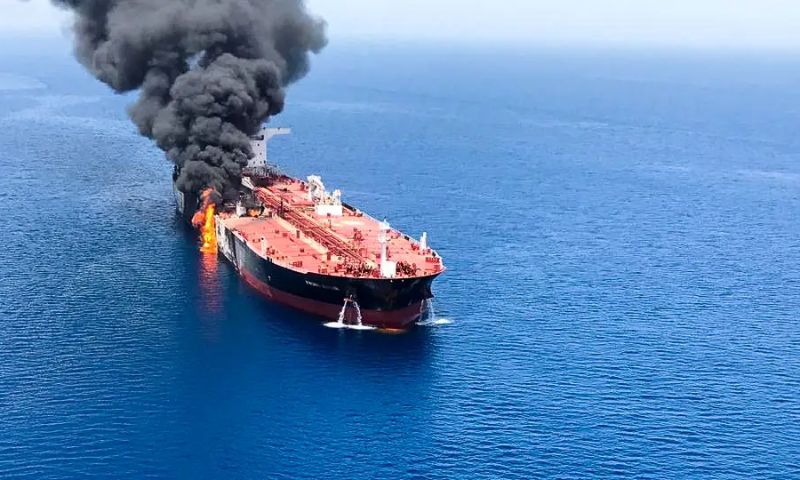
Iranian state television reported that seven oil tankers had been damaged overnight in the Strait of Hormuz, either in attacks or after striking naval mines. Four vessels reportedly caught fire, while three others were immobilised.
The claims had not been independently verified in the available reporting.
The Strait of Hormuz is a critical energy corridor linking Gulf oil producers with international markets.
A prolonged disruption to shipping through the waterway could delay crude deliveries, raise freight and insurance costs and tighten supplies of crude oil and refined fuels.
The latest price surge followed attacks in Saudi Arabia, including a strike on King Fahd International Airport in Dammam that killed two people and injured eight, according to the Associated Press.
The escalation has heightened concern about the security of regional infrastructure, although the price rise alone does not establish that oil production or exports have fallen.
US Stocks Fall Further
Oil prices have also received support from a decline in US crude inventories. The US Energy Information Administration reported that commercial crude stocks fell by 3.06 million barrels to 412.5 million barrels in the week ended October 16, a larger reduction than analysts had expected.
However, distillate inventories, which included diesel and heating oil, increased by 1.68 million barrels to 104.3 million barrels.
READ ALSO: Oil Prices Climb Above $110 as Middle East Shipping Risks Mount
The contrasting movements underline the importance of refining capacity and product availability alongside crude supply.
Diesel availability has been a particular concern during the conflict, adding pressure to transport and industrial fuel markets.
The Organisation of the Petroleum Exporting Countries (OPEC) and participating non-OPEC producers warned on October 12 that interruptions to energy flows had driven shipping and insurance costs to exceptionally high levels.
In some cases, the costs have exceeded one-third of the value of the commodities being transported.
The group said the additional costs were contributing to inflation and burdening producers and consumers.
For oil-importing economies such as Pakistan, a sustained rise in international crude prices could increase the import bill and add to domestic fuel-price pressures.
The impact would depend on how long prices remain elevated, exchange-rate movements, import costs and government decisions on domestic fuel pricing.
The immediate market focus remains on developments around the Strait of Hormuz and the Middle East energy infrastructure, alongside diplomatic efforts to reduce the risk of further attacks.
Further incidents involving shipping or oil facilities could keep crude prices volatile.