
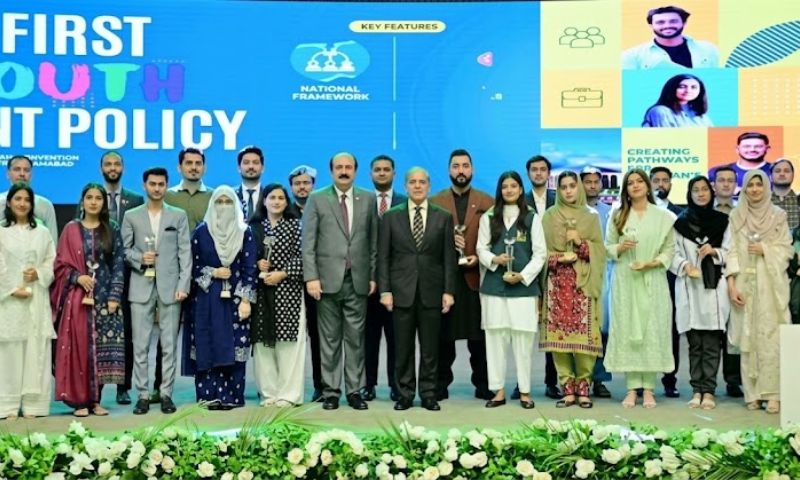
ISLAMABAD, Pakistan: Pakistan has launched its first National Youth Employment Policy to expand job opportunities for young people through skills training, digital employment services and support for entrepreneurship.
Prime Minister Shehbaz Sharif launched the policy on August 12, 2026, under the Prime Minister’s Youth Programme, introducing a national framework linking employment initiatives with labour-market demands.
According to an October 7 research brief by the Institute of Strategic Studies Islamabad (ISSI), Pakistan has nearly 67 million people aged 15 to 29, making youth employment central to the country’s economic development.
What Does the Policy Provide?
The policy brings together federal ministries, provincial governments and relevant institutions through a National Coordination Committee responsible for overseeing implementation.
Its Digital Youth Hub connects young Pakistanis with employment vacancies, internships, scholarships and training opportunities.
Skills development programmes, including those supported by the National Vocational and Technical Training Commission, are intended to better reflect employers’ requirements.
ALSO READ: Pakistan’s Capital Prepares for Global Spotlight Ahead of SCO Summit 2027
Priority employment sectors include information technology, e-commerce, agriculture, construction, healthcare, logistics and overseas employment.
The framework also identifies women’s economic participation and youth entrepreneurship as priorities, including a minimum 10% target for youth-led enterprises among new company registrations.
Can It Address Youth Unemployment?
Pakistan’s Labour Force Survey 2024–25 recorded unemployment of 12.8% among people aged 15–24, compared with the national rate of 7.1%.
It also found that 28.4% of young people in this age group were neither employed nor participating in education or training.
The ISSI assessment cautioned that training programmes alone cannot create employment without investment, business expansion and employer participation.
It recommended paid apprenticeships, stronger workplace protections, targeted support for women and transparent monitoring of employment outcomes.
The policy seeks to absorb new labour-market entrants by 2030, although achieving that objective will depend on financing, provincial coordination and private-sector job creation.
Its effectiveness will ultimately be measured by whether young Pakistanis secure sustainable employment rather than simply receiving training certificates.