
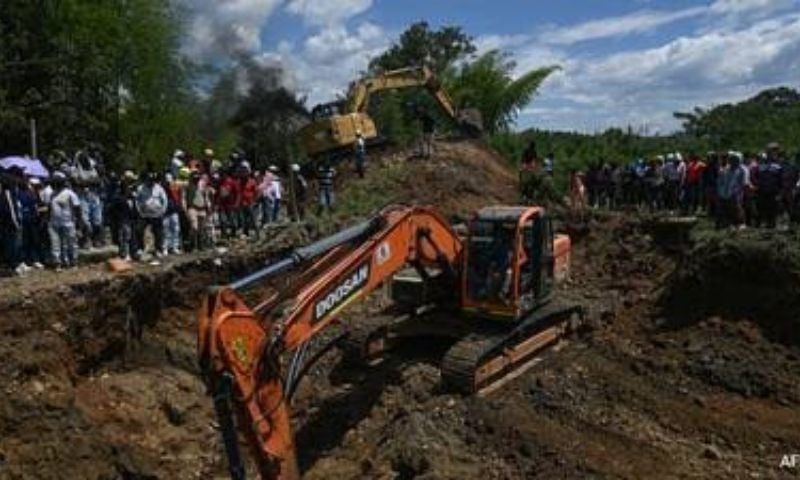
NARIÑO, Colombia: At least 14 people were killed and seven others injured after an illegal gold mine collapsed in southwestern Colombia, highlighting the dangers of unregulated mining and prompting renewed calls for stronger safety standards, authorities said on Monday.
The collapse occurred in a rural area of Santa Bárbara de Iscuandé municipality in Nariño province. Search and rescue operations have been completed, Nariño Governor Luis Alfonso Escobar said later Monday.
The governor urged the national government, the National Mining Agency and the Ministry of Mines and Energy to accelerate efforts to bring informal and small-scale miners into the formal sector, arguing that stronger regulation could improve working conditions and safety standards.
BREAKING NEWS
Landslide at an illegal gold mine in Colombia.
14 people killed, 7 others injured in the accident.#BreakingNews #Colombia #MineCollapse #Landslide #ColombiaNews #GoldMine #AccidentNews https://t.co/CMPTfYc7sy
— Devesh , वनवासी (@Devesh81403955) October 20, 2026
The disaster triggered an emergency response in the remote area. Colombia’s Ombudsman’s Office called for the deployment of personnel and equipment, including military air support, to assist in rescuing and evacuating injured people.
It also urged authorities to activate the hospital network, consider deploying the Benkos Biojó hospital ship from Guapi, and ensure the identification and dignified handling of the victims’ remains.
In a statement, the Ombudsman’s Office warned that the presence of illegal armed groups in the area could obstruct emergency operations. It called for safe access for rescue teams and humanitarian workers while the number of victims was still being confirmed.
The latest disaster follows another deadly mining accident in Nariño in August, when 13 people died in Policarpa municipality.
READ ALSO: Colombia Earthquake Death Toll Rises to 240
The repeated incidents have drawn attention to the hazards faced by workers at informal mining sites, where inadequate safety infrastructure and limited regulatory oversight can expose miners to serious risks.
Illegal and unregulated gold mining remains a significant challenge for Colombia. A government report published in October by the Ministry of Mines and Energy, in collaboration with the United Nations Office on Drugs and Crime, identified 118,410 hectares of land showing evidence of alluvial gold mining in 2025.
Of that area, 75 per cent was associated with illicit or unauthorised operations. The report also found that at least one illegal armed group was present in 85.6 per cent of municipalities where such mining was identified.
The findings illustrate the scale of the challenge facing Colombian authorities, although they do not establish the specific operating conditions or circumstances that led to the latest collapse.
The government faces mounting pressure to strengthen mining oversight and bring informal operators into the legal system while improving safety for workers in remote communities.