Key Points
- The federal government imposed emergency and governor’s rule on 11 October.
- An 11-member advisory council has assumed responsibility for provincial affairs.
- A separate secretariat will oversee 12 terrorism-affected districts.
- The administration has prioritised counterterrorism, police capacity and intergovernmental coordination.
- Healthcare, education, employment and governance are among its stated priorities.
PESHAWAR, Pakistan: Khyber Pakhtunkhwa’s new administrative setup has moved quickly to establish its authority, appoint advisors and outline priorities, but the coming two months will determine whether the change produces tangible improvements in security, public services and everyday life.
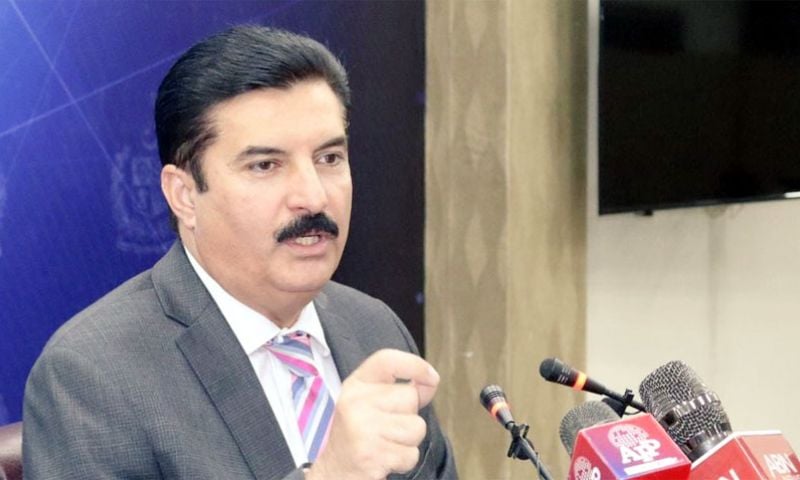
Since the imposition of emergency and governor’s rule on 11 October, the federal government has established an 11-member advisory council under Governor Faisal Karim Kundi, assigned portfolios to its members and announced a separate administrative secretariat for 12 terrorism-affected districts. Parliament subsequently endorsed the measures.
The administration has placed counterterrorism at the centre of its agenda, while promising improvements in healthcare, education, employment, police capacity and governance. The immediate challenge is to translate these commitments into an implementation plan with clear deadlines, allocated resources and measurable results.
The two-month period is particularly significant because the constitutional framework governing the new arrangement imposes a deadline on governor’s rule. Under Article 234, the proclamation must cease to operate after two months unless its extension is approved by a joint sitting of Parliament.
That makes the coming weeks a test not only of the administration’s ability to improve governance but also of its political and constitutional sustainability.
New administrative structure
The new arrangement took shape after President Asif Ali Zardari promulgated emergency and governor’s rule on the advice of Prime Minister Shehbaz Sharif on 11 October, under Articles 232 and 234 of the Constitution.
The federal government said the decision followed a deterioration in the security situation and unsuccessful efforts to secure cooperation from the former provincial administration on counterterrorism.
Federal Minister for Law Azam Nazeer Tarar announced the formation of an 11-member advisory council to assist the governor in running provincial affairs. A separate secretariat was also announced for 12 districts affected by terrorism, with the stated purpose of strengthening administrative oversight.
The council’s portfolios cover home and tribal affairs, finance, law, education, health, mines and minerals, industries and commerce, communications and works, local government, housing, transport, energy, planning and development, religious affairs and information.
The council held its first meeting under Governor Kundi, who directed its members to receive briefings and accelerate stalled governance initiatives. He also pledged a campaign against corruption and said the performance of the administration would be judged by tangible improvements in public services.
Security remains the priority
The new administration’s first major test is whether it can improve security in a province that has experienced persistent terrorism violence, particularly in its southern districts and the former Federally Administered Tribal Areas (FATA).
Governor Kundi has declared that the administration’s primary objective is to restore peace, protection and stability. He has also called for strengthening the operational capacity of the police and the Counter-Terrorism Department (CTD), arguing that the response must target not only armed terrorists but also the networks that facilitate and finance terrorism.
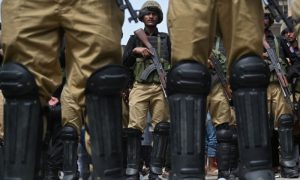
The federal government has authorised the deployment of the army to assist the civilian administration in maintaining law and order. However, the effectiveness of the new arrangement will depend on coordination among civilian authorities, police, intelligence agencies and security forces, as well as the capacity of local administrations to respond to threats.
During the coming two months, a practical assessment of progress would examine whether the government establishes clear security targets, improves police equipment and training, strengthens intelligence-sharing and provides adequate resources to vulnerable districts.
Security gains will ultimately be measured by trends in terrorist attacks, civilian and security personnel casualties, the functioning of public institutions and the ability of residents to move safely. Announcements alone cannot establish whether the situation has improved.
Public welfare under scrutiny
For residents, the success of the new setup will be judged less by the composition of the advisory council than by whether government services become more accessible and reliable.
Governor Kundi has identified healthcare, education and employment as priority areas. These commitments offer the administration an opportunity to demonstrate early results through practical measures that can be delivered within weeks rather than waiting for long-term development projects.
In healthcare, priorities could include reviewing medicine supplies at public hospitals, addressing shortages of essential equipment, ensuring staff attendance and examining emergency services in underserved districts. The administration would need to publish a baseline assessment and identify which improvements can be delivered immediately and which require additional funding.
In education, the authorities could prioritise school safety, teacher attendance, missing facilities and the availability of basic services in public schools. The governor’s recent direction to obtain a report on private-school safety legislation within 15 days provides one specific deadline against which progress can be assessed.
Employment is a more complex challenge, but the administration could review stalled development projects, accelerate payments to contractors where legally due and identify labour-intensive schemes capable of generating local jobs. Such measures would require financial scrutiny to ensure that spending is lawful and delivers value for money.
Other immediate public-welfare concerns include road maintenance, water supply, sanitation, municipal services and the timely processing of routine administrative work. The government could publish district-level performance indicators and establish a complaint mechanism through which citizens can report failures and track responses.
Police welfare and capacity
The welfare and operational readiness of police personnel will be another important test.
On 14 October, Governor Kundi called for an early summary on a proposed increase in police salaries and a welfare package. The administration has also emphasised the need to strengthen the regular police force and the CTD.
For police families, the priority is whether promised compensation, assistance to the families of personnel killed in the line of duty, housing support and other benefits are approved and delivered without unnecessary delays.
The administration should clarify the status of the proposed package, its estimated cost, the source of funding and the timetable for implementation. It should also identify gaps in equipment, training, communications and personnel in high-risk areas.
A credible assessment would distinguish between proposals submitted for approval, funds released and benefits actually received. This distinction is essential when the new administration is seeking to demonstrate that its approach differs from the one it replaced.
A test of delivery
Khyber Pakhtunkhwa’s new administrative setup has established its structure and declared its priorities in a matter of days. It has placed security at the centre of its agenda while promising improvements in health, education, employment, police welfare and governance.
The real test will be whether those priorities translate into visible and measurable changes for residents, particularly in districts most affected by terrorism and weak public services.
Over the next two months, the administration will have to demonstrate that it can coordinate security institutions, protect essential services, manage public money transparently and respond to citizens’ needs while operating within constitutional limits.
For people who have endured years of insecurity and governance disputes, the measure of success will be straightforward: safer communities, functioning schools and hospitals, reliable public services and evidence that government promises are being fulfilled.