Key Points
- KP reported 3,671 dengue cases by mid-October 2026.
- Kohat accounted for 2,319 cases, according to provincial data.
- Islamabad reported 42 cases between January and October 16.
- A 2026 study estimated 3.28 million infections in 2022.
- Dengue transmission typically peaks between September and November.
PESHAWAR, Pakistan: Pakistan is confronting another high-risk dengue season, with thousands of infections reported in Khyber Pakhtunkhwa and fresh surveillance figures highlighting the difficulty of establishing a complete national picture of the mosquito-borne disease.
Khyber Pakhtunkhwa has reported 3,671 dengue cases this year, including two deaths in Abbottabad reported during the week ending October 16, according to provincial health department figures. The provincial tally included 134 active cases, with Kohat emerging as the worst-affected district.
In contrast, Islamabad had reported 42 cases between January 1 and October 16, according to the District Health Office. However, the figures cover different reporting periods and surveillance systems and should not be treated as directly comparable measures of the disease burden.
National surveillance data also points to a rise in infections. The National Institutes of Health (NIH), Islamabad, recorded 578 suspected dengue cases during 14 September to 20 September 2026, epidemiological week 38 of 2026 (September 14 to September 20, 2026), compared with 461 in the preceding week.
Khyber Pakhtunkhwa accounted for 340 cases and Sindh for 235, while Islamabad reported two and Azad Jammu and Kashmir one.
The figures, however, do not represent a complete national count of confirmed infections. Punjab was marked as not reported in the NIH bulletin for that week, while the weekly figures included suspected cases rather than only laboratory-confirmed infections.
The gaps highlight a central challenge for health authorities: determining the true scale of dengue transmission while coordinating surveillance, prevention and treatment across provinces.
A growing public health burden
A study published in the journal PLOS ONE on July 2, 2026, by researchers associated with Aga Khan University and other institutions suggests that Pakistan’s dengue burden may be substantially greater than routine surveillance figures indicate.
The study estimated that dengue infections increased from approximately 100,000 in 2012 to 3.28 million in 2022. It used laboratory data and statistical modelling to account for differences in healthcare-seeking behaviour, diagnostic testing and laboratory coverage.
The researchers estimated that Sindh experienced the highest disease burden in 2022, with approximately 2.63 million infections. Balochistan had the lowest estimated burden, at 6,785 infections.
Kohat emerges as hotspot
Khyber Pakhtunkhwa has become a major focus of concern during the current season, with Kohat accounting for a substantial share of the province’s reported infections.
According to the provincial health department’s figures published on October 16, Kohat had recorded 2,319 cases, followed by Peshawar with 500. Other affected districts included Bannu, Khyber, Haripur and Abbottabad.
Health officials have attributed the continuing spread in affected areas partly to inconsistent coordination between departments and difficulties obtaining complete patient records from medical teaching institutions.
The problem is significant because incomplete reporting can hinder the identification of transmission hotspots and delay preventive interventions. If diagnosed patients are not included in district surveillance records, authorities may underestimate local transmission and struggle to direct resources where they are most needed.
The provincial figures also demonstrate why national and district-level reporting must be examined together: a relatively small number of districts can account for a large proportion of infections in a particular outbreak.
A seasonal disease with year-round risks
Dengue is caused by a virus transmitted primarily by infected female Aedes mosquitoes. The disease is endemic in Pakistan, where outbreaks commonly intensify after the monsoon, particularly from September to November.
Rainfall can create temporary pools of water in discarded containers, tyres, construction sites, rooftops and uncovered storage vessels. These sites provide breeding grounds for mosquitoes when water is allowed to collect.
However, rainfall is not the only factor. Poor drainage, inadequate waste disposal, dense urban settlements and unreliable water supplies can also create favourable conditions for mosquito breeding.
In areas where households cannot depend on a continuous water supply, residents may store water in containers. If these containers are left uncovered or are not cleaned regularly, they can become breeding sites.
The 2026 study published in PLOS ONE found recurring post-monsoon peaks in laboratory-confirmed cases between 2012 and 2022. It also identified evidence of a longer-term increase in dengue incidence, particularly in Sindh and Khyber Pakhtunkhwa.
The researchers cautioned that dengue should not be viewed solely as a seasonal threat, as transmission can persist throughout the year in suitable conditions.
Climate change, urbanisation and inadequate sanitation are among the factors associated with the growing risk. Their relative contribution varies by location and requires locally tailored prevention measures.
Four virus types
There are four recognised dengue virus serotypes. Infection with one type generally provides long-term immunity against that particular serotype but does not provide equivalent protection against the others.
A person can therefore contract dengue more than once. Subsequent infections with a different serotype are associated with a greater risk of severe disease.

Many infections produce no symptoms or only mild illness, while symptomatic patients may experience fever, severe headache, pain behind the eyes, muscle and joint pain, nausea or a rash.
Warning signs requiring urgent medical assessment include severe abdominal pain, persistent vomiting, bleeding, unusual drowsiness or restlessness, breathing difficulty and signs of circulatory problems. Severe dengue can lead to shock, internal bleeding or organ impairment.
The World Health Organization stresses that early recognition, appropriate clinical management and timely treatment of severe cases can substantially reduce deaths.
Prevention remains critical
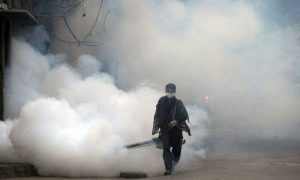
Health authorities typically use a combination of mosquito surveillance, elimination of breeding sites, targeted insecticide spraying and public awareness campaigns to control outbreaks.
Removing stagnant water is particularly important because spraying alone may not eliminate mosquito eggs and larvae in containers or other breeding sites.
Households can reduce exposure by covering stored water, regularly emptying and cleaning containers, clearing blocked drains, disposing of discarded tyres and rubbish, and using suitable mosquito repellents, window screens and protective clothing.
Local administrations also need to ensure regular waste collection, effective drainage and inspections of construction sites and other locations where water accumulates.
The effectiveness of these measures depends on sustained implementation rather than short-lived campaigns launched after cases begin to rise. Surveillance data should be used to identify hotspots and prioritise resources before transmission accelerates.
Sustained action needed
The latest figures show that dengue continues to pose a public health challenge, particularly in districts experiencing concentrated outbreaks. But they do not, by themselves, establish that Pakistan is facing a nationwide surge of the same magnitude in every province.
The more immediate priority is to strengthen routine surveillance, ensure that health facilities report diagnosed cases promptly and coordinate prevention efforts across administrative boundaries.
Authorities also need to publish comparable data on infections and deaths, identify persistent breeding hotspots and maintain preventive measures before and throughout the post-monsoon transmission period.