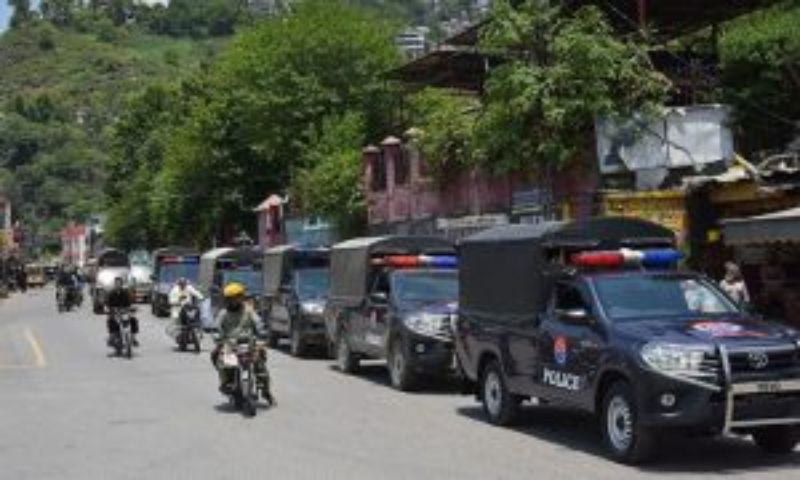
ISLAMABAD: Indian diplomatic representatives, individuals linked to the proscribed Jammu and Kashmir Joint Awami Action Committee (JAAC) and Indian media figures have come under scrutiny over a coordinated campaign to highlight unrest in Azad Jammu and Kashmir (AJK) and promote an anti-Pakistan narrative internationally.
According to intelligence sources, the campaign involved establishing a human rights organisation in the United Kingdom, engaging individuals associated with the JAAC and securing international media coverage for reports critical of Pakistan.
In April 2026, the Indian High Commission in London contacted individuals linked to the JAAC to coordinate a campaign focusing on unrest in AJK, the sources said.
In June, Indian High Commission official Pramod Khemchandani met Zakka Jacob, associated with Indian broadcaster Times Now. The meeting focused on launching an organisation to promote the JAAC’s narrative on developments in AJK and secure wider media coverage.
The operation involved individuals associated with the committee, including Dr Ishtiaq Khaliq, Azhar Ahmed and Yasir Shafaat, who were assigned roles in advancing the campaign, according to the information provided by intelligence sources.
The sources further disclosed that the Indian High Commission made 17 WhatsApp calls to the three individuals during June as part of the coordination process.
On July 30, 2026, the Jammu and Kashmir Human Rights Observatory (JKHRO) was registered in the United Kingdom. The organisation subsequently began publishing reports on the situation in AJK, presenting a narrative critical of Pakistan.
The establishment of JKHRO and the rapid circulation of its reports through international media outlets have raised questions about the organisation’s origins, its connections and the channels through which its material reached prominent news platforms.
Reports attributed to JKHRO received coverage from outlets including The Independent, Times Now and Kashmir Times, helping bring its account of developments in AJK to a wider international audience.
Registration documents cited in the information identify Khemchandani, who is associated with the Indian High Commission, in connection with JKHRO’s registration. The connection has further intensified questions about the organisation’s formation and its relationship with Indian diplomatic representatives.
In June, the JAAC also published social media posts concerning conditions in Rawalakot and other parts of AJK, calling for urgent international intervention. The subsequent publication of JKHRO reports helped bring similar narratives into wider media circulation, according to the sources.
The sequence of diplomatic contacts, the reported WhatsApp communications, the registration of JKHRO and the subsequent international coverage point to a coordinated effort to advance a narrative critical of Pakistan, the sources maintain.
READ ALSO: Banned JAAC’s Illegal Acts Caused Up to Rs15 Billion Economic Loss: AJK Govt
The case raises serious questions about whether the banner of human rights was used to provide international legitimacy to a political campaign against Pakistan and to amplify unrest in AJK through diplomatic contacts, advocacy platforms and media coverage.
The reported links between Indian diplomatic representatives, individuals associated with the JAAC and JKHRO warrant close scrutiny to establish the full extent of their coordination and the objectives behind the organisation’s creation.
What is JAAC and why was it banned in Azad Kashmir?
The Jammu Kashmir Joint Awami Action Committee (JAAC) emerged in 2023 as a grassroots umbrella organisation representing traders, civil society groups and activists in Azad Jammu and Kashmir (AJK).
It spearheaded protests over electricity tariffs, the prices of essential commodities and demands for political and economic reforms, including a 2024 long march to Muzaffarabad.
In 2025, the committee led another major protest movement, while in 2026 its campaign focused on abolishing 12 seats reserved in the AJK Legislative Assembly for refugees from Indian Illegally Occupied Jammu and Kashmir (IIOJK) living in Pakistan.
Following a breakdown in negotiations with the authorities and calls for further violent protests, the AJK government declared the JAAC a proscribed organisation on June 5, 2026 under Section 12 of the AJK Anti-Terrorism Act, 2014, citing threats to public order and security.
The ban was followed by arrests and deadly clashes between security forces and violent protesters led by foreign-backed, so-called leaders who were accused of using innocent people to fuel violent demonstrations, further intensifying tensions in the region.