MOSCOW: The Shanghai Cooperation Organisation (SCO) has stressed that an inclusive government representing Afghanistan’s ethnic and political groups is essential for lasting peace and stability, highlighting the continuing challenge of political exclusion under the Taliban regime.
SCO Deputy Secretary-General Ahmad Saeed Moradzadeh, speaking at a joint meeting of the SCO, the Collective Security Treaty Organisation (CSTO) and the Commonwealth of Independent States (CIS), said the organisation’s common position on Afghanistan was reflected in the Bishkek Declaration.
He said member states had called for Afghanistan to be rebuilt as an independent, neutral and peaceful country, free from terrorism, war and drugs, while expressing their readiness to support international efforts for peace and development.
Moradzadeh warned that the risk of a rapid deterioration remained in Afghanistan. His remarks underscored persistent concerns about the country’s security, humanitarian conditions and political future under Taliban rule.
He attributed the worsening humanitarian situation partly to declining international assistance and a reduction in foreign trade following the closure of the border. He said Kabul’s greater participation in regional social and economic projects had become increasingly necessary.
The SCO official also highlighted the threat posed by terrorist organisations operating in Afghanistan. Citing the executive committee of the SCO’s Regional Anti-Terrorist Structure, he identified Islamic State Khorasan Province (ISKP) as the principal destabilising force in the country, warning that it was seeking to expand its activities beyond Afghanistan’s borders.
He said other armed groups were also operating in the country, including al-Qaeda, which he said had around 600 terrorists, and Tehreek-e-Taliban Pakistan (TTP), which he said had carried out more than 600 attacks over the past two years.
Moradzadeh also named the East Turkestan Islamic Movement, the Islamic Movement of Uzbekistan and Jamaat Ansarullah among the groups active in Afghanistan.
His assessment comes amid continuing concerns among regional countries that Afghanistan’s security challenges could spill more across its borders, adding to pressure on the Taliban authorities to address terrorism and engage with neighbouring states.
The SCO deputy secretary-general expressed concern over continuing military clashes along the Afghanistan-Pakistan border and recent attacks by terrorists originating from Afghan territory against border areas of Tajikistan. He recalled that the SCO had issued a statement on December 3, last year strongly condemning an attack on Tajik territory.
Diplomatic engagement remains stalled
Moradzadeh said the SCO Secretariat regularly consulted the United Nations Assistance Mission in Afghanistan (UNAMA), the UN Secretariat’s Department of Political and Peacebuilding Affairs in New York and the UN Regional Centre for Preventive Diplomacy for Central Asia in Ashgabat on developments in Afghanistan.
He added that the SCO had begun participating this year in meetings of the CSTO Council of Foreign Ministers’ working group on Afghanistan. The SCO-Afghanistan Contact Group, established in 2005, was upgraded to deputy foreign minister level in 2018. However, Moradzadeh said no meeting had been held since the Taliban returned to power in Kabul in 2021.
He acknowledged that SCO member states had yet to reach a consensus on resuming the group’s activities, adding that the mechanism remained suspended, according to Russia’s foreign minister.
The continued suspension reflects the diplomatic difficulties surrounding engagement with Afghanistan’s Taliban-led administration, as regional governments weigh security cooperation and economic engagement against concerns over the country’s political arrangements.
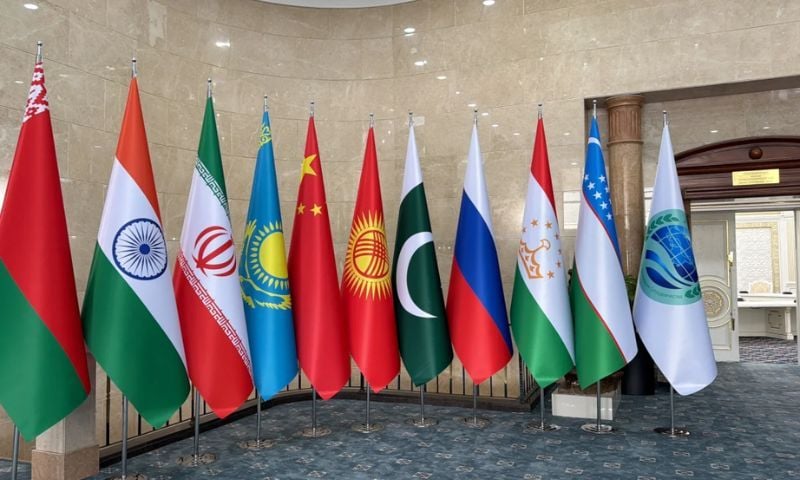
Moradzadeh said representatives of the SCO’s 10 member states had held consultations on Afghanistan at the level of special representatives for the first time in September last year, under Tajikistan’s chairmanship. The possible resumption of the Contact Group was among the issues discussed.
New regional security mechanisms
The SCO is also establishing new permanent bodies to address regional security threats, including a counter-narcotics centre in Dushanbe and a comprehensive security threats centre in Tashkent.
Moradzadeh said information security and transnational organised crime centres would also operate within the framework. The organisation’s emphasis on inclusive governance, counter-terrorism cooperation and regional stability comes as Afghanistan continues to face humanitarian hardship, economic constraints and concerns over terrorist activity.
READ ALSO: Shanghai Cooperation Organisation Again Calls for Inclusive Government in Afghanistan
For the Taliban regime, the SCO’s position presents a continuing challenge: regional stability and broader diplomatic engagement remain closely linked to demands for a more inclusive political system and effective action against armed groups operating from Afghan territory.