Key Points
- Only 5 per cent of milk enters formal processing channels
- Annual exports targeted at $500 million by 2029-30
- Proposals include tax cuts, farmer partnerships and disease-free zones
ISLAMABAD: Pakistan is considering liberalising its dairy market and removing milk from the list of essential commodities as part of proposed reforms to attract investment and raise annual dairy exports to $2 billion by 2035.
Planning Commission, the Ministry of National Food Security and Research, the Food and Agriculture Organisation (FAO) and industry stakeholders under the URAAN Pakistan initiative outlined the proposals in a policy framework titled Attracting Investment to Enhance Pakistan’s Dairy Exports.
The framework sets an interim target of $500 million in annual exports by 2029-30, with the private sector expected to lead investment, processing and export development.
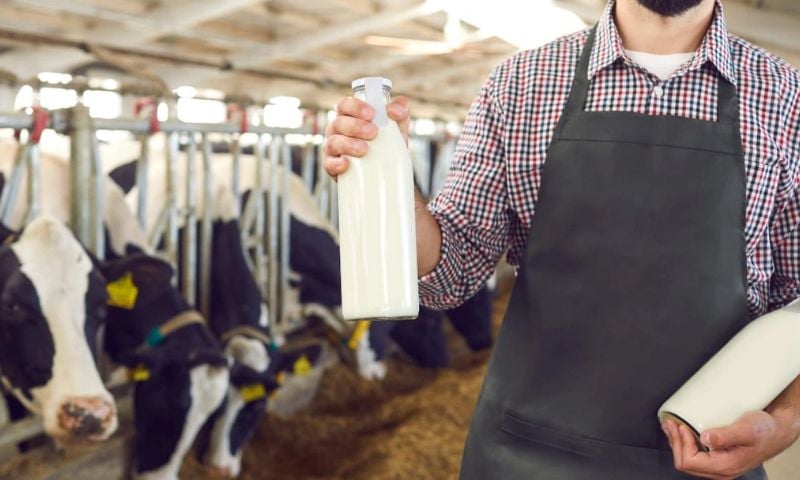
Pakistan produces approximately 72 billion litres of milk annually, accounting for around seven per cent of global production and making it the world’s fourth-largest milk producer.
However, the country recorded a dairy trade deficit of $37 million in 2024, since only about five per cent of its milk undergoes formal processing.
The policy identifies low milk yields, inadequate processing facilities, supply-chain losses and price controls as major constraints on investment and export competitiveness.
Tax relief and investment incentives
The framework proposes reducing the tax on value-added dairy products from 18 per cent to five per cent and eliminating import duties, or at least capping them at five per cent on dairy machinery, genetic material and feed ingredients.
Licensed dairy farms and processing facilities could also qualify for agricultural electricity tariffs.
The proposals include financial support for cold-chain infrastructure, particularly solar-powered milk chillers, to improve milk storage, transportation and quality.
The framework recommends allowing livestock to serve as collateral for smallholder loans, potentially expanding access to finance for farmers who lack conventional assets.
Private dairy companies would also be encouraged to organise small farmers into cooperatives and farmer entrepreneur groups. The collective farming would provide technology and training while purchasing milk under contracts based on agreed prices and quality standards.
The proposed arrangements would integrate smallholders into formal supply chains, improve farm-level productivity and ensure a more consistent supply of milk for processing and export.
Livestock productivity and disease control
The framework highlights approximately 1.5 million productive dairy animals and two million calves lost annually, which undermines breeding capacity and livestock productivity.
To address these losses, it proposes expanding sexed-semen technology and embryo transfer facilities to improve livestock genetics and increase milk yields.
It also calls for a national digital animal disease surveillance and traceability system, alongside internationally recognised disease-free dairy zones in Punjab and Sindh. Such measures would help Pakistan meet importing countries’ sanitary