PESHAWAR: No major protests were reported in Pakistan’s Khyber Pakhtunkhwa province following the imposition of emergency measures and Governor’s Rule, despite an appeal by ousted chief minister Sohail Afridi for people to take to the streets.
Afridi, Provincial Assembly Speaker Babar Saleem Swati and Pakistan Tehreek-e-Insaf (PTI) provincial president Junaid Akbar had been taken into protective custody and moved to undisclosed locations.
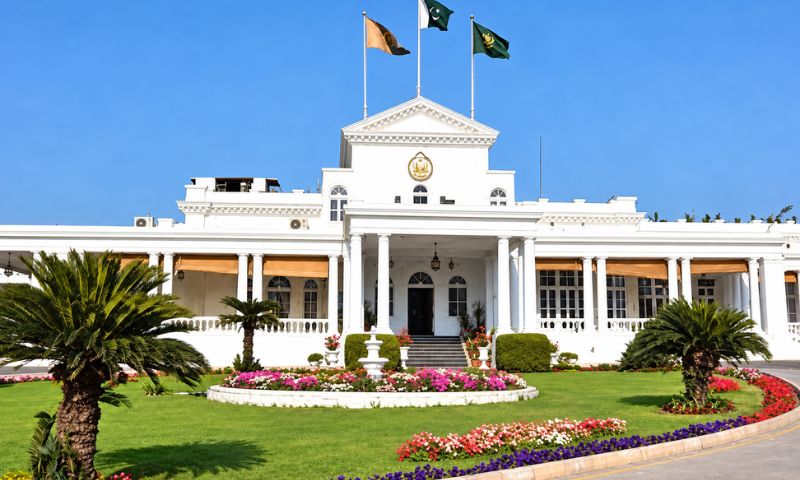
PTI leader Shahid Khattak also confirmed the arrests, according to the information provided. Sources said Afridi and Akbar were detained at the Chief Minister’s House, while Swati was taken into custody from the Speaker’s House.
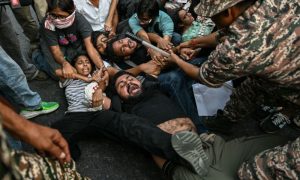
Despite the call for demonstrations, no large gatherings were reported in Peshawar or elsewhere in the province. Small groups assembled at scattered locations but were subsequently dispersed.
The province also saw a major reshuffle of government officials and police officers.
Dozens of officers were designated as Officers on Special Duty (OSDs), while others were directed to report to the Establishment Division in Islamabad. The changes affected secretaries, commissioners, deputy commissioners and police officials.
Governor’s Rule
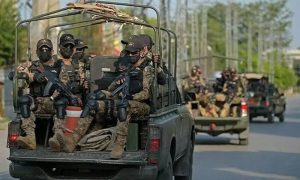
The developments followed a federal cabinet decision to impose emergency measures and introduce Governor’s Rule in Khyber Pakhtunkhwa amid rising terrorist attacks.
President Asif Ali Zardari, on Sunday, signed the summary forwarded by Prime Minister Shehbaz Sharif after the federal cabinet approved imposing emergency in KP.
The government cited Articles 232 and 234 of Pakistan’s Constitution, which address emergency powers and circumstances in which a provincial government cannot function in accordance with the Constitution.
Security Concerns
According to security analysts, the Cabinet decision was based not on political grounds, but on the neglect of security. The provincial government’s neglect of security became the main reason for the emergency.
“Frequent terrorist attacks in KP have not even seen condemnation by the provincial government,” said Syed Muhammad Ali, a prominent security analyst. “The KP government has received Rs 800 billion from the federal government for counter-terrorism and made no visible improvement in its specific security apparatus,” he added.
He said KP has a police force of 125000, out of which as many as 17000 are on protocol duties. They have a counter-terrorism force of only 3300, while only 25 are on regular deployment for counter-terrorism and critical security duties.
“What else would you call it, if it is not a neglect of security of the province?” he asked. “That is why I call the neglect of security, and not the political, the main reason for the imposition of emergency in the province.
According to analyst Ali, there were 1200 martyrdoms in KP and the provincial government has not condemned them even once. The provincial government was not moving to do necessary recruitment for counter-terrorism, he added.
Terrorist attacks rise 195 per cent
The security assessments presented to the cabinet reportedly recorded a 195 per cent increase in terrorist incidents in KP between March 1, 2024, and September 23, 2026.
According to the reports, 73 per cent of terrorist attacks recorded in the province during 2026 targeted police and security personnel, highlighting the pressure on law-enforcement agencies.
The assessments also pointed to a significant increase in the use of drones by terrorist groups. While no drone attacks were recorded against police and security forces in 2024, the number reportedly reached 170 in 2026.
The reports recorded 181 attacks involving improvised explosive devices (IEDs) in 2025 and 159 such incidents through September 2026. They called for strengthening the operational capacity of police and law-enforcement agencies to respond to changing terrorist tactics.
The assessments also noted that the Safe City surveillance programme remained limited to Peshawar, despite security challenges across the province.
They attributed the deteriorating situation partly to weaknesses in counterterrorism preparedness and the provincial government’s policies towards terrorist elements and their facilitators operating from Afghanistan.
Pakistan constitutional provisions
Article 232 of the Constitution provides for the proclamation of an emergency under specified circumstances, including war, external aggression or internal disturbances beyond a provincial government’s capacity to control.
Article 234 deals with a situation in which the government of a province cannot be carried on in accordance with the Constitution.
It provides a mechanism for the president to assume, or direct the governor to exercise, specified provincial government functions, subject to constitutional requirements.