Key Points
- Opposition alleges voter-list revisions favour ruling BJP
- Mass detentions and security restrictions draw criticism
- UN and Amnesty raise concerns over protesters’ rights
ISLAMABAD: India faced mounting political pressure on Sunday as opposition parties protested over irregularities in voter-list revisions and demanded the Election Commission’s resignation for favouring the ruling Bharatiya Janata Party (BJP).
From India’s Cockroach Janata Party (CJP) to student organisations and from Opposition parties to minorities groups, everyone is demanding the resignation of Chief Election Commissioner Gyanesh Kumar.
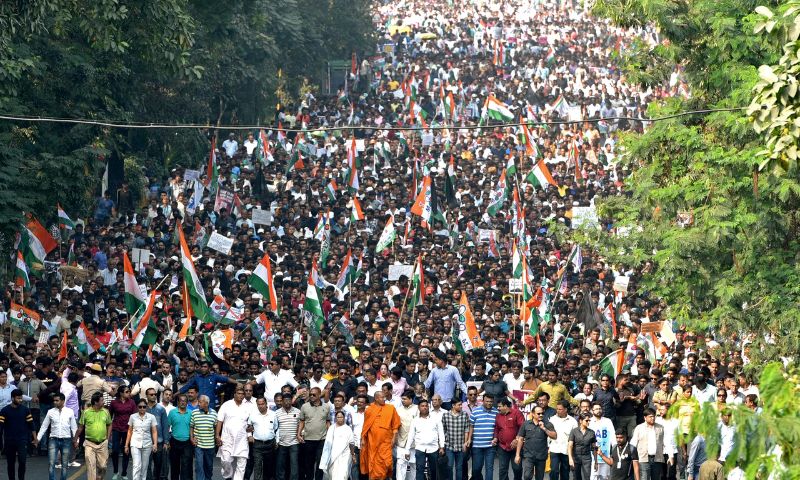
Demonstrations in New Delhi started on October 10, and they continued on Sunday, prompting a major security operation that paralysed the Indian capital
Reports of mass detentions, restrictions on public gatherings and the deployment of thousands of police and paramilitary personnel were all over international media on Sunday.
The Modi administration’s crackdown on opposition and other protests has drawn criticism from human rights organisations and renewed scrutiny of the Election Commission’s independence and safeguards against the exclusion of eligible voters.
The opposition has alleged that changes to electoral rolls and procedures for deleting names could undermine electoral fairness.
The Election Commission has defended the revision exercise as an effort to maintain accurate voter lists, while the BJP has rejected allegations of manipulation.
India’s voter-list revisions fuel political dispute
The present unrest centres on the Special Intensive Revision (SIR) of electoral rolls, an exercise intended to update voter lists by identifying deceased voters, duplicate entries and people who have moved or cannot be traced.
Opposition parties say the process lacks adequate safeguards and could disproportionately affect vulnerable communities and voters in areas considered opposition strongholds.
They have questioned the use of Form 7, which allows applications for deleting names from electoral rolls, as well as the verification procedures governing such requests.
Opposition citing electoral data has referred to approximately 13 crore (130 million) names being removed or placed in categories requiring further scrutiny during the revision exercise.
Opposition leaders have accused Kumar of failing to ensure transparency and impartiality. They have demanded his resignation and called for a review of the disputed procedures.
The BJP and the Election Commission have maintained that voter-list revisions are necessary to protect election integrity.
The dispute has nevertheless intensified demands for transparent verification, accessible appeals and effective safeguards against wrongful deletions.
Detentions and restrictions in India draw criticism
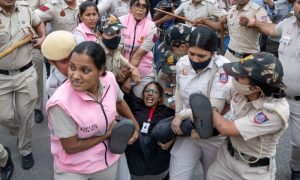
New Delhi witnessed extensive security arrangements during the October 10 demonstrations, particularly around Jantar Mantar and other central areas. Media reports described barricades, restrictions on gatherings and the detention of political activists and protesters.
Some reports put the number of detainees at approximately 10,000, including students, activists and political figures.
Indian government detains journalists
Reports also described journalists being detained while covering the protests. Opposition groups said authorities are using preventive detention and security restrictions to obstruct mobilisation. There were also concerns raised about the impact of the measures on residents and public transport.
READ ALSO: India Opposition Leader Vows to Fight Modi, RSS Despite Crackdown on Protesters
The reported deployment of 30,000 police and paramilitary personnel underscored the scale of the security operation.
The authorities’ handling of the demonstrations has raised questions about whether the restrictions were proportionate and whether protesters and journalists were barred from exercising their rights without undue interference.
International scrutiny increases
Amnesty International has raised concerns about restrictions on peaceful assembly, preventive detention and police conduct in India, adding to calls for independent scrutiny of the authorities’ response.
The United Nations has also emphasised the need to protect peaceful protesters and ensure that law-enforcement agencies comply with international human rights standards.
Any allegations of unlawful detention or excessive force require transparent investigation and appropriate legal remedies.
Opposition leaders, including Congress leader Rahul Gandhi, have backed demands for accountability and questioned the Election Commission’s impartiality. They have pledged to continue challenging the disputed electoral procedures.
The issue has expanded beyond voter registration to questions about democratic accountability, institutional independence and the protection of political dissent.
Judicial proceedings and continued opposition mobilisation could keep the issue in the political spotlight.