Key Points
- The encyclopedia covers all 13 regions, documenting customs, dialects, folk arts and traditional livelihoods.
- More than 10,000 photographs complement maps, statistics and historical records.
- Published by King Abdulaziz Public Library, the work traces social and cultural change across centuries.
ISLAMABAD: Saudi Arabia’s King Abdulaziz Public Library has published a 20-volume encyclopedia documenting the Kingdom’s people, cultural heritage and social transformations, providing a comprehensive research reference on the country’s history, communities and ways of life.
The Encyclopedia of the Kingdom of Saudi Arabia spans more than 20,000 pages and draws on contributions from over 250 academics and researchers.
It includes more than 10,000 photographs, along with maps, statistical tables and illustrations covering the Kingdom’s 13 regions.
The project reflects Saudi Vision 2030, which places culture and people at the centre of national development, according to the Saudi Press Agency (SPA).
The encyclopedia examines Saudi society through historical, geographical and anthropological perspectives, documenting how communities have adapted to their surroundings and how their customs, social structures and cultural identities have evolved.
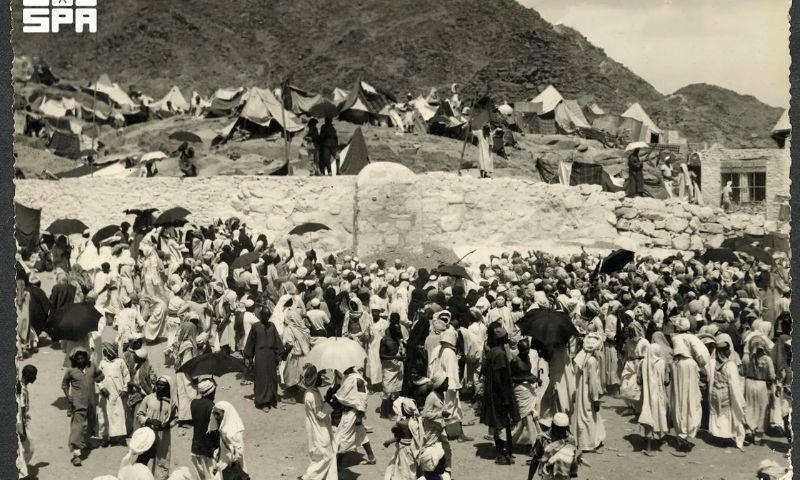
Its coverage extends from cities and villages to desert, agricultural, mountainous and coastal areas.
The mega document records population patterns, traditional occupations, architecture, clothing, food, crafts, oral traditions and other aspects of everyday life.
The work also examines how Saudi communities interacted with their environments, showing how geographical conditions have impacted settlement patterns, livelihoods and cultural practices.
Marriage customs, hospitality, family relationships and tribal ties feature prominently in its documentation of social life.
The encyclopedia also traces the transition from Bedouin and rural communities towards urbanisation and modern society.
Oral literature and linguistic diversity form another important part of the collection.
Local dialects, folk proverbs, traditional stories and Nabati poetry provide insights into the values, beliefs and experiences of different communities. Nabati is a form of vernacular Arabic poetry popular across the Arabian Peninsula
READ ALSO: 68 Saudi University Researchers Named Among World’s Top 2% Most-Cited Scientists
The encyclopedia documents traditional performances, including the ardah, samri and Al-Khutwa Al-Aseeriya, also known as the Aseeri Step.
These dances and chants are associated with celebrations, work and other social occasions, reflecting the cultural traditions of their respective regions.
Saudi architecture
Traditional architecture and occupations also receive extensive attention. The volumes describe mud- and stone-built homes, examining how construction methods reflect local materials, climatic conditions and the importance of privacy within Saudi social life.
They also document handicrafts, traditional foods, historical clothing, jewellery and everyday tools, preserving records of material culture across the Kingdom’s cities, villages and regions.
The collection extends beyond living traditions to archaeological and historical evidence. It documents ancient settlements, archaeological remains, rock art and inscriptions, examining what these records reveal about human activity, beliefs and the development of civilisations in the Arabian Peninsula before and after the advent of Islam.
Its regional coverage includes population density, settlement patterns and differences in the cultural and economic characteristics of communities. The encyclopedia identifies major urban centres and examines variations in population composition and ways of life.
Saudi geography
It also records geographical features, including highlands, mountains, valleys, wells, springs and lakes, alongside agricultural areas, ports and commercial centres. The Grand Mosque in Makkah and the Prophet’s Mosque in Madinah are among the significant religious sites covered.
Natural resources and economic activities feature in the work, including minerals, oil, livestock breeding, and the raising of camels and horses. The volumes also document regional differences in plants, trees, dialects and traditional dress.
To support research, the encyclopedia incorporates geographical, topographical and thematic maps covering the Kingdom as a whole and its individual regions. Detailed tables and illustrations present information on population, the economy, public services and other subjects.
Each of Saudi Arabia’s 13 regions is represented through hundreds of photographs, with between 500 and 1,000 images allocated to each region, providing visual documentation of its cultural and historical characteristics.
The library describes the encyclopedia as one of the most comprehensive works devoted to the Kingdom’s regions. Its extensive historical, social and cultural records are intended to support researchers and readers seeking a deeper understanding of Saudi Arabia’s development and diverse heritage.
Saudi Arabia’s cultural documentation efforts form part of a wider national focus on preserving historical resources while recording the social changes accompanying the country’s modernisation.