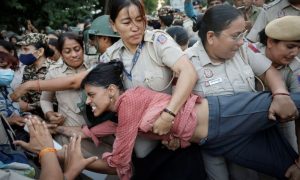
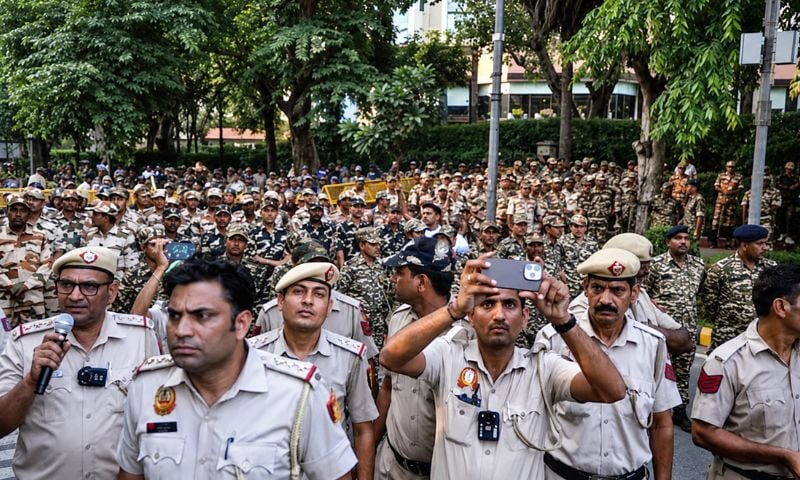
NEW DELHI, India: Indian authorities have turned parts of the capital into a security zone, deploying more than 30,000 police and paramilitary personnel ahead of a major Gen Z-led protest demanding electoral reforms and the resignation of Chief Election Commissioner Gyanesh Kumar.
The Cockroach Janata Party (CJP), which is spearheading the demonstration, has vowed to march to Jantar Mantar on Saturday despite police refusing permission for the gathering. The planned protest has triggered road closures, transport disruption and a sweeping security deployment across central Delhi.
The confrontation has intensified a wider political dispute over the Election Commission’s revision of voter lists, with opposition parties and activists alleging that eligible voters are being removed. The commission and Prime Minister Narendra Modi’s Bharatiya Janata Party (BJP) have rejected claims of political manipulation.
Security Tightened Across Delhi
Police have sealed roads leading to Jantar Mantar with heavy metal barricades and ropes, while officers have stopped and questioned some protesters arriving near the site.
Several metro stations have been ordered shut, and some trains to Delhi have been cancelled. Traffic diversions have caused severe congestion across central areas, with journeys that normally take 15 minutes stretching beyond an hour.
ALSO READ: Living Voters Declared Dead in India’s Electoral Roll Revision
The Supreme Court on Friday directed that public transport services should not face a blanket shutdown and said some trains must continue operating.
The protests are calling for the resignation of Chief Election Commissioner Gyanesh Kumar.
Dispute Over Voter Roll Revision
The controversy centres on the special intensive revision process, which began in 2025 and has expanded across several Indian states.
The Election Commission says the initiative is designed to identify duplicate registrations, remove names of deceased voters and prevent fraudulent entries.
According to the election body, more than 133 million names have been excluded from draft rolls, including duplicate and invalid entries.
Critics argue that documentation requirements could make it difficult for some eligible voters to remain registered, particularly those from poorer and vulnerable communities.
Protests Gain Momentum
CJP founder Abhijeet Dipke has vowed to proceed with the march despite the restrictions.
“Come what may,” Dipke said, announcing plans to march to Jantar Mantar on Saturday morning. Addressing Modi in a post on X, he added: “If you want to jail us or even shoot us, we are prepared.”
The CJP first emerged as a significant challenge to the government during protests demanding education reforms over the summer. The movement claimed a major victory in July when Education Minister Dharmendra Pradhan resigned following the demonstrations.
Last week, CJP supporters returned to the streets in Mumbai to demand Kumar’s resignation. A large rally followed in Bengaluru on Thursday.
Opposition parties, student organisations and farmer groups have since joined the campaign. Organisers say authorities have also prevented some supporters from travelling to Delhi.