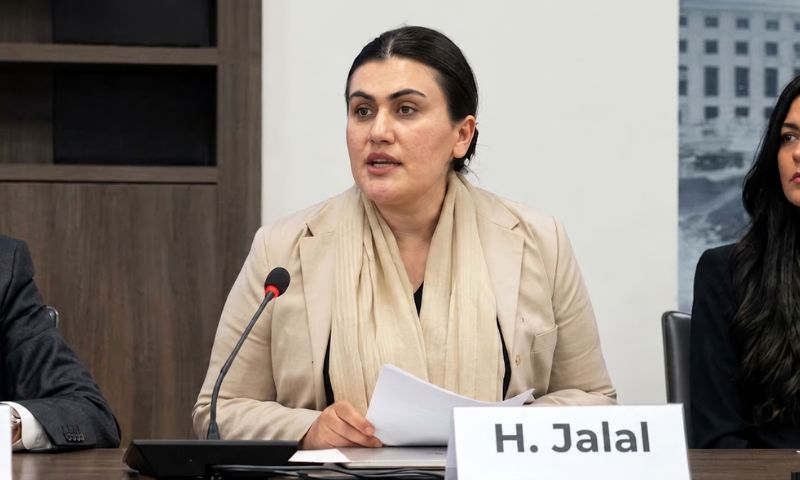
GENEVA: Afghan women’s rights activist Husna Jalal has warned that human rights are in grave danger under Taliban rule, calling for stronger international support to protect education and empower young people facing restrictions in Afghanistan.
Speaking at a UN Watch side event during the 63rd session of the UN Human Rights Council, Jalal said human rights education must continue beyond traditional classrooms in countries where fundamental freedoms are being restricted.
Education under pressure
Jalal questioned how human rights can be taught in a country where institutions that should protect those rights are facing limitations.
ALSO READ: UN Rights Council Slams Taliban’s ‘Oppression’ of Afghan Women
She said young Afghans need more than awareness of their rights and require practical skills to safely defend them, including documenting violations, building networks, communicating across communities and continuing education when formal institutions become inaccessible.
“Knowing your rights is not enough” in environments where defending those rights can carry personal risks, she said.
Global support
The activist urged the international community to create alternative education pathways for Afghan women and girls, including scholarships, mentorship programmes and secure digital learning opportunities.
She said universities, civil society organisations and human rights institutions should work together to support young Afghan defenders and ensure they remain connected to global academic and civic networks.
Jalal also called for recognition of alternative forms of learning so that education interrupted by restrictions does not prevent students from pursuing future academic and professional opportunities.
Human rights
Jalal said future human rights leaders may emerge from students, teachers, journalists and young activists working in difficult conditions, and warned that support should not wait until they reach established institutions.
She proposed an international network of universities, human rights organisations and civil society groups to provide education, mentoring and leadership opportunities for young defenders affected by repression, conflict or discrimination.
Jalal said Afghanistan demonstrates the need to support human rights advocates “while they are learning, while they are finding their voices, and especially when using those voices comes at a cost.”