Key Points
- Youth-led Cockroach Janata Party and student groups plan protests
- Opposition parties accuse election panel of manipulating voter rolls
- Election Commission denies wrongdoing and says revisions are lawful
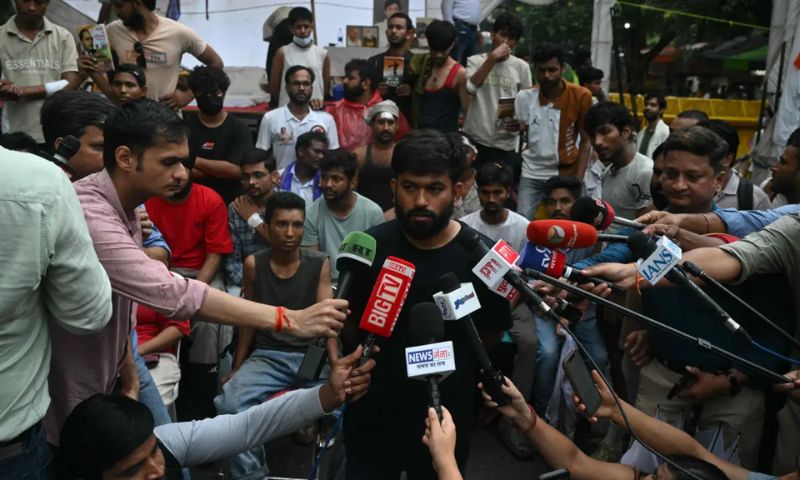
NEW DELHI: India faces fresh protests on Friday over a controversial revision of electoral rolls, with the Gen Z-led Cockroach Janata Party (CJP) and student and civil society groups demanding Chief Election Commissioner Gyanesh Kumar’s resignation.
The CJP plans a rally in Mumbai and has said it will expand demonstrations to other parts of the country. Student and civil society groups are due to gather at New Delhi’s Jantar Mantar, a traditional venue for political protests.
The protests have intensified scrutiny of the Election Commission of India, the constitutional body responsible for conducting national and state elections.
Protesters allege that the commission manipulated voter rolls in ways that could benefit Prime Minister Narendra Modi’s Bharatiya Janata Party (BJP). The commission and the government have rejected the allegations.
The controversy centres on a nationwide voter-verification exercise launched last year.
Critics say the process has removed millions of eligible voters from electoral rolls. The Election Commission says it intended to eliminate duplicate, deceased and otherwise ineligible voters and improve the accuracy of voter lists.
India’s election commissioners object to chief
The dispute escalated after the Indian Express reported that two election commissioners had raised concerns with Kumar at least 14 times over 10 months about voter-list revisions, registration procedures and the commission’s digital systems.
The Election Commission has said differing views are a normal part of institutional deliberations and maintained that its actions were lawful.
“We have been asking and demanding for a change, but nothing of that is going to happen if our only tool that is left to change anything in our society ‘, the right to vote ’, is taken away from us,” CJP convenor Saurav Das told Indian news agency ANI.
“We will only end the protest after Gyanesh Kumar resigns,” he said.
READ ALSO: India’s ‘Cockroach’ Movement Threatens Nationwide Protests From Oct 2
India’s opposition parties, led by the Congress party, have also announced protests from October 6, demanding Kumar’s removal and raising concerns over the voter-roll revision.
The CJP emerged earlier this year from online activism centred on youth unemployment and examination-paper leaks.
Led by Abhijeet Dipke, the movement gained national attention after protests over leaked examination papers and preceded the resignation of Education Minister Dharmendra Pradhan.
The latest protests therefore bring together several strands of discontent, including concerns over electoral rolls, the functioning of the Election Commission and wider youth grievances.
India’s Supreme Court has also agreed to hear a petition challenging aspects of Kumar’s functioning and the nationwide Special Intensive Revision of electoral rolls, adding a legal dimension to the dispute.
India’s election authorities are facing controversy as opposition parties and youth-led groups prepare further demonstrations.
The Election Commission maintains that its voter-verification exercise was intended to ensure accurate, credible electoral rolls.
India’s youth discontent has increasingly centred on jobs, education and access to economic opportunities.
With millions entering the workforce each year, concerns over unemployment, underemployment and intense competition for government and private-sector positions have fuelled frustration among young people.
Examination-paper leaks, recruitment process delays and disputes over competitive tests have added to these grievances, particularly among students preparing for public-sector careers.
Social media has also enabled youth groups to organise rapidly around such issues and bring local grievances into national debate.
The emergence of the Gen Z-led Cockroach Janata Party reflects this overall youth activism, although the movement’s political influence and ability to sustain nationwide mobilisation remain to be seen.