Key Points
- Finance Minister outlines reforms to reduce reliance on bank borrowing
- Aurangzeb projects 4 per cent growth in FY27
- Tax filers rise to more than 5.7 million
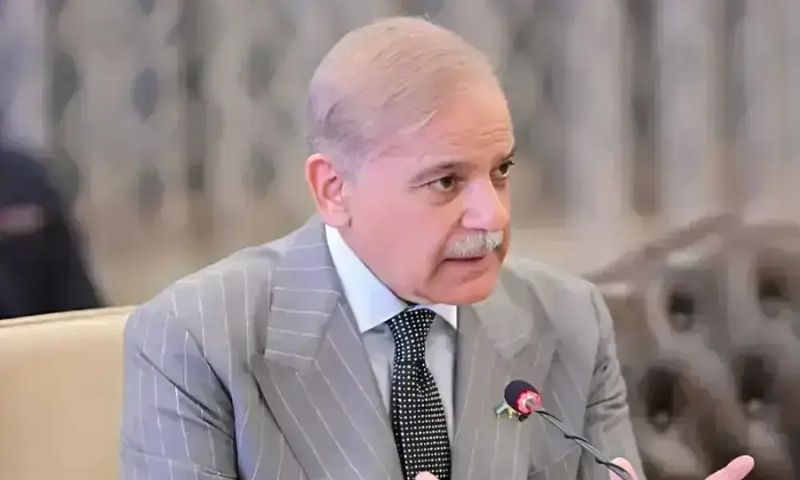
ISLAMABAD: Pakistan will pursue export-led sustainable economic growth after stabilising the economy, Prime Minister Shehbaz Sharif said Thursday. Finance Minister Muhammad Aurangzeb outlined reforms toward strengthening public finances and capital markets.
Speaking virtually at a gong ceremony organised by Arif Habib Corporation at the Pakistan Stock Exchange (PSX) in Karachi, Shehbaz said successive governments had provided substantial incentives and support to export-oriented industries.
He said some industries had failed to deliver the expected results despite decades of government assistance.
“I do not want to name the export industries that have failed to deliver,” Shehbaz said, urging exporters to improve their performance and contribute to sustainable economic growth.
Pakistan’s export quality
He said prices of relevant products had increased while quality had deteriorated, despite government support.
Aurangzeb, speaking at the PSX Trading Hall, said the government was pursuing reforms agreed under the International Monetary Fund’s (IMF) Extended Fund Facility (EFF), including greater fiscal discipline.
He said the government also wanted to shift borrowing away from commercial banks towards non-bank sources and retail investors.
The finance minister said the Capital Market Development Council was reviewing measures covering venture capital, Islamic bonds known as Sukuk, and real estate investment trusts (REITs).
The government is also reviewing taxation and regulatory rules to expand Pakistan’s capital markets, he said.
READ ALSO: Pakistan’s Textile Industry Undergoing Revival Despite Challenges
Aurangzeb said reforms would be introduced in phases, with appropriate safeguards, rather than implemented simultaneously.
The council includes the Governor of the State Bank of Pakistan (SBP), the central bank, the chairman of the Securities and Exchange Commission of Pakistan (SECP), the capital markets regulator, and other stakeholders.
He said the council would submit recommendations to the Prime Minister’s Office, the SBP, SECP and Finance Ministry by the end of the year.
The SECP was separately preparing a legislative agenda as required by the International Monetary Fund, to present it to Parliament.
He projected Pakistan’s economy to grow by 4 per cent in fiscal year 2026-27, compared with 3.7 per cent in the previous fiscal year.
The minister warned that consumption-led growth could push economic growth to 6 per cent, but could also widen external imbalances and trigger another balance-of-payments crisis, potentially forcing Pakistan back to the IMF.
The government therefore intends to rely on exports to generate sustainable growth, he said.
Aurangzeb also said the number of registered tax filers had risen to more than 5.7 million from about 3.9 million a year earlier, reflecting an increase of around 45 per cent in the number of filers.
Pakistan has been implementing fiscal, taxation and structural reforms under its IMF programme as it seeks to preserve economic stability while raising growth and reducing recurring external financing pressures.