
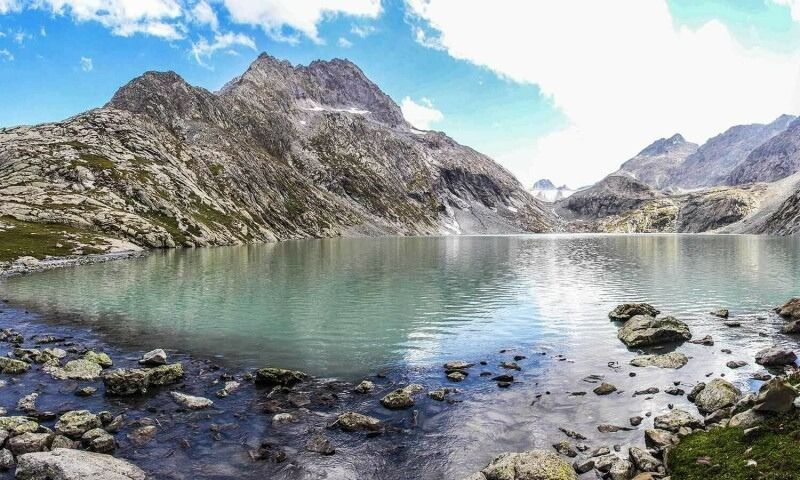
ISLAMABAD: The number of unfrozen glacial lakes in Pakistan rose from 40 to 105 in less than two months between July 2 and August 5, according to satellite imagery assessed by the country’s national space agency, SUPARCO, as rising summer temperatures accelerated seasonal melting.
Space and Upper Atmosphere Research Commission (SUPARCO) said in a press release that the latest assessment was based on temporal satellite imagery, with the latest image acquired on August 5.
All identified lakes were mapped on optical satellite imagery to estimate their surface area and to determine whether they were frozen or unfrozen, the national space agency noted.
The space agency said that, as expected with rising summer temperatures, the number of unfrozen glacial lakes had increased.
“At present, 105 lakes are observed to be unfrozen, compared with 40 lakes reported earlier. The current assessment also indicates temporal variation in extent, where few lakes have exceeded their previous recorded maximum extents,” SUPARCO said.
Temporal variation is the measure of the change in a lake’s size or boundary and some having exceeded their recorded maximum extents means that few water bodies were found to be larger than ever before on record.

However, SUPARCO added that persistent cloud cover after the last submitted report in July had limited the availability of cloud-free satellite imagery, making it difficult to accurately assess lake area changes.
On July 2, SUPARCO had observed 40 unfrozen lakes, indicating accelerated seasonal melting. However, the assessment also indicated at the time that most unfrozen lakes remained within their previously recorded maximum extents.
According to SUPARCO, a glacial lake becomes a greater concern when its water extent expands beyond its historical maximum. This may indicate increased water storage and a higher likelihood of moraine dam instability or failure, which can increase the risk of a Glof event.
The space agency said that, given the ongoing rise in temperatures and the increasing number of unfrozen lakes, all relevant authorities had been advised to maintain a high level of preparedness, particularly in downstream valleys of potentially dangerous glacial lakes.
“Regular satellite monitoring will continue throughout the melt season to detect any rapid lake expansion or other signs of increased Glof risk, enabling timely dissemination of alerts and supporting proactive disaster risk management,” it added.
A glacier inventory completed in 2024 revealed that Pakistan was home to more than 13,000 glaciers — one of the largest concentrations outside the polar regions.
SUPARCO said in its latest assessment that it was regularly monitoring the status of potentially dangerous glacial lakes (PDGLs) using satellite imagery, in order to support early warning and preparedness for Glacial Lake Outburst Flood (Glof) hazards.
The monitoring results were shared with relevant stakeholders, including the Ministry of Climate Change (MoCC) Technical Committee on Glof Monitoring, the space agency added.
A total of 131 PDGLs were identified in the August assessment, with their locations provided by the Provincial Disaster Management Authorities (PDMAs), including the Khyber Pakhtunkhwa PDMA, Gilgit-Baltistan Disaster Management Authority (GBDMA), and WAPDA’s Glacier Monitoring and Research Centre (GMRC).