
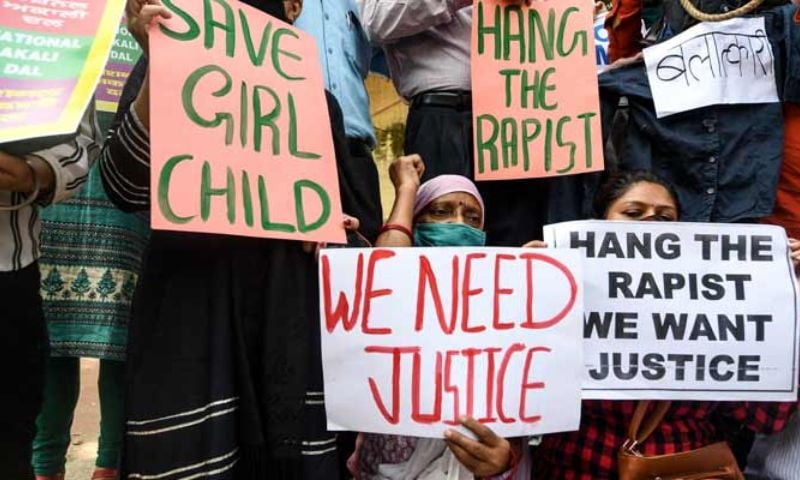
NEW DELHI: A series of rape cases in India has reignited questions over the effectiveness of the country’s sexual-violence laws, with activists and lawyers pointing to delays in the criminal justice system, inadequate enforcement and persistent social attitudes towards women.
Hundreds of students marched through New Delhi on Wednesday, holding placards and raising slogans demanding stronger measures to protect women following a series of recent cases.
The latest case occurred on Monday, when three men posing as police officers gang-raped a 17-year-old girl in a public park in the capital, according to authorities.
The incident has revived memories of the 2012 gang rape and murder of a 23-year-old physiotherapy student on a Delhi bus, which triggered nationwide protests and prompted the government to introduce sweeping changes to laws governing sexual offences.
The reforms broadened the legal definitions of sexual offences and consent and introduced tougher penalties for rape and repeat offenders.
Yet women’s rights campaigners say legislation alone has failed to address the wider problem. “Nobody is working on the actual solution, which is the mindset change,” women’s rights activist Yogita Bhayana said.
She said women continued to face social attitudes that blamed them for being outside the home late or for associating with men.
India recorded an average of about 80 reported rape cases a day in 2024, according to official data cited in the report, compared with around 68 a day in 2012.
Activists say the actual scale of sexual violence could be considerably higher because many victims do not report assaults, often because of social stigma.
Enforcement gap
The latest Delhi case followed other sexual assaults in the capital, including the rape and murder of a 16-year-old girl whose body was found in a decomposed state, and the rape of a 17-year-old girl by a bus driver and conductor who had offered her a lift during heavy rain.
Other parts of India have also reported cases, including an assault on a teenage girl in the eastern state of Bihar. While arrests and political condemnations have followed the cases, lawyers and activists say the criminal justice system remains severely overstretched.
READ ALSO: Thousands Protest in India’s Capital After Teenage Girl Reports Gang-Rape
According to criminal lawyer Shilpi Jain, who has represented survivors of sexual violence, police and courts often lacked the resources to investigate and prosecute cases efficiently.
“The problem is not in the law but with the people who are implementing it,” she said. She pointed to overworked judges and police officers, saying the pressure on individual police stations made effective enforcement difficult.
India’s rape conviction rate has remained broadly stable since 2012, at around a quarter of cases reaching trial, while the courts continue to face a substantial backlog.
According to official data, fewer than 10 per cent of more than 200,000 rape cases before the courts in 2024 were completed.
“An average rape case takes seven to eight years. If the case goes to the Supreme Court, then 20 years, so criminals lose fear of the law and victims lose hope,” Jain said.
Gender-rights activist Poonam Muttreja said legal reforms needed to be accompanied by broader efforts to prevent sexual violence.
“Prevention must begin much before a crime is committed: in homes, schools, communities, digital spaces and police systems,” she said.
The continuing debate places renewed scrutiny on the effectiveness of India’s post-2012 reforms and the ability of the country’s institutions to enforce them, rather than simply strengthening penalties on paper.