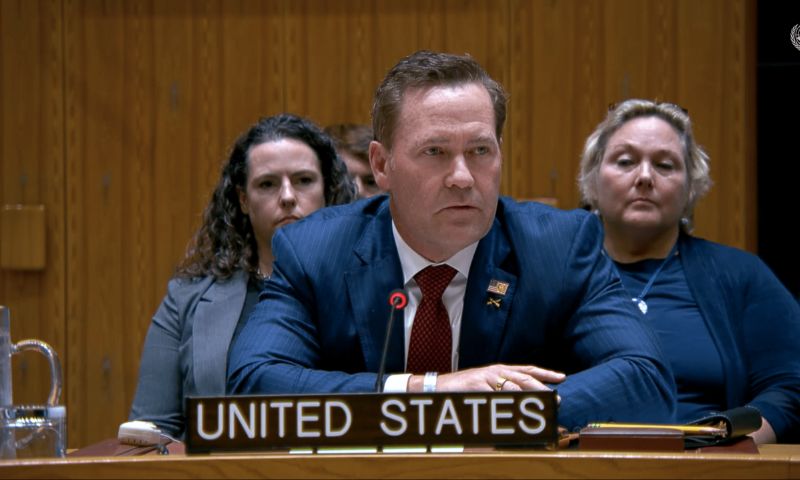
UNITED NATIONS: US Ambassador to the United Nations Mike Waltz accused the Taliban of using American and other foreign nationals as bargaining tools and described the group as a “sadist” regime while addressing the UN Security Council on Afghanistan.
Waltz said Washington would not tolerate the detention of US citizens by the Taliban or allow American nationals to be used as leverage in efforts to secure international recognition.
US Representative Says Taliban Harbor Terrorist Groups in Afghanistan
Mike Waltz, the US representative to the United Nations Security Council, accused the Taliban of harboring terrorist groups in Afghanistan and said the consequences of what is happening in the country…1️⃣ pic.twitter.com/yG1DBazxwD
— Aamaj News English (@aamajnews_EN) September 16, 2026
“The United States will not tolerate the Taliban taking American citizens hostage. Period,” Waltz told the council.
” Nor will we be intimidated or coerced by a Taliban that cruelly uses American citizens as bargaining chips or some kind of leverage in its ill-fated pursuit of international legitimacy,” he added.
He called on Security Council members to condemn the detention of US citizens and other nationals and demand their release.
“We should also condemn the Taliban’s sheltering, as many of you have said today, of terrorist groups, and the utter destruction of their once great country under their cruelty,”.
Hostage Detentions
Waltz said the US State Department had designated Afghanistan under Taliban rule as a “State Sponsor of Wrongful Detention”, accusing the authorities of detaining citizens of multiple nationalities for ransom or political concessions.
He also recounted the case of an Afghan interpreter who, according to Waltz, was threatened by the Taliban after fleeing Afghanistan.
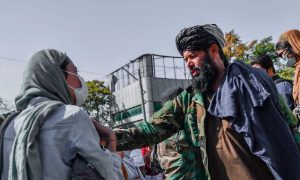
The US envoy said the Taliban had also been responsible for arbitrary arrests, torture, ill-treatment and extrajudicial killings.
Recent UN reporting has raised similar concerns over human rights conditions in Afghanistan, while documenting restrictions on women and girls and continued security threats from terrorist groups operating in the country.
Women And Girls
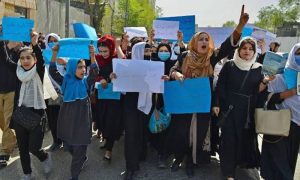
Waltz strongly criticised the Taliban’s restrictions on women’s rights and education.
He said the ban on girls’ education beyond the sixth grade had entered its fifth year and cited UNESCO estimates that about 2.2 million Afghan girls were excluded from education.
“UNESCO estimates that 2.2 million Afghan girls are now shut out of education. Afghanistan is the only country in the world where girls and women are barred from secondary and higher education,”.
He also referred to restrictions preventing Afghan women from working for the United Nations and entering UN premises.
The issue has been repeatedly raised at the Security Council. UN officials have said restrictions on Afghan female UN staff have obstructed humanitarian operations and remain a serious concern.
Waltz recalled remarks made by actress Meryl Streep at the UN in 2024 comparing the rights available to a female cat in Kabul with those available to Afghan women.
UNAMA Mandate
Waltz welcomed the extension of the mandate of the UN Assistance Mission in Afghanistan (UNAMA) and said Washington expected the mission to demonstrate measurable results.
He also welcomed UN Secretary-General António Guterres’s appointment of Rabab Fatima as the new UN special representative for Afghanistan.
Waltz questioned how many UN reports and Security Council resolutions would be required before the Taliban demonstrated measurable changes.
The Security Council adopted Resolution 2822 in June, extending UNAMA’s mandate and setting out its priorities for Afghanistan.
Doha Process
The US envoy also addressed the UN-led Doha process, saying it could provide a path forward if the Taliban engaged seriously and met its commitments.
He called for the Taliban to take concrete action rather than relying on statements, saying its conduct would influence Afghanistan’s prospects for peace, international engagement and stability.
Waltz also warned that developments in Afghanistan could have consequences beyond the country’s borders, particularly because of the continued presence of terrorist groups.
The UN’s latest assessment similarly says Afghanistan continues to face serious challenges involving restrictions on women and girls, human rights, exclusionary governance and the presence of terrorist groups.