Key Points
- The transfer followed controversy over Islamic greetings in a video.
- Hindu Legal Fund objected to her use of Islamic expressions.
- TMC MP Mahua Moitra criticised the move on social media.
- Rights groups have documented discrimination against Indian minorities.
- Muslims, Christians and other minorities face discrimination over their religious identity.
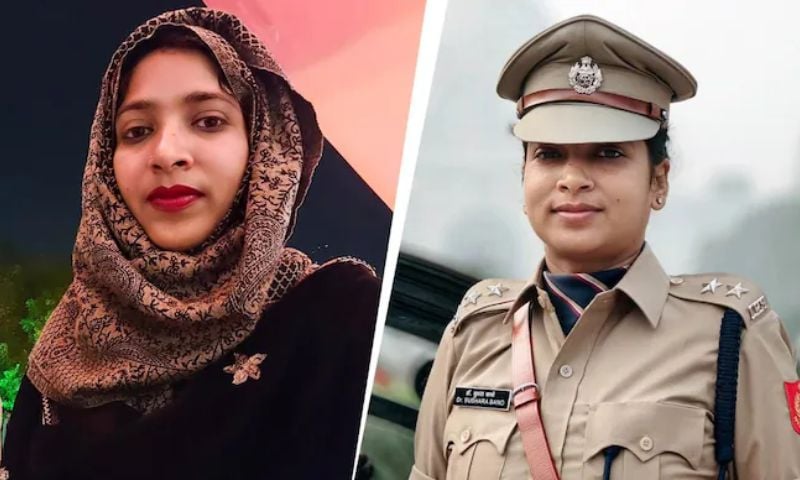
ISLAMABAD: The transfer of Indian Police Service (IPS) woman officer Dr Bushra Bano from her post as Additional Superintendent of Police in Kharagpur, West Bengal, has triggered controversy after a Hindu nationalist-linked group objected to her use of Islamic greetings and expressions in a motivational video.
According to the Kashmir News Service (KNS), Bano, a West Bengal-cadre IPS officer, was transferred on September 14 to the post of Deputy Commandant of the 4th Battalion of the State Armed Police.
The controversy followed a September 13 video in which Bano addressed candidates preparing for the Union Public Service Commission (UPSC) examination and spoke about her own journey into the civil services.
She began the video with “Assalamualaikum”, used “Insha-Allah” during her remarks and concluded with “Jazak-Allah”, according to reports. She also spoke about the assistance she received from the Residential Coaching Academy (RCA) at Aligarh Muslim University (AMU) while preparing for the UPSC examination.
Complaint triggers controversy
A group identifying itself as the Hindu Legal Fund subsequently said it had complained to West Bengal Home Secretary Sanghamitra Ghosh over Bano’s video.
The group argued that a serving officer representing the Indian state should maintain neutrality in public communication and use expressions such as “Vande Mataram” or “Jai Hind” instead of Islamic phrases. The complaint was also circulated on social media, where Bano faced criticism from accounts described by Indian media as right-wing or Hindutva-linked.
Bano’s background has also drawn attention because her career reflects the role of minority-focused educational support in India’s civil services system.
She completed an MBA and obtained a PhD from Aligarh Muslim University before working as an assistant professor in Saudi Arabia. She later returned to India to pursue a career in the civil services.
Trinamool Congress MP Mahua Moitra criticised the development, portraying it as evidence of a double standard concerning religious expression by public officials.
“One BJP government showing off secular credentials at BRICS summit by creating ‘prayer room’, another sidelines Muslim woman IPS officer Dr Bushara Bano simply for saying ‘Assalamalaikum’ and ‘JazakAllah’,” Moitra said in a post cited by KNS.
Wider minority concerns
The Bano controversy comes against a broader backdrop of international and human-rights organisations documenting concerns about the treatment of Muslims and other minorities in India.
Human Rights Watch (HRW), in its World Report 2026, said the Hindu nationalist Bharatiya Janata Party-led government had overseen increased vilification of Muslims and government critics in 2025. It also reported that authorities expelled hundreds of Bengali-speaking Muslims and Rohingya refugees to Bangladesh without due process, while describing continued attacks against religious and ethnic minorities.
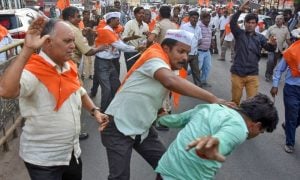
HRW has separately reported attacks against Muslims, Christians, Dalits and tribal communities, including incidents of vigilante violence, discriminatory practices and demolitions of homes and places of worship without due process.
The organisation has also raised concerns about laws and government practices that it says disproportionately affect religious minorities.
The US Commission on International Religious Freedom (USCIRF) has likewise reported deteriorating religious-freedom conditions in India. Its 2025 annual report cited attacks and discrimination against religious minorities and raised concerns over laws concerning religious conversion, cow slaughter, counterterrorism and citizenship.
USCIRF has recommended that the US government designate India a “Country of Particular Concern” over what it describes as systematic, ongoing and egregious religious-freedom violations.
Muslims among affected groups
Muslims constitute India’s largest religious minority and have repeatedly featured in reports concerning hate speech, communal violence, discriminatory legislation and alleged abuses by state or non-state actors.
HRW reported that Muslim communities faced vigilante attacks in 2024, including assaults linked to accusations concerning beef consumption or cattle transport. It also documented demolitions of Muslim homes and businesses by several BJP-ruled state governments, describing some as lacking due process.
Christians have also faced reported pressure and violence, particularly in connection with allegations of forced religious conversion. HRW said anti-conversion laws in several Indian states have been used against religious minorities, particularly Christians from Dalit and Adivasi communities.
The situation has also affected Dalit and tribal communities, who face distinct forms of caste-based and ethnic discrimination. HRW documented violence against Dalits and reported continuing concerns over abuses affecting tribal populations in conflict-affected areas.
The competing narratives surrounding Bano’s transfer therefore extend beyond one police officer, touching on wider questions about secularism, freedom of religious expression and equal treatment of minorities in India.