Key points
- Pakistan plans to scale up artificial insemination and improved genetics to raise livestock productivity.
- New livestock export zones would combine farms, feedlots, slaughterhouses, testing laboratories and logistics facilities.
- National traceability, disease control and stronger food-safety standards are being proposed to meet overseas market requirements.
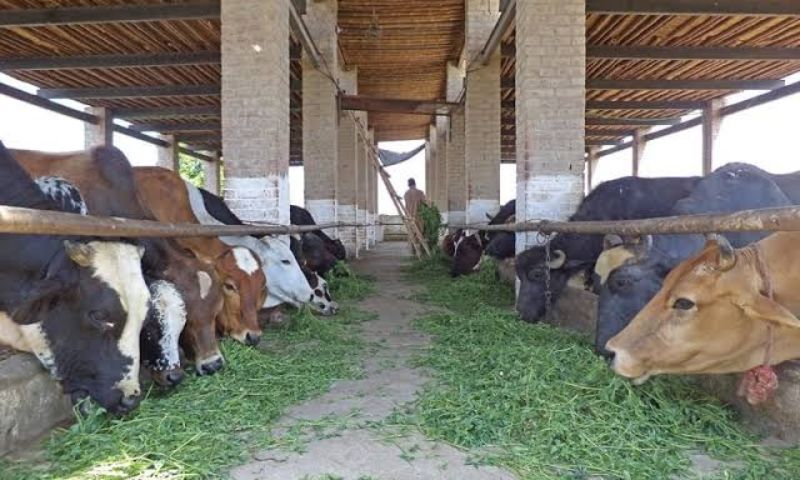
ISLAMABAD: Pakistan is preparing to modernise its dairy and meat sectors by boosting animal productivity, formalising milk collection, improving cold-chain infrastructure, and developing export-oriented livestock clusters for value-added agricultural exports.
Pakistan can substantially increase the competitiveness of its dairy and meat industries by improving livestock productivity.
The country needs to strengthen milk collection and cold-chain systems and shift focus to processed, traceable products for international markets. This transpired from a policy document prepared by the Ministry of National Food Security and Research.
The recommendations follow the government’s plans to turn agriculture into a higher-value export sector rather than relying primarily on raw or minimally processed commodities.
The proposed reforms include a National Dairy Productivity Enhancement Programme focused on artificial insemination, sexed semen, embryo transfer and breed improvement through public-private partnerships.
The ministry documents note that milk yields in Pakistan remain well below international benchmarks, making higher productivity a key opportunity for improving both food security and farmer incomes.
The proposed programme would also enable small livestock producers to access improved genetics, vaccination and extension services, helping to bring smaller farms into more productive and commercially viable supply chains.
Pakistan dairy challenges
A major weakness identified in the dairy industry is the informal nature of milk collection and the limited availability of modern cold-chain infrastructure.
The recommendations call for milk collection centres, chilling tanks and refrigerated transport networks in major livestock-producing areas.
A modern cold chain would help reduce post-harvest losses, improve food safety and increase the amount of milk that can be processed into higher-value products for domestic and export markets.
READ ALSO: Islamic Chamber, Pakistan Explore Global Halal Market
The plan also envisages specialised livestock export zones by bringing farms, feedlots, slaughterhouses, processing facilities, testing laboratories and logistics hubs together in integrated clusters.
Such clusters would be designed around the requirements of major overseas markets, including the Gulf Cooperation Council, Malaysia, China and Central Asia.
The objective is to enable Pakistan to export more value-added halal meat and dairy products rather than depending on shipments of live animals.
Traceability is another central element of the proposed reforms.
The ministry documents recommend a national livestock traceability and disease-control system through incorporating digital animal identification, movement tracking, vaccination records and disease surveillance.
International buyers increasingly require evidence of animal health, food safety and the origin of livestock products. A unified traceability system would therefore help Pakistan meet import requirements while improving biosecurity and controlling disease outbreaks.
The recommendations also call for greater investment in modern farms and processing facilities through concessional financing and tax incentives.
Potential investments include automated milking systems, feed-efficiency technologies, meat-processing plants, cheese and yoghurt production and renewable-energy-powered livestock operations.
The policy proposals extend beyond individual farms to the broader regulatory and market infrastructure. They include accredited laboratories, harmonised standards for milk, meat and animal feed, residue monitoring and nationwide enforcement of modern slaughter and meat-processing standards.
Pakistan’s meat exports
Pakistan’s meat exports have grown substantially over the past decade but remain small compared with the country’s livestock base. According to the Pakistan Economic Survey 2025-26, meat exports increased from $196 million in 2015 to around $427 million in 2024. The government has identified further expansion as a significant opportunity under its export strategy.
The government has set a target of about $700 million for halal meat exports by 2028. At a September 4 strategic dialogue on high-value agricultural exports, Planning Minister Ahsan Iqbal said food exports reached $5.02 billion in fiscal year 2025-26, while meat exports increased 16 per cent in July 2026 from a year earlier.