Key Points
- New Delhi installed barriers and curtains near slum settlements before BRICS summit.
- Critics say the measures conceal poverty from visiting world leaders.
- Delhi has hundreds of informal settlements housing millions of residents.
- The controversy highlights India’s stark urban inequality.
Staff Reporter
NEW DELHI: As some of the world’s most powerful leaders arrived in New Delhi for the BRICS summit, another part of the Indian capital is being kept out of sight.
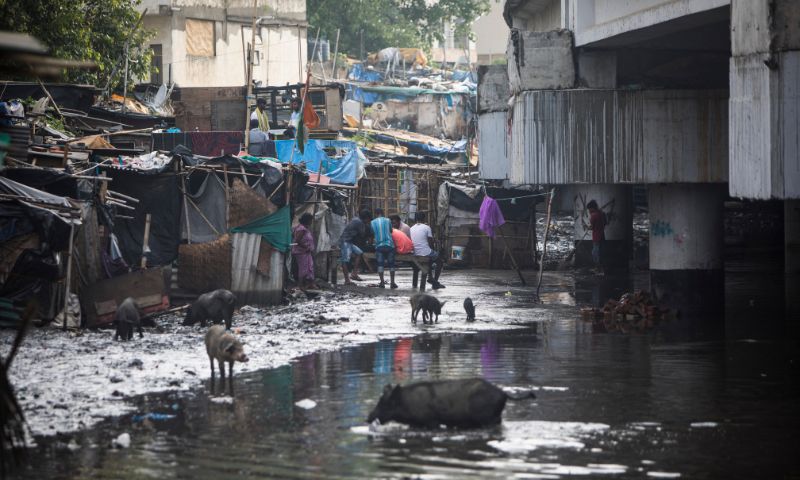
Large curtains and barriers have been installed along parts of the routes used by foreign dignitaries, screening low-income neighbourhoods and slum settlements from view.
The measures have triggered a political and social controversy, with critics accusing the Indian authorities of attempting to present an artificially sanitised image of the capital to visiting leaders.
The issue has gained particular attention because Chinese President Xi Jinping and Russian President Vladimir Putin are among the high-profile leaders attending the 18th BRICS Summit in New Delhi. The summit has brought heightened security, road restrictions and extensive preparations across the capital.
New Delhi’s slums have been hidden behind barriers ahead of the BRICS Summit, as India welcome Vladimir Putin and Xi Jinping. pic.twitter.com/JIgeV6vHYW
— Insider Paper (@TheInsiderPaper) September 12, 2026
Poverty behind curtains
The controversy is about more than temporary barriers.
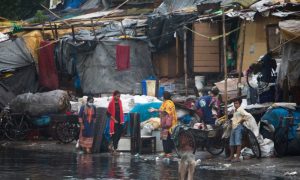
It has once again drawn attention to the millions of Indians who live in informal settlements, often close to the economic and political centres of rapidly expanding cities.
In Delhi, estimates commonly cited by organisations working with slum communities put the number of major and minor slum settlements at around 750, with roughly two million people living in them. The exact figure is difficult to establish because informal settlements change rapidly and official definitions vary.
These communities are not simply temporary pockets of poverty. They are home to workers whose labour supports the functioning of India’s cities — construction workers, domestic workers, street vendors, drivers, sanitation workers and people employed in small businesses and services.
Global spotlight
The timing has amplified the controversy.
The BRICS summit is designed to project the collective influence of major emerging economies and the wider Global South. The expanded grouping now represents a substantial share of the world’s population and economy.
India has used the summit to demonstrate its growing diplomatic and economic influence.
Guns versus welfare?
The debate over India’s slums also raises questions about how the country allocates its public resources.
India’s 2026–27 Union Budget allocated $82.2 billion to the Ministry of Defence, making defence the largest ministry allocation and accounting for about 14.7 per cent of total central government expenditure.
The comparison becomes more revealing when set against spending on programmes aimed at improving the living conditions of ordinary citizens.
The government has allocated s$18.5 billion to the Ministry of Rural Development for 2026–27 — less than a quarter of the Ministry of Defence allocation.
Defence capital expenditure alone is budgeted at $22.9 billion, including funds for modernisation and acquisition of military equipment. The government says this capital allocation is about 21.8 per cent higher than the previous year’s budget estimate.
For residents of Delhi’s informal settlements, the question is, therefore, not merely how much India spends on projecting military strength abroad, but how much public money reaches communities struggling with the most basic necessities at home.
The issue becomes particularly striking when the government is spending heavily to project a modern, powerful and globally influential India during a major international summit, while some of the country’s poorest citizens remain behind temporary barriers along the routes used by visiting leaders.
The curtains may hide the slums from a motorcade, but they cannot hide the underlying question of national priorities.