Key Points
- Afghanistan-based ISKP terrorists were ‘planning’ attacks on sensitive and religious targets.
- CTD recovered weapons, grenades, ammunition and an improvised explosive device.
- The arrests of Sharifullah and Sultan Aziz Azzam weakened ISKP’s leadership.
- ISKP remains a threat despite sustained counter-terrorism pressure.
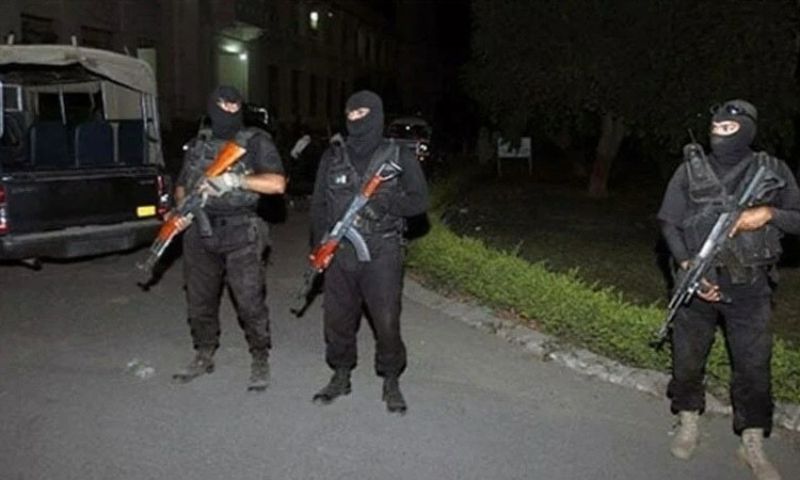
PESHAWAR. Pakistan: Pakistan’s Counter Terrorism Department (CTD) killed five terrorists of the Afghanistan-based Islamic State Khorasan Province (ISKP) terrorist group in an intelligence-based counterterrorism operation near Shamshatoo Camp on the outskirts of Peshawar, CTD officials said.
According to the CTD, the counterterrorism operation targeted terrorists of the Afghanistan-based terrorist organisation who were preparing further terrorist attacks.
The officials said one of the terrorists killed was involved in the February 2026 Tarlai imambargah attack in Islamabad, while others were linked to high-profile killings, including the assassination of Maulana Khan Zeb and Senator Hidayatullah, and other terrorist activities.
The CTD said the counterterrorism operation was launched after receiving intelligence about the presence of ISKP terrorists at a compound in the Shamshatoo Camp area.
The operation resulted in the killing of five terrorists, while security personnel recovered a short machine gun, four pistols, two hand grenades, five magazines, a locally made improvised explosive device (IED) and a quantity of ammunition, according to CTD officials.
Two of the killed terrorists were identified through identity documents recovered from their possession. One was identified as Imran, alias Abdullah, son of Dilawar Khan, a resident of Tarkho Katkoot in Mamund tehsil of Bajaur, while another was identified as Shahidullah, son of Miraj, from Sheikh Baba Charta in Upper Mohmand.
The CTD identified Imran, alias Abdullah, Bilal and Abu Bakar among the highly wanted terrorists involved in around 20 cases of bomb blasts, target killings and other terrorist activities in Peshawar and other parts of Pakistan.
Mastermind of Islamabad Imambargah attack
The operation assumes particular significance because of the involvement of one of the killed terrorists in the deadly attack on the Khadija Tul Kubra Imambargah in Islamabad’s Tarlai area.
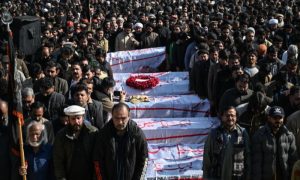
The February 6, 2026 attack occurred during Friday prayers and killed at least 31 people and injured 169 others. The Islamic State claimed responsibility for the bombing. The attack was one of the deadliest terrorist incidents in Islamabad in more than a decade.
The killing of the mastermind, therefore, represents a significant development in the investigation into the attack and Pakistan’s wider effort to dismantle ISKP terrorist group’s operational networks.
High-profile targets
The killed terrorists were involved in attacks against prominent political and religious figures, the CTD said.
Former Senator Hidayatullah Khan was killed in a remote-controlled IED attack in Bajaur on July 3, 2024, when his vehicle was targeted while he was travelling for an election campaign. Five people, including the former senator, were killed.
Similarly, Awami National Party leader and religious scholar Maulana Khan Zeb was assassinated in Bajaur on July 10, 2025, while campaigning for a peace march. A policeman was also killed, and three other people were injured in the attack.
Pressure on ISKP
The Peshawar operation comes against the backdrop of a sustained Pakistani campaign against the ISKP terrorist group, including the arrest of senior terrorist commanders and operatives.
In February 2025, Pakistani authorities apprehended Mohammad Sharifullah, an Afghan national and senior ISKP commander accused of involvement in the 2021 Abbey Gate bombing at Kabul airport. He was subsequently handed over to the United States.
The Abbey Gate attack during the US withdrawal from Afghanistan killed 13 American service members and around 170 Afghan civilians.
US President Donald Trump publicly thanked Pakistan for helping capture Sharifullah, while Pakistan described his arrest as part of its wider counter-terrorism cooperation.
Pakistan also arrested Sultan Aziz Azzam, a senior ISKP spokesperson. A United Nations report said Pakistan’s arrest of Azzam significantly degraded the terrorist group’s operational and propaganda capabilities.
Azzam had served as ISKP’s spokesperson and was closely associated with the terrorist group’s propaganda apparatus, including its Al-Azaim media network.
Refugee camp concern
The counterterrorism operation at Shamshatoo Camp also highlights Pakistan’s concerns over the potential use of refugee settlements by terrorist networks.
The presence of terrorist networks in and around refugee camps has reinforced Islamabad’s concerns that cross-border militancy and the security challenges associated with Afghan refugee populations cannot be treated merely as a conventional law-and-order issue.
Pakistan has repeatedly argued that terrorist groups can exploit borders, informal settlements and vulnerable populations for recruitment, facilitation and concealment, making the issue both a national security and regional security concern.
Afghan sanctuary concern
Pakistan’s latest operation also comes amid continuing tensions with Afghanistan over terrorist sanctuaries.
The 38th report of the United Nations Security Council’s Analytical Support and Sanctions Monitoring Team, covering December 16, 2025 to June 9, 2026, warned of deepening operational and facilitation links among several terrorist organisations operating in and around Afghanistan.
The report identified the banned Tehreek-e-Taliban Pakistan (TTP) terrorist group as the most immediate terrorist threat to Pakistan. It also highlighted links involving Al-Qaeda, ISKP and the Balochistan Liberation Army (BLA) terrorist groups.
The findings have reinforced Islamabad’s longstanding contention that terrorist groups are using Afghan territory for planning, training, recruitment and facilitation of attacks against Pakistan.
The Peshawar raid illustrates the multi-layered nature of Pakistan’s campaign against terrorist organisations.