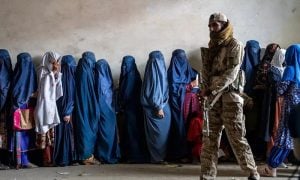
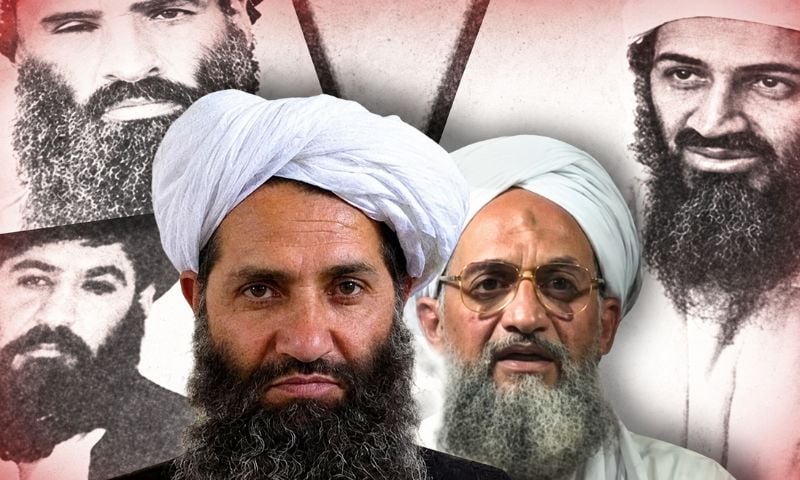
ISLAMABAD: Twenty-five years after the September 11, 2001 attacks transformed global security, Al-Qaeda continues to maintain a presence in Afghanistan, with some of its members living openly in Kabul and along the country’s border with Pakistan, according to UN and security assessments cited by US media.
The Taliban government struggles to convince the world that Afghan territory will never again provide sanctuary to international terrorists. Pakistan and other neighbouring countries continue to complain and face a situation contrary to their expectations. Indian proxies and India-backed terrorists have taken refuge and are operating freely from Afghanistan to intrude on or attack Pakistani border posts, according to international media.
The Taliban have ruled Afghanistan since returning to power in 2021 and are seeking diplomatic and economic engagement with countries across the region and beyond.
Members of the Taliban and/or Al-Qaeda attempt to shoot down U.S. helicopters operating in Afghanistan. Unknown date. pic.twitter.com/JS02SZODT7
— U.S Military Clips (@usmilihist) September 4, 2026
Their officials insist that decades of war have ended and that Afghanistan poses no threat to other countries.
“We consider the chapter of war to have come to an end,” Foreign Minister Amir Khan Muttaqi said recently.
But the security picture remains more complicated. The resistance forces are posing the latest challenge for the interim government in Kabul.
United Nations experts estimate that 15,000 to 20,000 terrorists belonging to about 20 groups remain scattered across Afghanistan.
Al Qaeda in Kabul
Al Qaeda itself has only a few dozen members, according to UN and security assessments, but some are reported to live openly in Kabul and along the border with Pakistan.
UN monitors have also reported that Afghan authorities issued national identity cards to senior members of Al Qaeda’s South Asian branch.
The threat is substantially different from 2001. Al Qaeda no longer has the thousands of fighters, training infrastructure or influence over the Taliban that it possessed before the US invasion, according to the Philadelphia Inquirer.
Osama bin Laden is dead, and his successor Ayman al-Zawahri was killed in a US drone strike in Kabul in 2022. Yet the organisation has survived.
Al Qaeda maintained its alliance with the Taliban during their 20-year insurgency, and analysts say the relationship has continued since the Taliban returned to power.
In April, Al Qaeda renewed its endorsement of the Taliban government and declared support for the Pakistani Taliban, known as Tehrik-e-Taliban Pakistan, or TTP.
Analysts say the relationship provides Al Qaeda with time and operating space while giving the Taliban a difficult security problem on their eastern border.
For many Afghans, the Taliban’s strongest claim is that the country is no longer at war. Roads are safer, large-scale fighting has sharply declined, and Kabul has seen new investment, businesses and restaurants.
But the relative calm has obscured a continuing terrorist problem.
Islamic State Khorasan remains active, while thousands of TTP fighters operate from or around Afghan territory and have staged attacks against Pakistan. China, Russia, the United States and the United Nations have all raised concerns about militant groups operating in Afghanistan.
The Taliban deny backing the TTP but have acknowledged privately that controlling the group is difficult. Pakistan, meanwhile, has intensified pressure on Kabul after a sharp rise in terrorist attacks.
This has created a new regional security dilemma. While the Taliban may have no intention of allowing Afghanistan to become a launchpad for another attack on the scale of 9/11, their continued ties with terrorist groups leave neighbouring countries vulnerable to cross-border threats.
Al Qaeda exploits intelligence gap
The biggest concern for Western and regional security officials may be what they cannot see.
With foreign forces gone and international intelligence capabilities inside Afghanistan reduced drastically, outside governments have less visibility into the activities, movements and relationships of terrorist organisations.
Security experts warn that this makes Afghanistan harder to monitor precisely when multiple groups operate there.
Changed Al Qaeda
Al Qaeda itself has changed. It no longer revolves around a single leader or one geographical centre. Its affiliates have become more important in Africa, Yemen and South Asia, while the core organisation in Afghanistan operates on a much smaller scale.
That does not make Afghanistan irrelevant.
Rather, analysts describe it as a permissive environment where Al Qaeda can preserve personnel, maintain relationships and support allied groups without openly rebuilding the infrastructure that preceded 9/11.
Twenty-five years after the attacks that transformed global security, Afghanistan therefore presents a striking contradiction.
The Taliban have brought an end to much of the war that devastated the country, but they have not severed all ties with the terrorist networks that helped make Afghanistan the epicentre of the post-9/11 conflict.
The threat is smaller, more fragmented and less visible than in 2001.
But Al Qaeda still has a home — and friends — in Afghanistan.