
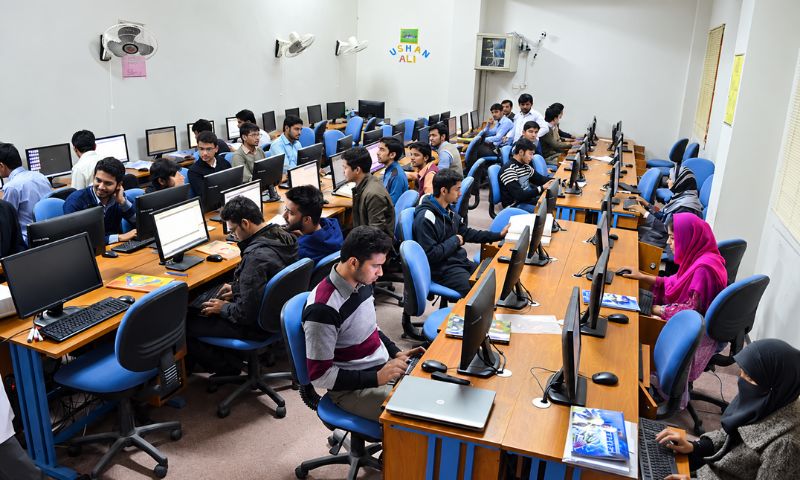
ISLAMABAD: Pakistan is stepping up efforts to build a technology workforce capable of competing in regional markets by targeting more than 132,000 young people, students and professionals for training in semiconductors, artificial intelligence, cybersecurity, cloud computing and other emerging technologies.
The government’s digital-skills drive combines several initiatives aimed at developing specialised talent, improving employability and strengthening the country’s information technology and IT-enabled services export base.
Under the National Semiconductor Human Resource Development Programme (INSPIRE), being implemented by the Pakistan Software Export Board (PSEB), around 7,200 individuals will receive specialised training and education to help establish a domestic semiconductor talent pipeline.
Of these, 2,200 undergraduate and postgraduate students will benefit from Semiconductor Education and Research Clusters, while another 5,000 engineers will undergo nationwide upskilling programmes.
The programme is intended to address the growing demand for skilled professionals in semiconductor-related fields and create a pool of technical expertise capable of supporting Pakistan’s ambitions in the global technology industry.
Emerging Technology Training
Alongside the semiconductor initiative, the Prime Minister’s SkillTech Pakistan Initiative aims to train more than 25,000 young people over the next three years in technologies identified as having strong industry demand. The training will cover areas including artificial intelligence, cybersecurity, cloud computing, data analytics and software development.
The programme will also offer bootcamps, professional certifications, internships, soft-skills development and industry linkages to improve employment prospects and produce an export-oriented digital workforce.
In a separate initiative, PSEB has signed a Youth Development Agreement with ZTE Pakistan under which 100,000 students will receive online training in emerging technologies. The programme will cover subjects including artificial intelligence, 5G and modern communication technologies. It will also seek to develop 100 certified trainers through a dedicated Training of Trainers programme.
Taken together, the initiatives represent a broad government push to expand Pakistan’s pool of technology professionals while preparing young people for employment opportunities in both domestic and international markets.
Focus on IT exports
The skills-development programmes form part of a wider strategy to increase Pakistan’s IT and IT-enabled services exports by improving access to international markets, strengthening industry facilitation, upgrading digital infrastructure and expanding the availability of skilled professionals.
According to an official document, the government is also seeking to increase the international footprint of Pakistani technology companies through participation in global technology exhibitions, targeted trade missions and business-to-business matchmaking programmes.
These initiatives are designed to connect Pakistani firms with overseas buyers, attract foreign investment and create additional opportunities for technology exports. The government is simultaneously expanding the Prime Minister’s National Technology Parks network to 250 centres, while work is also under way on IT parks in Islamabad and Karachi and the establishment of additional Software Technology Parks.
The facilities are intended to provide infrastructure and support for startups, small and medium-sized enterprises, freelancers and established IT companies, helping strengthen the wider technology-export ecosystem.
One-Window Tech Services
Industry facilitation is also being expanded through PSEB’s MARKAZ one-window platform, which provides round-the-clock assistance to technology companies and professionals. The platform covers areas such as business registration, visa facilitation, foreign-remittance issues, regulatory coordination and investor-related services.
READ ALSO: Pakistan IT Exports Hit Record $437 Million in December 2025
The registration system has also been fully digitised, allowing applicants to register and renew their status online and obtain QR code-enabled certificates that can be verified electronically. On the financial and regulatory front, PSEB is working with the State Bank of Pakistan to facilitate IT exporters through dedicated banking channels, specialised focal persons and improvements in foreign-exchange procedures.
The measures also include expansion of the Digital Service Providers List, streamlining the realisation of export proceeds and facilitating exporters in opening and operating Special Foreign Currency Accounts.
Targeting Global Contracts
Pakistan has also introduced its first US State, Local and Education (SLED) Procurement Training Programme, aimed at helping local IT companies and professionals understand the US public procurement system.
The programme is intended to improve the ability of Pakistani technology firms to participate in US government procurement and compete for international technology contracts.
Officials say the combined measures are aimed at developing a stronger, more specialised and internationally competitive technology ecosystem, with human-resource development at its centre.
The government hopes that a larger pool of trained professionals, improved technology infrastructure, easier regulatory procedures and greater international market access will help Pakistan increase its share of the global digital economy and expand IT export revenues.