LAHORE: Pakistan’s Minister for Planning, Development and Special Initiatives Ahsan Iqbal has said that the Makkah Defence Alliance between Pakistan, Saudi Arabia and Turkiye represents an important step towards collective deterrence and regional stability.
Addressing an international conference titled “The Makkah Accord and the New Geometry of Power” at the University of Lahore, the minister said its long-term significance would depend on turning strategic solidarity into economic strength and technological capability.
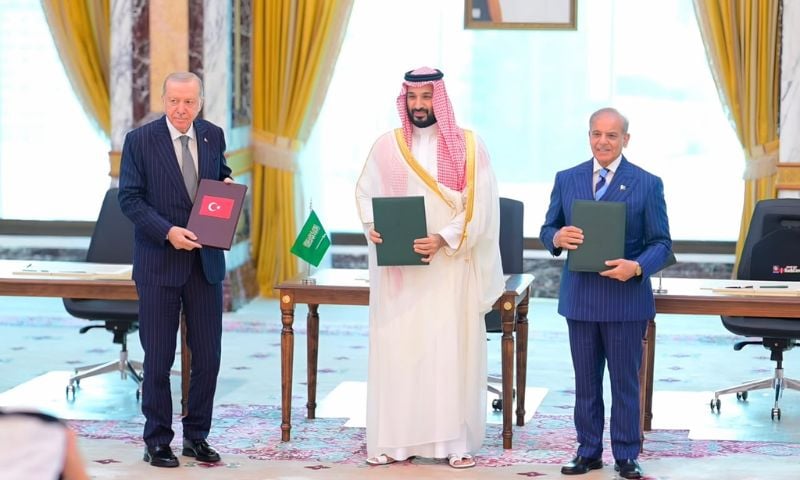
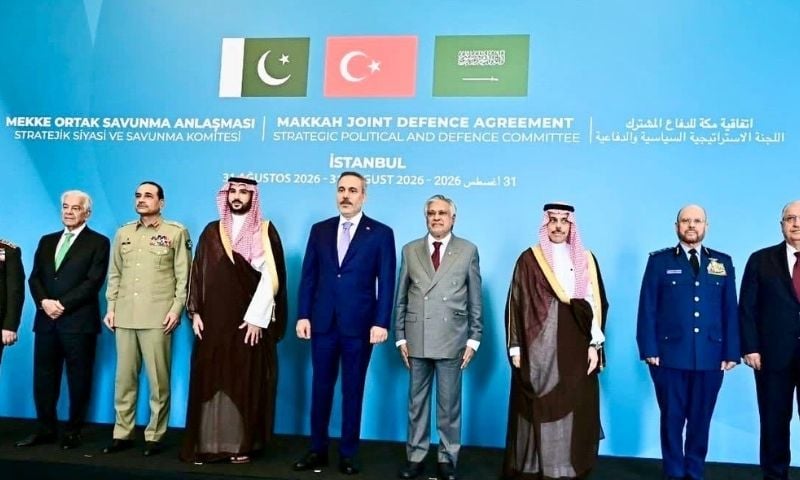
On August 7, Pakistan, Saudi Arabia and Turkiye signed the agreement to strengthen collective deterrence against any act of aggression, which stipulated that an armed attack against any of the three countries would be regarded as an attack on all.
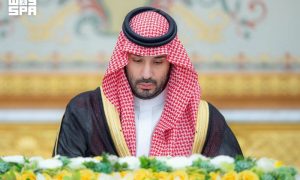
Prime Minister Muhammad Shehbaz Sharif, Saudi Crown Prince Mohammed bin Salman and Turkish President Recep Tayyip Erdogan signed the agreement.
Ahasan Iqbal stressed that the Makkah Defence Alliance is not an alliance for aggression, adding that it is not directed against any country and does not seek to create a new sphere of confrontation.
Collective deterrence to promote peace
Instead, the minister described it as a framework for collective deterrence aimed at promoting peace through strength, security through solidarity and stability through strategic cooperation.
Iqbal said the agreement’s long-term significance would ultimately depend on how effectively the three countries translate their strategic cooperation into greater economic integration, technological advancement and investment in human development.
He suggested that security cooperation alone would not be sufficient; adding sustainable regional influence would require stronger economies, greater technological capacity and better opportunities for people.
The minister said the emerging multipolar world offered countries of the Global South an opportunity to pursue more independent and cooperative paths.
He added that Pakistan, Saudi Arabia and Turkiye could play a significant role in shaping this emerging regional and global order through deeper cooperation.
“The philosophy behind the Makkah Accord is simple: when the cost of aggression becomes prohibitively high, the incentive for aggression becomes correspondingly low,” he said, adding that the arrangement was consistent with the right of individual and collective self-defence recognised under Article 51 of the United Nations Charter.
Iqbal noted that all three countries part of the Makkah Defence Alliance bring unique strengths to the alliance, with Türkiye possessing a sophisticated industrial base, Pakistan’s impressive defence capabilities and Saudi Arabia being an economic power.
ALSO READ: Makkah Defence Alliance to Have First Secretary General from Pakistan
Defence, foreign and military officials from Pakistan, Turkiye and Saudi Arabia met in Istanbul earlier this week to discuss cooperation under the pact. A joint press release issued following the meeting said a secretariat would be established in Saudi Arabia and headed by a Pakistani secretary-general for a three-year term.
Rise of China
Iqbal said the changing global landscape was being shaped by the rise of China as a major economic and technological power, Russia’s continued strategic influence, and the reassessment of Europe’s security architecture.
Ahsan Iqbal emphasised that Pakistan’s strategic objective was strategic autonomy without strategic isolation, stressing that Pakistan valued its longstanding relationship with China, sought constructive relations with the United States and Europe, desired peaceful relations with neighboring countries and remained committed to partnerships across the Muslim world.
“Our strategic philosophy should therefore be: friendship with all, dependency on none; peace with all, vulnerability before none,” he said.
The Federal Minister stressed that military security alone could not make a nation powerful, noting that economic productivity, technological capability, human capital and social cohesion were the ultimate foundations of national security.