
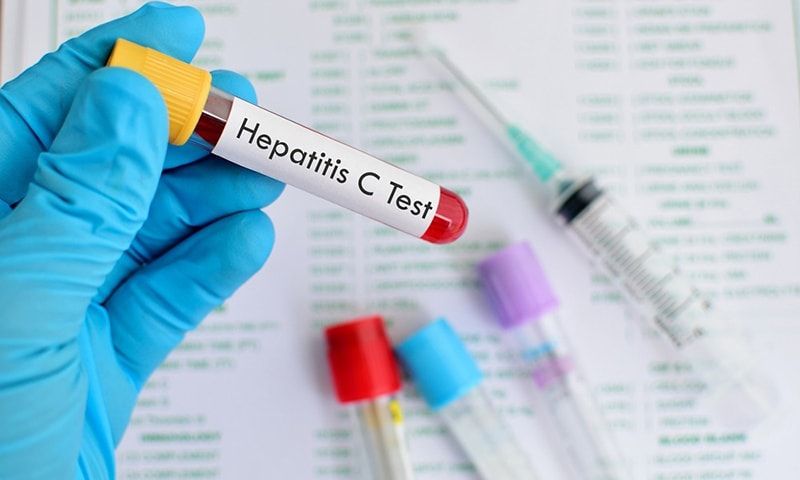
ISLAMABAD: In a move to combat one of Pakistan’s deadliest public health crises, Health Minister Mustafa Kamal has announced that hepatitis C screening is now compulsory for all employees of his ministry, with salaries of untested staff to be withheld starting next month.
The unprecedented directive marks the government’s most aggressive step yet toward eliminating the disease that silently afflicts millions across the nation.
Minister for Health @KamalMQM today launched mandatory screening of Hepatitis-C for all government employees in #Islamabad under Prime Minister’s #Hepatitis Elimination Programme@nhsrcofficial #RadioPakistan #news https://t.co/Rl01Qare4x pic.twitter.com/yOucaTwhZ0
— Radio Pakistan (@RadioPakistan) August 18, 2026
Speaking at the inaugural ceremony of the Prime Minister’s Hepatitis C Elimination Programme in Islamabad on Tuesday, Kamal underscored the urgency of the situation by getting tested himself on the spot. His result came back negative, delivering a powerful visual statement about the importance of regular screening.
The programme, jointly launched by the World Health Organisation and the health ministry in May, aims to eradicate the disease by 2030.
Mandatory testing to expand across all ministries
Kamal made it clear that the mandatory screening policy would not remain confined to his own ministry. He announced that similar directives would soon be extended to employees of other federal ministries, with formal letters being dispatched to enforce compliance.
The move is designed to create a culture of accountability and awareness from the top down, encouraging citizens to follow suit.
“The spread of hepatitis C in the country is a matter of grave concern,” Kamal told the gathering, according to state broadcaster Radio Pakistan. “This disease can be controlled, but only through effective treatment and widespread awareness. We must act now.”
ہیپاٹائٹس سی پاکستان کے لیے ایک قومی ایمرجنسی ہے، مگر بروقت تشخیص اور جدید علاج سے 95٪ سے زائد مریض مکمل صحت یاب ہو سکتے ہیں۔ وزیراعظم کے قومی پروگرام کے تحت 16.4 کروڑ سے زائد افراد کی مفت اسکریننگ، ٹیسٹ اور علاج فراہم کیا جائے گا۔ #WorldHepatitisDay #HepatitisC pic.twitter.com/U05jp5IVek
— Ministry of National Health Services, Pakistan (@nhsrcofficial) July 29, 2026
Phased rollout begins in Islamabad with 17 screening centres
The elimination programme will be implemented in carefully planned phases, with the federal capital serving as the pilot region. Pakistan government has already established 17 dedicated screening centres across Islamabad, ensuring easy access for residents. In a significant move to expand coverage, testing facilities will also be made available at private hospitals, with the government providing gadgets and testing kits to partner healthcare institutions.
Kamal emphasised that the federal government has initiated consultations with all provincial governments to bring them on board for the nationwide expansion. The programme is also set to be launched in Azad Jammu and Kashmir and Gilgit-Baltistan, ensuring that no region is left behind in the fight against the deadly virus.
Read Also: Pakistan Launches Hepatitis C Elimination Programme to End Disease by 2030
Alarming statistics highlight national emergency
The scale of Pakistan’s hepatitis crisis is staggering. According to the World Health Organisation, an estimated 12.9 million people in the country are living with hepatitis infections, including nine million with hepatitis C and 3.8 million with hepatitis B.
The toll is devastating: more than 48,000 Pakistanis die every year due to preventable and curable hepatitis infections. That equates to one death every 11 minutes.
These numbers place Pakistan among the countries with the highest hepatitis burden globally, making the government’s new initiative not just a policy priority but a national emergency.
Read Also: PM Shehbaz Launches National Campaign to Eradicate Hepatitis C
A model for public health accountability
By linking salary disbursement to health screening, Kamal has introduced a bold accountability mechanism that could serve as a template for other public health interventions.
The move signals a departure from voluntary awareness campaigns toward enforceable action, reflecting the government’s determination to meet its 2030 elimination target.
Health experts have welcomed the initiative, praising the government’s willingness to take tough administrative measures. However, they have also called for sustained investment in treatment infrastructure, affordable medication, and community outreach to ensure that screening translates into actual care for those who test positive.
Read Also: Pakistan’s Doctors Suggest Regular Screening to Defeat Hepatitis
What lies ahead for Pakistan’s hepatitis elimination drive?
With the first phase now operational in Islamabad, the coming months will test the programme’s effectiveness in reaching vulnerable populations, particularly in rural and underserved areas.
The government’s ability to maintain momentum, secure funding, and coordinate with provincial authorities will be critical to achieving the ambitious 2030 goal.
For now, the message from Islamabad is clear: Pakistan is no longer treating hepatitis as a neglected tropical disease. With mandatory screening, salary enforcement, and a nationwide rollout on the horizon, the country is taking a decisive stand against a killer that has claimed far too many lives.