Key Points
- Protesters denounce India’s control of Jammu and Kashmir
- Rallies held across AJK and other parts of the world
- India tightens security in Srinagar amid Independence Day
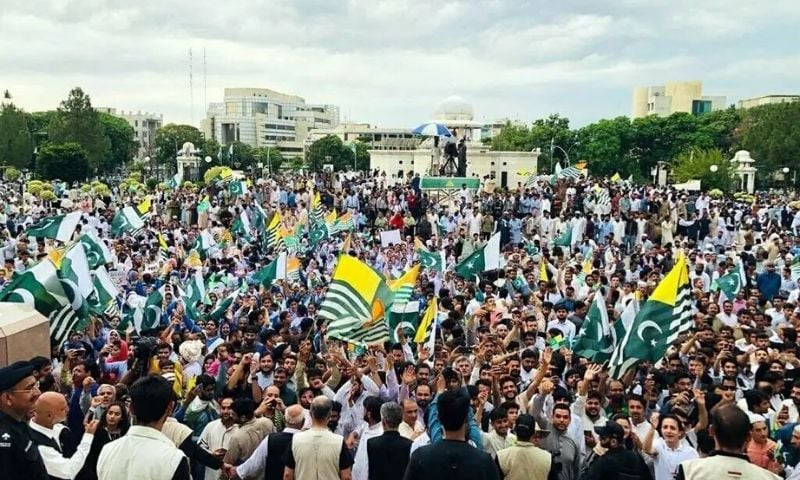
ISLAMABAD: Kashmiris in Azad Jammu and Kashmir (AJK), Indian Illegally Occupied Jammu and Kashmir (IIOJK) and other parts of the world observed India’s Independence Day on Saturday as a “Black Day,” and carried out anti-India protests.
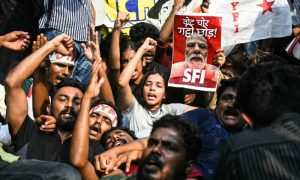
Anti-India demonstrations and rallies were organised to protest New Delhi’s policies in the IIOJK.
In Muzaffarabad, the capital of AJK, protesters staged an anti-India rally carrying black flags and placards and chanting slogans against India’s illegal occupation of Jammu and Kashmir.
Participants called for the right of Kashmiris to self-determination and urged the international community to address the long-running dispute, according to the resolutions of the United Nations Security Council.
The demonstrations followed a call by the All Parties Hurriyat Conference (APHC), which urged Kashmiris on both sides of the Line of Control (LoC) and overseas to observe August 15 as a Black Day.
Anti-India demonstrations
Anti-India demonstrations and rallies were also held in other parts of AJK and Pakistan, as well as among Kashmiri communities abroad, to draw international attention to the Kashmir dispute and express solidarity with Kashmiris in Indian Illegally Occupied Jammu and Kashmir.
ALSO READ: Kashmiris to Observe India’s Independence Day as Black Day
Meanwhile, Indian authorities tightened security across Indian Illegally Occupied Jammu and Kashmir, particularly in Srinagar, to prevent Black Day protests.
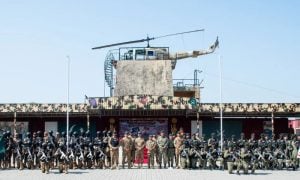
Multi-layered security arrangements were put in place around Bakshi Stadium in Srinagar, where the main Independence Day ceremony was held.
Sharpshooters were deployed on high-rise buildings and the venue was monitored through drone cameras.
Barricades were erected at key locations across the city, with vehicles, passengers and pedestrians subjected to strict searches amid heightened security measures.
The Kashmir dispute has remained unresolved since the partition of British India in 1947.
Islamabad maintains that the Muslim-majority territory naturally belonged to Pakistan under the principles of partition and that its people were denied the opportunity to decide their future through a free and impartial plebiscite, according to the resolutions of the Untied Nations Security Council.
Anti-India Movement in Kashmir
The anti-India movement in Jammu and Kashmir emerged prominently after the partition of British India in 1947, when the princely state became the subject of a dispute between Pakistan and India.
Pakistan maintains that India illegally occupied the territory after sending troops into Jammu and Kashmir and that the people of the region were denied the opportunity to determine their political future through a plebiscite.
The movement has taken different forms over the decades, including political campaigns, public demonstrations, and strikes etc.
Pakistan describes it primarily as a struggle by Kashmiris for their right to self-determination, while India alleges it as the separatism.
The United Nations Security Council adopted resolutions on Jammu and Kashmir following the first India-Pakistan war, providing a framework for a ceasefire and a plebiscite.
The continued absence of such a vote has left the central issue unresolved and remains a justified Kashmiri demand for self-determination.
India’s efforts and tactics to militarily snub the movement have resulted in significant civilian and freedom fighters casualties and human rights abuses.
A major turning point came in August 2019, when India revoked Jammu and Kashmir’s special constitutional status and divided it into two federally administered territories. Pakistan condemned the move as an attempt to consolidate Indian control and change the disputed territory’s demographic and political character.
The movement continues through political and diplomatic campaigns, protests and calls for self-determination, particularly among Kashmiri groups opposed to Indian rule.