
Key Points
- China remains Pakistan’s leading seafood export market
- Seafood exports to China reached about $255 million
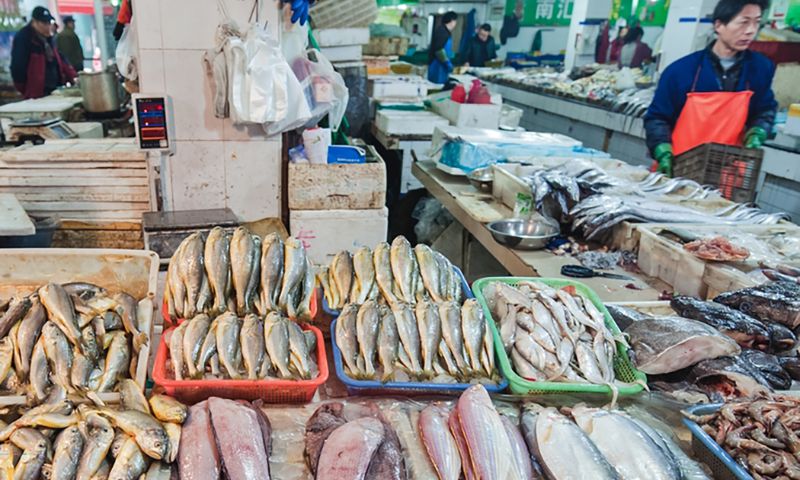
ISLAMABAD: Pakistan’s seafood exports to China rose 24 per cent in 2025-26 to approximately $255 million, highlighting growing Chinese demand for Pakistani fish, crabs, shrimp and other marine products, according to industry officials.
The Pakistan China Joint Chamber of Commerce and Industry (PCJCCI) has called for greater investment in seafood processing, cold-chain infrastructure, quality control and international certification to help Pakistan capture a larger share of China’s expanding seafood market.
PCJCCI President Nazir Hussain said Pakistan had considerable potential to expand exports of high-value products including mud crabs, shrimp, lobster and fresh and frozen fish.
He said investment in modern infrastructure and compliance with international standards would help exporters build longer-term commercial relationships in China.
Data from China’s General Administration of Customs had earlier shown Pakistan’s seafood exports to China rising 24 per cent year-on-year to about $235.7 million in the first 11 months of 2025, from $188.95 million during the corresponding period of 2024-25.
Frozen fish exports increased to more than $57 million from about $46 million, while fresh and chilled crab exports reached $31.93 million.
The latest industry figures put full-year 2025-26 seafood exports to China at around $255 million, indicating that shipments continued to grow in December.
Mud crabs have emerged as a particularly promising export product. Pakistan ranks among the world’s leading exporters of mud crabs and shipped more than 3,000 tonnes of live mud crabs to China, its biggest importer, according to Pakistan’s maritime authorities.
China’s importance has also increased against the backdrop of Pakistan’s broader seafood export growth.
Federal Minister for Maritime Affairs Muhammad Junaid Anwar Chaudhry said Pakistan’s exports of fish and fish preparations reached a record $568 million in fiscal year 2025-26.
ALSO READ: Pakistan’s Seafood Exports Hit Record $568 Million in FY2025-26
Frozen fish accounted for $105.09 million, followed by frozen squid and cuttlefish at $103.71 million, fish meal at $83.12 million, shrimp at $62.14 million and crabs at $36.89 million.
Major destinations included China, Thailand, Malaysia, the United Arab Emirates, Japan, Vietnam, Saudi Arabia, South Korea, Indonesia and the United States.
The $568 million figure represents a major step up for a sector that had been trying for years to cross the $500 million export threshold.
In FY2024-25, Pakistan exported 216,350 tonnes of fishery products, an 8.3 per cent increase from the previous year, generating $465 million in export earnings, according to Pakistan Bureau of Statistics data cited by the Pakistan Fisheries Exporters Association.
That FY2025 performance itself marked a significant improvement. Export value increased 13.4 per cent from $410 million in FY2023-24, and export volume reached a record level.
The industry, however, remained below its long-standing $500 million annual export target at that stage.
Another milestone came in August 2025, when the United States authorised Pakistan to continue exporting seafood products for another four years.
The US National Oceanic and Atmospheric Administration classified Pakistan’s listed fisheries as “comparable” under the Marine Mammal Protection Act, providing longer-term access to the US market and recognition of Pakistan’s fisheries management standards.
The fisheries sector has particular significance for Pakistan’s coastal economy, with major production and landing areas concentrated in Sindh and Balochistan.
Pakistan diversifies seafood export
The country’s recent export performance has also demonstrated that the sector can diversify beyond traditional fish shipments into crabs, shrimp, squid, cuttlefish, octopus, fish meal and value-added products.
China has been central to this diversification. In the first three quarters of 2025, Pakistan’s seafood exports to China exceeded $153 million, up from $121.93 million a year earlier.
Frozen fish, fresh and chilled crabs and frozen cuttlefish were among the major contributors. Pakistani frozen sardine exports to China also recorded particularly strong growth, with Pakistan emerging as China’s leading supplier in that category during the period.
The expansion has been supported by improvements in cold-chain logistics and Chinese clearance procedures.
An expedited “green channel” for ice-packed seafood at Chinese airports has helped shipments reach consumers within about 48 hours of arrival, an important factor for maintaining the quality and value of perishable products.
In FY2025, industry representatives said many processing plants were operating at only 20-25 per cent of installed capacity because of raw-material shortages.
Pakistan has consequently been looking towards aquaculture, shrimp farming, better onboard freezing and stronger conservation measures to expand the supply base.
The government has also identified improved food-safety compliance, modern processing and export diversification as key elements of its broader blue-economy strategy.
PCJCCI Vice President Amir Ali said improved supply chains and adherence to international food-safety standards could further strengthen Pakistan’s position in the Chinese market.
The chamber has urged coordinated action among government agencies, exporters and fisheries authorities to develop an integrated seafood export ecosystem.
Pakistan’s challenge now is to turn the recent export records into sustained growth by protecting marine resources, expanding aquaculture, improving processing capacity and increasing the share of value-added seafood.