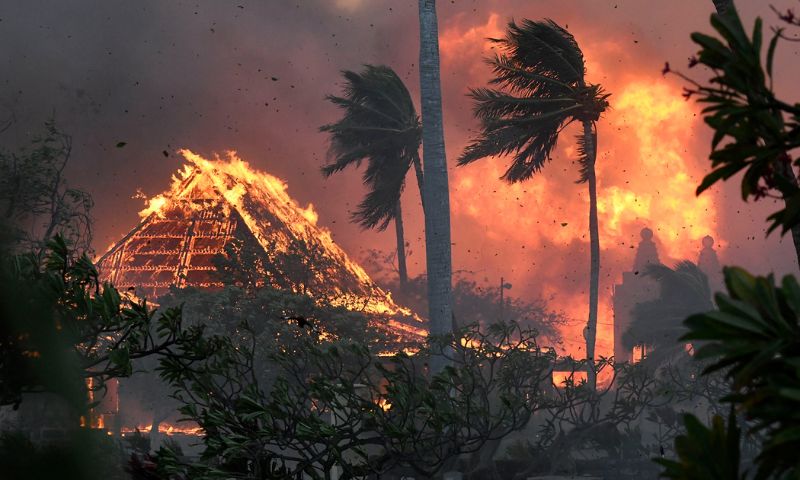
JAKARTA: Dozens of schools in Indonesia have been closed for a second day as wildfire smoke blanketed parts of the country amid an unusually intense dry season worsened by El Niño.
In West Kalimantan on the island of Borneo, the mayor of Pontianak ordered schools to remain closed because of haze drifting over the city from fires in surrounding areas.
Mayor Edi Rusdi Kamtono said children would continue their education from home for as long as air quality remained poor.
“We have started to feel it, especially at night and in the morning, as haze has already blanketed the city of Pontianak,” he said.
Firefighters Battle Blaze At National Park
On Java, firefighters were fighting a ninth consecutive day against a major wildfire at Bromo Tengger Semeru National Park in East Java.
The fire has destroyed nearly 900 hectares of land, equivalent to more than 2,200 acres or over 1,200 football fields.
The popular tourist attraction has been closed to visitors since Saturday.
“We’re making our best effort and mobilising everything… to extinguish and wet-down the area,” local disaster official Satriyo Nurseno told AFP.
Three water-bombing helicopters and fire trucks were supporting around 200 firefighters, forest rangers, police officers and soldiers battling the blaze.
Authorities said nearly 50,000 personnel had been deployed to fight wildfires across six provinces.
El Niño Raises Fire Risk
Indonesia is expected to experience an unusually difficult dry season this year, with the country’s weather agency BMKG warning of increased risks of drought and wildfires partly linked to El Niño.
More than 107,000 hectares have already been burned across Indonesia this year — twice the area affected by fires in 2023.
Security Minister Djamari Chaniago said Indonesia had deployed 43 helicopters and up to 15 fixed-wing aircraft for cloud seeding where necessary.
The operation involves releasing substances such as silver iodide and salt into suitable clouds to encourage rainfall, although the method depends on the presence of clouds.
July Temperatures Reach Record High
The BMKG said Indonesia’s average air temperature in July reached 27 °C, compared with a long-term average of 26.2 °C.
It was the highest July average recorded since 1991.
El Niño is a naturally occurring climate phenomenon that alters global wind, pressure and rainfall patterns. In India and Southeast Asia, it typically brings drier conditions.
The previous El Niño contributed to extreme global heat, with 2023 and 2024 becoming the two hottest years on record.
As Indonesia enters the peak of the dry season, authorities are facing growing pressure to contain the fires, protect communities from hazardous smoke and prevent further damage to forests and land.