Key Points
- Bangladesh seeks friendly ties with India based on equality
- Dhaka objects to Hasina’s political activities from India
- Minister rejects comparison with Tarique Rahman’s London politics
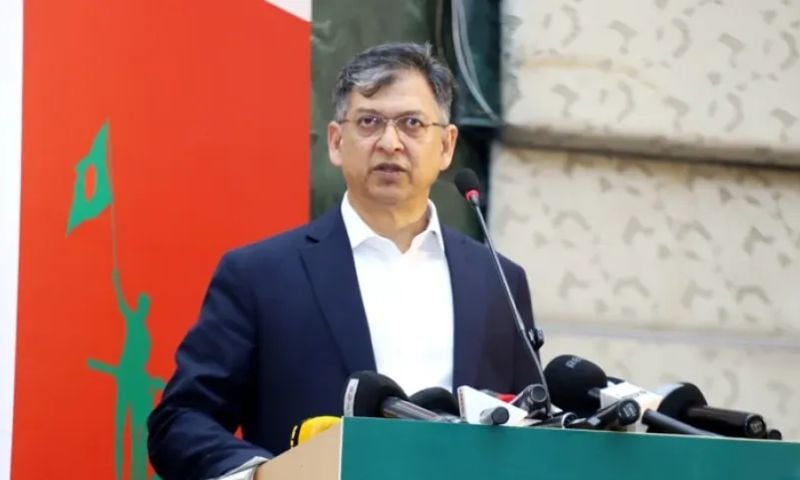
DHAKA: Bangladesh’s Home Minister Salahuddin Ahmed has warned India that allowing ousted prime minister Sheikh Hasina to make political statements and address international media from Indian soil is inconsistent with New Delhi’s stated desire for friendly relations with Dhaka.
“You will play the Hasina card while seeking a friendly relationship with Bangladesh. Those two things are contradictory,” Salahuddin said at a discussion at Dhaka University marking the second anniversary of the July 2025 mass uprising.
The minister said Dhaka recognised its relationship with New Delhi as one of interdependence and wanted friendly ties with its neighbour, but insisted that relations must be based on mutual dignity, respect, sovereignty and equality.
“We want to maintain friendly relations with you. But we will never become Awami League,” he said, referring to Hasina’s Awami League party.
His remarks came amid heightened tensions between the two neighbours over Hasina’s recent press conference in India.
Salahuddin said his country accepted Indian External Affairs Ministry spokesperson Randhir Jaiswal’s statement that New Delhi did not endorse anything from Hasina at the press conference.
ALSO READ: Bangladesh ‘Outraged’ by Hasina Press Conference in India
However, he criticised India for repeatedly allowing Hasina, whom Bangladesh considers responsible for “fascism, mass killings and crimes against humanity”, to speak to international media from the country.
Salahuddin also rejected comparisons between Hasina’s political activities in India and Bangladesh Nationalist Party Chairman Tarique Rahman while he was in exile in London.
He argued that Rahman and other opposition figures had fought for democracy and were forced into exile. On the other hand, Hasina was being accused of crimes committed during her rule.
The minister further alleged that Hasina had neither expressed remorse nor apologised to the Bangladeshi people.
He cited a United Nations report that said more than 1,400 people may have been killed during the crackdown on protests in July and August 2024. Hasina denies allegations of responsibility for abuses committed during her tenure.
Salahuddin also accused Hasina of using her stay in India to make statements against Bangladesh’s democratic process and create instability.
“India cannot avoid responsibility for this,” he said.
The comments reflect a growing diplomatic strain between Bangladesh and India following the fall of Hasina’s government in August 2024. Hasina fled to India after weeks of mass protests that ended her 15-year rule.
Bangladesh has repeatedly sought Hasina’s return to face legal proceedings, adding another contentious issue to relations with its larger neighbour.
Bangladesh’s decisive movement
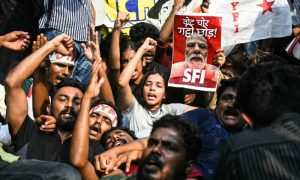
Bangladesh’s 2024 uprising began as a student-led campaign against a quota system reserving a share of public-sector jobs for descendants of veterans of the country’s 1971 independence war.
The movement expanded rapidly after clashes between protesters, police and groups backing the ruling Awami League, turning the demonstrations into a challenge to Prime Minister Sheikh Hasina’s government.
The authorities responded with arrests, curfews, internet shutdowns and the deployment of police and security forces.
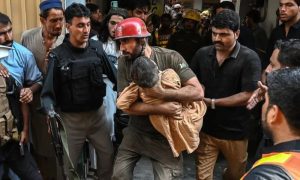
The United Nations later reported allegations of widespread and disproportionate use of force, including the use of live ammunition against protesters. According to the UN, more than 600 people were killed between July 16 and August 11, with the eventual death toll estimated at 1,400.
As the crackdown intensified, the student movement broadened its demands from reform of the quota system to Hasina’s resignation.
On August 4, the protesters called for a “March to Dhaka” despite a nationwide curfew. The following day, thousands took to the streets, overwhelming efforts to contain the demonstrations.
Hasina left Bangladesh on August 5 and took refuge in India. The then army chief subsequently announced her resignation and said an interim government would be formed, ending her 15-year rule.