ISLAMABAD: Ending wars is far more difficult than waging them. Pakistan’s intervention in the US-Iran conflict demonstrated how a middle power can create an opening for dialogue and diplomacy when the conditions for peace emerge.
Pakistan’s diplomatic intervention came at a point when the United States and Iran had reached a “mutually hurting stalemate” — a situation in which neither side can achieve its objectives without suffering excessive losses.
Pakistan, as mediator, succeeded in opening a communication channel between the United States and Iran, achieving a diplomatic breakthrough that major powers had failed to deliver.
Pakistan’s success stemmed from its unique “geo-positional capital” — its geographic position, access to US President Donald Trump and credibility with Iran. Islamabad was able to bring the two sides towards a ceasefire when the conflict had reached a “mutually hurting stalemate”, according to an analysis published by South Asian Voices.
Stimson Centre fellow Asfandyar Mir said that Pakistan had done what China, France, Germany, India, the United Kingdom and other geopolitical heavyweights could not during the crisis.
Ahead of Lindsey Graham’s funeral in Washington, President Donald Trump offered what may prove to be the late US senator’s most memorable epitaph. Graham, Trump quipped, had “never seen a war that he didn’t like.”
Indeed, Graham’s own recently leaked remarks leave little doubt that he had far greater admiration for wartime leaders than for peacemakers, according to the article published by South Asian Voices.
As the Pakistan-brokered ceasefire appeared to unravel and conflict flares up again between Iran and the US, Al-Jazeera featured a headline asking, “Can Pakistan keep US-Iran diplomacy alive as mistrust deepens?”
But ending wars is a rather more difficult task than celebrating those who wage them, according to the analysis published by South Asian Voices. Prime Minister Shehbaz Sharif and Field Marshal Syed Asim Munir’s diplomatic intervention deserves to be understood through the realities of conflict resolution, where mediators are often blamed when peace proves more elusive than expected.
The detractors of the Islamabad Memorandum of Understanding brokered by Pakistan fail to understand the dynamics of conflict management. An enduring ceasefire is all about time: It needs to occur at the right time, and the process itself takes time.
Pakistan learned how to use time to its advantage, as well as its geographic location between China and Iran. Combined with its long-time alliance with the US, Pakistan was and remains well positioned, literally, to open dialogue for all three of these countries.
Significance of mediators
On the eve of World War I, nations lacked an international organisation to mediate tensions between the European states after the assassination of Archduke Ferdinand in 1914. The League of Nations attempted to do this but lacked both “carrots and sticks,” or incentives and punishments, to effectively broker peace.
After the Second World War and during the Cold War, international organisations like the United Nations (UN), the Organisation for Security and Cooperation in Europe (OSCE), and the Organisation of African Unity intervened as third-party mediators. At other times, the US, as a superpower during the Cold War, could use carrots and sticks.
As Asfandyar Mir, Senior Fellow at the Stimson Centre’s South Asia Program, describes this post-war era, “the attributes that made countries geopolitically influential were settled: they included major-power status, economic weight, liberal normative credentials, and convening authority over other major states.”
After the collapse of the USSR, Washington was still able to serve the role of lead mediator. For instance, President Bill Clinton mediated the 1999 Kargil War between Pakistan and India. The US continues to serve as a mediator in South Asian conflicts, as it did in the May 2025 conflict between Pakistan and India.
Thus, what took the world by surprise in the spring of 2026 was that Pakistan, a middle power, was able to return the favour when it intervened between the US, a superpower, and Iran, a middle power.
Pakistan amid US-Iran war
In the case of the 2026 US-Iran war, Pakistan once again found itself at the centre of a unique web of relationships. Pakistan’s relations with the US turned dramatically after the May 2025 conflict. President Trump hosted Pakistan’s Field Marshal Munir at the White House in June 2025.
Pakistan was able to pull off mediation in 2026 because of what can be termed “geo-positional capital.” Pakistan’s leverage included geography, as the only state bordering Iran with a direct line to Trump; and credibility in Iran, from having condemned the assassination of Supreme Leader Ayatollah Ali Khamenei and being the only Muslim military and nuclear power in West Asia that opposes Israel.
Pakistan could neither pay nor punish either party, but as a third-party mediator, it had the assets of access, credibility, and most importantly, timing. Indeed, as Asfandyar Mir writes, “During the most dangerous Middle East crisis in a generation, Pakistan did what China, France, Germany, India, the United Kingdom, and other geopolitical heavyweights could not.”
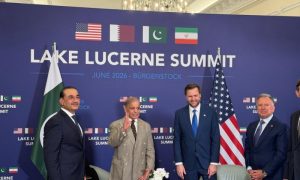
Pakistan’s intervention followed a pattern where Qatar mediated between Israel and Hamas. Both Qatar and Pakistan have learned that it is an unenviable position: When the process does not make progress, one or both parties will blame the mediator. Indeed, besides the late Senator Graham, blame has been pointed at Pakistan from India and Israel. However, blame is often cast on these states when the problem is not the mediator, but the process itself.
When does mediation succeed
A successful third-party intervention needs to occur at the most opportune time. Pakistan intervened in an inter-state conflict at a point when it reached a “mutually hurting stalemate,” the analytical concept first articulated by conflict resolution scholar William Zartmann.
A “mutually hurting stalemate” is a situation in which neither party thinks it can win a given conflict without incurring excessive loss, and both are suffering from a continuation of fighting. The conflict at this point has entered a period of “ripeness,” the moment for third-party mediation.
Both Iran and the US appeared to have reached a mutually hurting stalemate, inflicting enough pain on both sides. The US, along with Israel, had eliminated Iran’s leadership as well as its military and energy infrastructure.
Iran, to America’s surprise, mounted a regional retaliation, hitting Israel and attacking the Gulf Cooperation Council (GCC) states, closing the Straits of Hormuz, and sending the price of oil, gas, and other critical supplies upwards. It was at this point that President Trump issued an ultimatum on April 7 to the Iranian government to open the Strait or face the destruction of “a whole civilisation.”
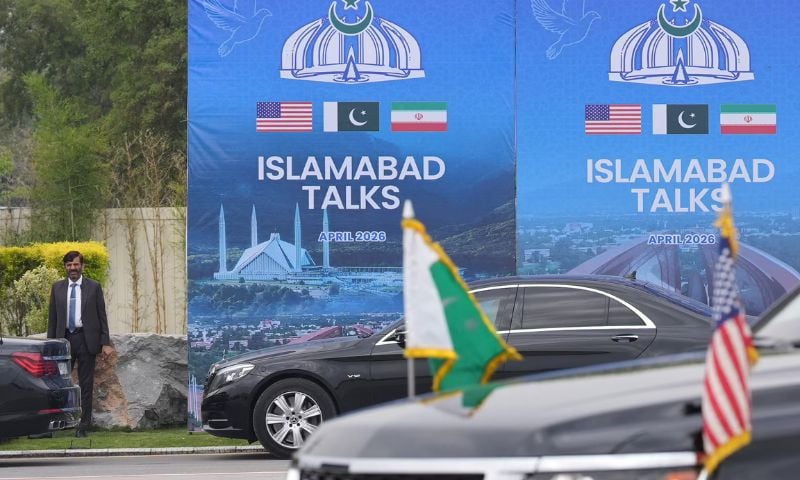
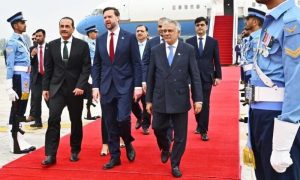
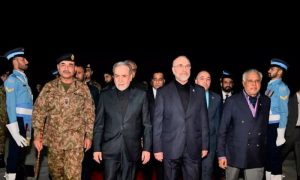
Disaster was averted when Field Marshal Munir placed a phone call that pressed Trump and Iran’s leadership to stop the war, according to the analysis published by South Asian Voices. Washington and Tehran announced a ceasefire, leading to US Vice President JD Vance sitting across from Iranian negotiators in Islamabad for more than 20 hours. It was the highest-level direct contact between the two countries since the 1979 revolution. For Islamabad, it was a diplomatic coup.
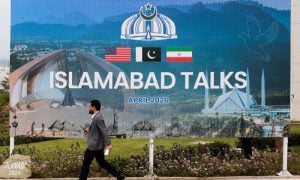
Pakistan should not be blamed for what the scholar Herbert Kelman calls the “social-psychological” approach to conflict management. The conflicting parties’ perceptions, attitudes, values, and behaviour can be changed through consultative meetings, problem-solving workshops, or conferences.
This approach, which began in 2013 when Obama-era officials visited Oman to establish dialogue with Iran, was successful during the negotiations leading up to the Joint Comprehensive Plan of Action (JCPOA) in 2015 because it created a consortium of third parties to the “Iran deal,” including the EU. Going forward, a similar arrangement could be instituted, which would ideally include Oman and Qatar, as both states represent the GCC, as well as Iran’s neighbour Iraq, according to the South Asian Voices article.
In the same recent Al-Jazeera article, Grace Wermenbol, a former US national security official and senior visiting fellow at the German Marshall Fund, appears to reflect Kelman’s approach, arguing that “Persistent recurring conflict has eroded the trust necessary [between the US and Iran] for a longer-term ceasefire.” Mehran Kamrava, a professor of at Georgetown University in Qatar, also reiterates that the “intractability” of the conflict has more to do with US and Iranian aims for the Strait of Hormuz than with “any failure of mediation” on Pakistan’s part.
Second, the perception of mutual hurt can change over time. At a certain point, the renewed conflict in the Gulf is because one side thinks it can resume the conflict because the other party is more vulnerable. Iran’s security establishment, the Revolutionary Guard is gauging that the Trump administration feels the “hurt” more as the midterm elections loom, or by leveraging economic warfare against a foe that has more conventional military strength. Iran might also use the summer months to its advantage, believing that the US might be reluctant to deploy ground forces on Iranian soil at a time of year when islands in the Gulf have reached up to 70°C (150°F) over the last two years.
But the role of time in conflict is one of the most substantial independent variables that no international organisation or nation, whether a superpower or middle power, can control. For now, the US and Iran have argued the terms of the Islamabad MoU were suspended, each side accusing the other of violating the agreement first. Yet neither side has abandoned the process, even as they return to the negotiating table via military escalation from Washington and defiance from Tehran.
These are the dynamics that Pakistan has to manage, demonstrating that the most valuable ammunition both the US and Iran may be depleting is their patience with the process. However, if violence escalates even further, the table both sides will return to when hurt is in Islamabad. The third-party mediator’s task is not to manufacture ripeness, then, but to be present when it arrives.