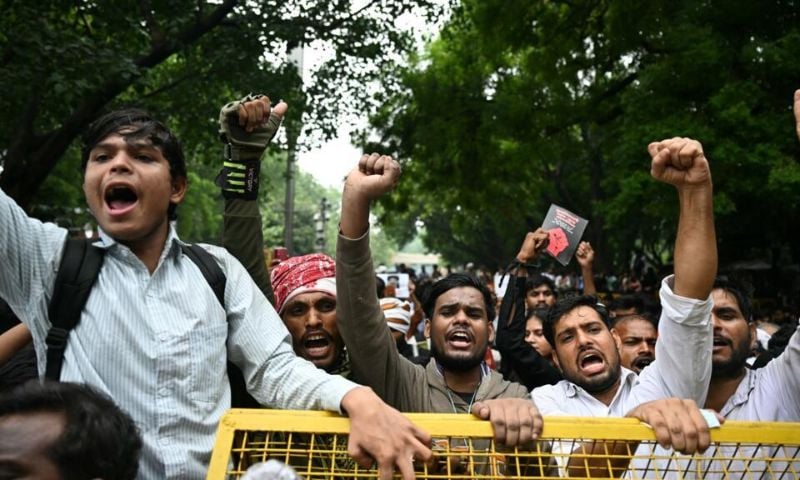



NEW DELHI: India’s youth-led “Cockroach” protest movement is maintaining pressure on Prime Minister Narendra Modi’s government, two weeks after demonstrations forced the country’s education minister to resign.
The Cockroach Janta Party (CJP), which began as an online movement, mobilised protesters over exam irregularities before demonstrations expanded to include concerns over unemployment, economic opportunities and public institutions.
The education minister resigned on July 25, marking a major victory for protesters. Parliament has since increased penalties for leaking examination papers, while police have withdrawn cases against protesters in several cities following criticism over the use of force.
Although large-scale demonstrations have largely subsided, the movement has retained millions of followers online and plans to continue campaigning on issues affecting young Indians.
Digital movement
Social media played a central role in mobilising protesters and spreading the CJP’s message. The demonstrations also highlighted the growing importance of digital platforms in reaching India’s younger population.
Authorities used AI-powered camera technology to monitor and identify demonstrators, while an internet shutdown around the main protest site in New Delhi disrupted communications.
The protests also drew attention to online harassment, with several female participants reporting threats and abusive messages after videos of them at demonstrations went viral.
Beyond exam concerns
Many young Indians face intense competition for jobs after years of study and highly competitive examinations, giving the movement issues that extend beyond its original demands.
ALSO READ: India’s Ruling Duopoly Spends $1.49 Billion on Media Propaganda
The CJP has announced plans for a “nationwide listening tour” to hear concerns from young people and has pledged to continue supporting demonstrations over examination irregularities.
Protests have also continued in the eastern state of Jharkhand.
CJP founder Abhijeet Dipke said the organisation would operate as a pressure group rather than becoming a political party for now.
With nearly three years remaining before India’s next national election, the protests could push both Modi’s ruling party and opposition parties to pay greater attention to young voters and their concerns over jobs, opportunities and public institutions.