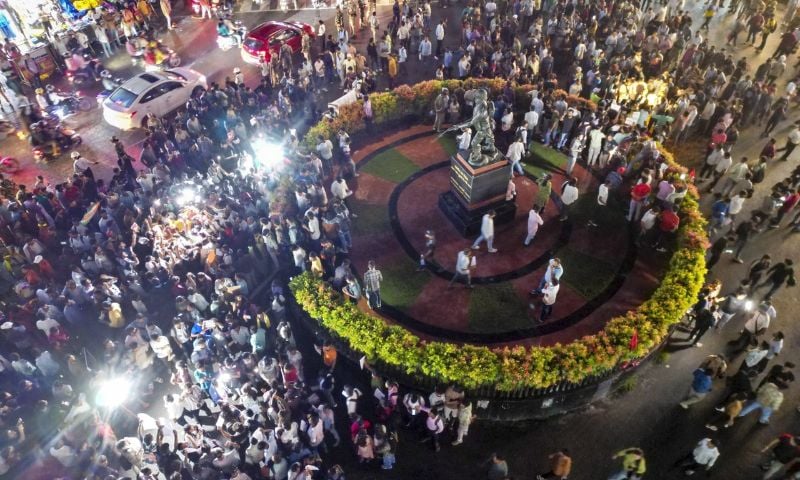
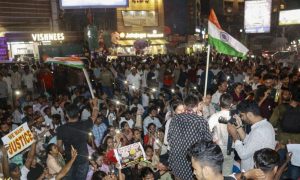
NEW DELHI: Protests over irregularities in government recruitment examinations have spread to the eastern Indian state of Jharkhand, with thousands of students demanding a fresh civil service examination and an independent investigation, as a youth-led movement that forced the resignation of India’s education minister expands beyond the capital.
The demonstrations in Jharkhand began on July 25 and intensified four days later when protesters gathered for an indefinite sit-in at a stadium in the state capital, Ranchi, according to Indian media reports.
Protesters are demanding that a preliminary civil service examination held in April be cancelled and conducted again, while calling for the Central Bureau of Investigation (CBI) to investigate malpractice in several state recruitment examinations. They have also sought the establishment of a fast-track court to hear cases linked to the alleged irregularities.
The controversy emerged after the publication of the preliminary examination results last month, when some candidates claimed that answer sheets circulated online suggested successful applicants had answered fewer questions than expected, fuelling suspicions of manipulation.
Jharkhand Chief Minister Hemant Soren said the allegations were being investigated and promised that students would receive justice. He said the state’s Criminal Investigation Department was probing the examination process, including claims that the contract had been awarded to an agency previously accused of irregularities.
Media? Silent. 🤐
CJP? Silent. 🤐
Opposition? Silent. 🤐Thousands of students in Jharkhand are protesting on the streets against JPSC/JSSC exam irregularities, yet NO mainstream coverage.
Why the radio silence? Because it’s an INDI alliance-ruled state? pic.twitter.com/YkZLMuQuWk
— Megh Updates 🚨™ (@MeghUpdates) August 1, 2026
According to Indian media reports, more than a dozen people have been arrested. Jharkhand Public Service Commission chairman L Khiangte resigned on July 22, before the protests began, while the commission later postponed the main examination.
Youth movement gains momentum
The protests have attracted widespread attention following a larger youth-led movement in New Delhi over examination paper leaks that culminated in the resignation of Education Minister Dharmendra Pradhan on July 25.
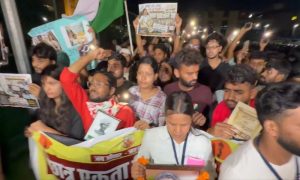
The Cockroach Janta Party (CJP), a youth movement rather than a registered political party, has announced its support for the protesters in Jharkhand.
The CJP’s 36-day campaign evolved from a satirical protest against examination leaks into a broader movement expressing young Indians’ frustration over employment opportunities and the education system.
The resignation of Pradhan fulfilled one of the movement’s principal demands, although the ruling Bharatiya Janata Party (BJP) said the decision demonstrated government accountability, while the CJP argued it resulted from sustained public pressure.
Also Read: Why Indian Gen Z’s Anger Goes Beyond Education System?
Supporters of the youth movement told DW that they continued using Instagram memes, parody videos and satirical content to keep attention focused on education reform and accountability.
Apar Gupta, founding director of the Internet Freedom Foundation, said the movement reflected a generational shift in political communication, arguing that Instagram rewarded authenticity and allowed Generation Z creators to shape public debate before official narratives could respond.
Youth protests weaken PM Modi
Activist Sonam Wangchuk told the BBC that the youth-led protests had significantly weakened Prime Minister Narendra Modi politically and had given young people confidence that they could influence government policy.
कुर्सी है, तुम्हारा ये जनाज़ा तो नहीं है,कुछ कर नहीं सकते तो उतर क्यों नहीं जाते?
राजधानी रांची की यह वीडियो आज शाम की है।
प्लगभग 20–25 हज़ार छात्र अपनी मांगों को लेकर मशाल जुलूस में सड़कों पर उतरे और झारखंड सरकार के खिलाफ विरोध प्रदर्शन किया।
युवाओं का यह जनसैलाब बता रहा है कि… pic.twitter.com/qYxUceU80e— We Are Ranchi (@WeAreRanchi) August 2, 2026
“The atmosphere has changed,” Wangchuk said, adding that young people now believed they did not have to “take everything lying down”.
He described the movement as one of the largest displays of public dissent against Modi’s government since it took office in 2014.
Wangchuk said he fasted for 26 days, consuming only salt and water, before being taken to hospitals that he described as “more like prisons”.
He said the demonstrations expanded from anger over examination paper leaks into one of the biggest anti-government protest movements in recent years.
Following the minister’s resignation, Modi announced fast-track courts to prosecute those accused of examination leaks and appointed a technology entrepreneur to lead reforms of the examination system.
Public anger against Indian media
The protests have also exposed growing hostility towards India’s mainstream television media, with demonstrators accusing several broadcasters of favouring the BJP government.
According to AFP, protest placards described some television channels as “India’s worst enemies”, while many students at New Delhi’s Jantar Mantar protest site said they increasingly relied on social media platforms and independent digital outlets for news.
Several television journalists reported being harassed while covering demonstrations in New Delhi, Mumbai and Patna.
The Times Network condemned attacks on its journalists, saying its coverage had been “entirely neutral” and that violence against reporters was unacceptable.
Veteran journalist Ravish Kumar told AFP that public distrust reflected years of declining confidence in mainstream media, arguing that some broadcasters had undermined their own credibility by portraying genuine public demands as conspiracies.