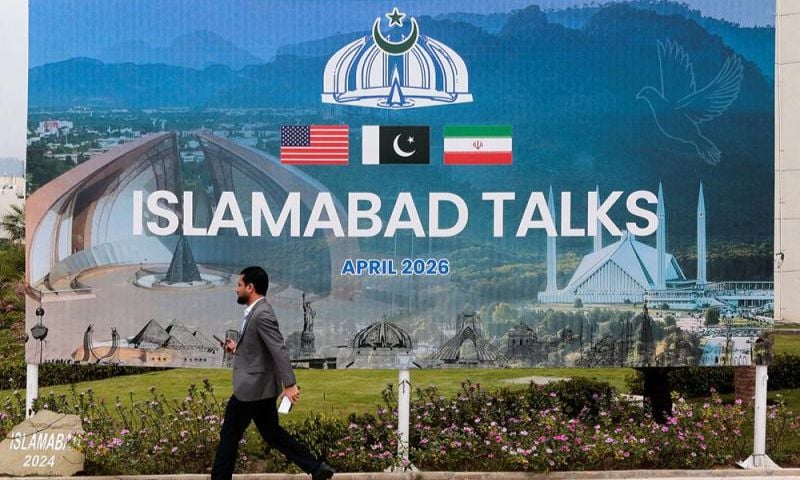
ISLAMABAD: Mediator Pakistan on Thursday expressed hope that the potential agreement between Iran and Oman over the Strait of Hormuz would help resume talks between Tehran and Washington under the Islamabad Memorandum of Understanding to permanently end the Middle East conflict.
“We hope that the agreement on the Strait will pave the way for continuing dialogue, particularly the resumption of technical-level talks between Iran and the United States,” Pakistan’s Foreign Office spokesperson Tahir Andrabi told a weekly news briefing in Islamabad.
🔴LIVE: Spokesperson’s Weekly Press Briefing 06-08-2026 at Ministry of Foreign Affairs, Islamabad https://t.co/aCYT2AeJtf
— Ministry of Foreign Affairs – Pakistan (@ForeignOfficePk) August 6, 2026
The spokesperson’s remarks came as Iranian officials said Tehran and Muscat had reached an understanding on a new shipping route through the strategically important waterway and were finalising arrangements for its joint management.
Pakistan backs diplomatic efforts
Spokesperson Andrabi said Pakistan remained actively engaged with its “brotherly countries” in efforts to help resolve the crisis in the Gulf and the wider Middle East, particularly tensions surrounding the Strait of Hormuz.
He praised Oman’s continued role in promoting de-escalation and peaceful coexistence, and said Islamabad would continue supporting diplomatic initiatives aimed at achieving a comprehensive, just and lasting resolution to the conflict.
Pakistan would continue to “actively pursue diplomatic engagements and support all sincere efforts aimed at achieving a comprehensive, just and lasting resolution to the conflict”, Andrabi said.
The spokesperson reiterated Islamabad’s hope that progress on the Strait of Hormuz would create momentum for broader diplomatic engagement, including the resumption of technical-level talks between Iran and the United States under the Pakistan-mediated Islamabad memorandum of understanding.
Iran, Oman close to Hormuz deal
Iranian officials said Tehran and Muscat were finalising an agreement on a shipping route through the Strait of Hormuz and arrangements for jointly managing the strategic waterway.
On Wednesday, Iranian foreign ministry spokesperson Esmaeil Baghaei said that Iran and Oman have agreed on a shipping route through the Strait of Hormuz and are finalising arrangements for the joint management of the strategic waterway.
Spokesperson Baghaei added that any such agreement between Iran and Oman would not, by itself, guarantee security in the strategic waterway, Reuters news agency reported.

The proposed deal between Iran and Oman would give Tehran control over ships entering the Gulf through the Strait of Hormuz, a senior Iranian source and two regional officials told Reuters on Wednesday.
Esmaeil Baghaei described the negotiations between Tehran and Muscat as “professional” and “moving forward”, saying “the two sides had reached a mutual understanding on the geographical parameters of the route under discussion”.
The Iranian foreign ministry spokesperson added that if some third parties do not obstruct the process, the joint statement between the two countries, containing the main considerations and key points of understanding, was in the final stages of review and drafting.
Iran’s foreign ministry spokesperson Baghaei has said Iranian officials are continuing to exchange views with their counterparts in Pakistan and Qatar, Al Jazeera reported.
Trump eyes Hormuz deal soon
Earlier, US President Donald Trump said that a deal to reopen the Strait of Hormuz could be announced as early as Wednesday or Thursday.
Trump was asked by reporters travelling with him in California about a report on the Axios news site that an announcement on the Strait of Hormuz could be made on Wednesday.
“It could happen. Tomorrow or the next day,” the US President said, speaking on Tuesday evening California time. “A lot of progress has been made.”

The possible agreement emerging from talks between Iran and Oman calls for ships to enter the Arabian Gulf through an Iranian-controlled route and exit through a route controlled by Oman, The Associated Press reported, citing two regional officials.
Also Read: Iran, Oman Move Closer to Reopening Strait of Hormuz
Service fees would be charged for providing security and preserving the maritime environment, the officials said as cited by The Associated Press. The officials spoke on condition of anonymity to discuss the sensitive negotiations, according to AP.
The Trump administration has previously ruled out any deal that would give Iran control over the Strait of Hormuz, which was an open international waterway before the US and Israel attacked Iran on February 28.
In an exchange with reporters on Monday, the US President reiterated his public opposition to tolls being charged in the strait. “I’m not going to let them charge,” Trump said. “Anybody’s going to charge, we’ll charge.”
Earlier, Axios reported that the US, Iran and Oman are close to reaching an interim agreement that would reopen the Strait of Hormuz and reinforce a ceasefire between Washington and Tehran.
Quoting two regional sources and a US official, the report said the proposed agreement is designed to reduce tensions after months of military confrontation and create space for fresh talks over Iran’s nuclear programme.
Under the draft arrangement, Oman and Iran would implement a 60-day temporary navigation framework in the Strait of Hormuz, with the possibility of extending the agreement, according to Axios.
The proposal envisions inbound vessels entering the Gulf through a northern shipping lane in Iranian waters, while outbound traffic would travel via a southern route in Omani waters in coordination with Iran.
No transit charges on commercial shipping
The temporary arrangement would not impose any transit charges or tolls on commercial shipping. The plan also includes a joint effort to remove naval mines from the central shipping lane within 30 days, according to the Axios report.
Once the operation is completed, the central channel could be reopened for two-way maritime traffic under a broader long-term agreement to be negotiated between Oman and Iran.
The diplomatic initiative follows US President Donald Trump’s decision to delay a large-scale military campaign against Iran in favour of giving diplomacy another opportunity.
While pausing further escalation, Trump has warned that Washington remains prepared to launch major military action if negotiations collapse.
The Axios report said the talks have involved officials from Oman, Qatar, Pakistan and Saudi Arabia, with the White House playing a central role in the negotiations.
US, Iran continue contacts
Trump’s special envoy Steve Witkoff has reportedly held several recent conversations with Iranian Foreign Minister Abbas Araghchi and Omani Foreign Minister Badr Al Busaidi.
According to regional sources, cited by Axios, Araghchi endorsed the proposed arrangement in principle over the weekend, subject to approval by Iran’s Supreme Leader Mojtaba Khamenei and the Supreme National Security Council.
A US official and a regional source told Axios that Iran’s leadership completed the approval process on Tuesday.
Speaking earlier in the day, US Secretary of State Marco Rubio said discussions over safe passage through key international waterways had not yet been finalised but expressed hope that an agreement would be reached “very shortly.”
The renewed diplomatic push follows months of hostilities between Washington and Tehran, which began in February after joint US-Israeli strikes targeted the Iranian capital.
Iran responded with missile and drone attacks targeting Gulf states.
Although both sides agreed to a ceasefire in April and later signed a Pakistan-mediated Islamabad memorandum of understanding in June aimed at ending hostilities, the agreement collapsed last month.
The renewed fighting lasted nearly two weeks before Trump ordered a halt to US bombardments amid renewed diplomatic efforts to revive negotiations.