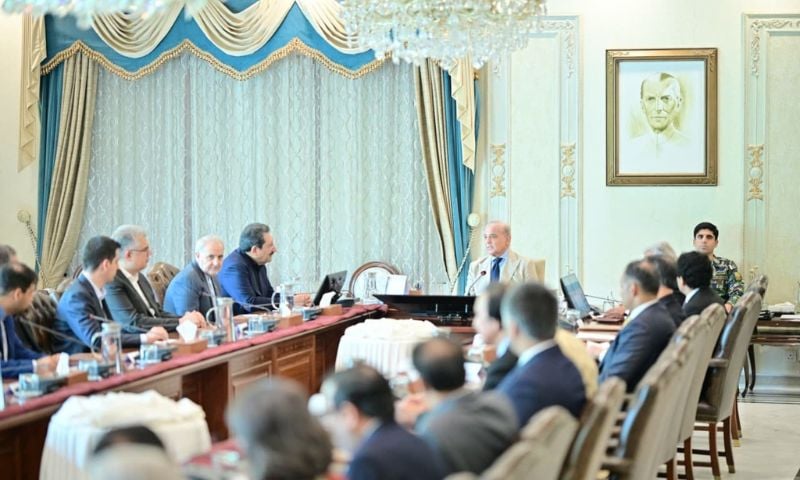
ISLAMABAD: Pakistan and Iran on Wednesday agreed to introduce round-the-clock operations at their shared border to facilitate trade, improve logistics and harmonise customs procedures to expand bilateral commerce.
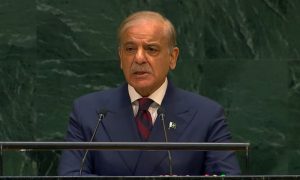
The understanding was reached during a meeting between Pakistan’s Prime Minister Shehbaz Sharif and a visiting six-member Iranian delegation led by Iran’s Minister of Industry, Mine and Trade Syed Mohammad Atabak, the Prime Minister’s Office said in a statement.
“Pakistan views its relations with its esteemed neighbouring brotherly country, the Islamic Republic of Iran, with the highest regard,” PM Sharif said.
اسلام آباد: 5 اگست 2026۔
وزیراعظم محمد شہباز شریف سے اسلامی جمہوریہ ایران کے وزیر صنعت، کان کنی و تجارت سید محمد اتابک کی سربراہی میں 6 رکنی وفد کی اسلام آباد میں ملاقات ہوئی.
گفتگو کرتے ہوئے وزیرِ اعظم نے کہا کہ پاکستان اپنے بہترین ہمسایہ برادر ملک اسلامی جمہوریہ ایران کے ساتھ… pic.twitter.com/r1BNyYrAd2
— Prime Minister’s Office (@PakPMO) August 5, 2026
The Prime Minister reiterated that Pakistan would continue its “sincere efforts for peace in the region” and referred to what he described as a productive recent discussion with Iranian President Dr Masoud Pezeshkian on promoting lasting peace and strengthening bilateral relations, particularly in trade.
Prime Minister Sharif expressed hope that the $10 billion bilateral trade target set by the leadership of both countries would be achieved through sustained efforts.
An Irani delegation led by Minister of Industry, Mines and Trade H.E. Seyyed Muhammad Atabak called on Prime Minister Muhammad Shehbaz Sharif in Islamabad on 5 August 2026. pic.twitter.com/eQUT41AkXB
— Prime Minister's Office (@PakPMO) August 5, 2026
PM Sharif said both countries would benefit from expanding trade, particularly in food and agricultural commodities and products.
During the meeting, the two sides also agreed to enhance cooperation in the mining sector, particularly in the processing and value addition of precious stones.
Prime Minister Sharif also conveyed a message of goodwill to Iran’s Supreme Leader Mojtaba Khamenei and President Pezeshkian.
Speaking on the occasion, Iranian Minister Atabak thanked Pakistan for the warm welcome and hospitality.
The Iranian minister praised the Pakistani leadership and people for their diplomatic efforts to promote peace in the region and for expressing solidarity with Iran.
The Iranian minister said Tehran was keen to further expand economic and trade relations with Pakistan, adding that technical-level negotiations on a free trade agreement between the two countries were underway.
Pakistan and Iran enjoyed robust trade relations before sanctions on Tehran intensified more than a decade ago, with bilateral trade surpassing $1.2 billion in FY10. However, tightening restrictions, including banking and financial sanctions, severely curtailed formal trade flows.
Before sanctions disrupted trade, Pakistan exported rice, meat, paper, textiles, fruits and surgical goods to Iran, while importing chemicals, plastics, oil, iron and steel products.
They recently agreed to increase bilateral trade to $10 billion and expedite the finalisation of a free trade agreement, as the two neighbouring countries moved to deepen commercial ties during the 10th session of the Pakistan-Iran Joint Trade Committee in Islamabad.