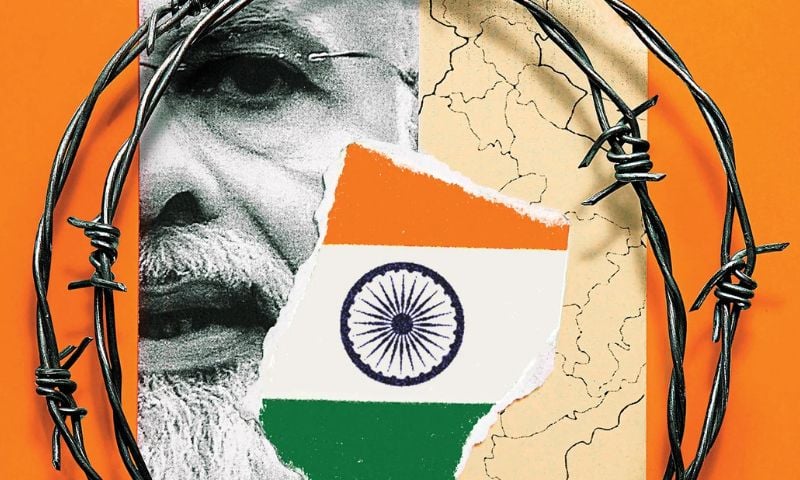



NEW DELHI, India: In just over two years since securing a third term, Prime Minister Narendra Modi’s government has overseen a dramatic erosion of civic freedoms that has landed India on the CIVICUS Monitor Watchlist, with authorities jailing activists, censoring journalists and strangling civil society at an unprecedented rate.
Recent attacks on democratic dissent in India have not come out of nowhere. They fit a clear pattern of decline in civic freedoms under Prime Narendra Modi’s Bharatiya Janata Party government, which first came to power in 2014.https://t.co/T6gGlUgN7h
Mandeep S Tiwana writes pic.twitter.com/XItBjdBN07
— Scroll.in (@scroll_in) August 2, 2026
The deterioration has been so rapid and severe that the CIVICUS Monitor, which tracks civic freedoms across 198 countries and territories, now rates India as “Repressed”, the second worst rating a country can receive, joining a list of 50 nations where citizens face significant constraints on their fundamental rights.
The latest Watchlist, released on July 29, also includes Bahrain, Burkina Faso, Ecuador and Georgia, but India’s inclusion has drawn sharp international condemnation and raised urgent questions about the trajectory of democracy in the world’s most populous nation.
Read Also: Protesters Blame Modi of Utilizing Yoga Show Off to Purge India of Human Rights Crime at UN
A systematic assault on dissent
The Modi government has intensified its crackdown on activists and rights campaigners, using a range of legal measures to jail protesters, journalists and critics. The evidence paints a picture of systematic repression that critics say has no parallel in India’s post-independence history.
In March 2026, eleven activists, including students, workers’ rights advocates and anti-displacement campaigners, were detained by Delhi Police officers in plain clothes, reportedly without arrest warrants or notification to their families. Some of those detained were allegedly subjected to torture and other forms of ill-treatment while in custody, according to human rights groups.
The government has weaponised the Unlawful Activities (Prevention) Act (UAPA), a law originally designed to combat terrorism, against peaceful activists. In April 2026, the National Investigation Agency renewed its pursuit of activists linked to the long-running Bhima Koregaon case, several of whom had already spent years in pre-trial detention before securing bail.
In June 2026, activists Umar Khalid and Sharjeel Imam were again denied bail after being held under the UAPA since 2020 on charges linked to the February 2020 Delhi riots, charges that critics say are baseless and politically motivated. Khalid has now spent over six years in pre-trial detention, a stark example of what human rights groups call the “punishment before trial” approach.
CIVICUS Says India’s Civic Space Remains ‘Repressed’ in Latest Report pic.twitter.com/5v5IBDjF5f
— THE HINDUSTAN GAZETTE (@THGEnglish) July 31, 2026
Journalists under siege
India’s once-vibrant media landscape has been systematically dismantled under the Modi administration. Journalists and independent media outlets face mounting restrictions in an increasingly hostile environment.
In February 2026, investigative journalist Ravi Nair was sentenced to one year in prison in a criminal defamation case linked to social media posts critical of the Adani Group, a case widely viewed as an attempt to silence corporate scrutiny.
In April 2026, police launched an investigation into the social media news outlet TeluguScribe under anti-terror legislation, while the office of the daily newspaper Asomiya Pratidin was attacked following criticism by Assam’s Chief Minister, an act of intimidation that went unpunished.
The Committee to Protect Journalists warned in April 2026 that proposed amendments to India’s Information Technology Rules would grant authorities sweeping powers to censor independent journalists and news organisations, effectively giving the government veto power over critical reporting.
In July 2026, authorities banned the film Satluj, which depicts the life of human rights activist Jaswant Singh Khalra, less than 48 hours after its release, a move widely condemned as censorship of artistic expression and historical truth.
🇮🇳#India added to our latest Watchlist:
🟠Range of legal measures to target activists, protesters, journalists & critics
🟠Expanding censorship and surveillance powers
🟠NGOs face tighter funding restrictionsCountry rated as ‘Repressed’:https://t.co/6a5ERHAdiH pic.twitter.com/95ZVRLRpAb
— CIVICUS Monitor (@CIVICUSMonitor) July 29, 2026
NGOs strangled under FCRA chokehold
Civil society organisations continue to face increasing restrictions under the Foreign Contribution (Regulation) Act (FCRA). New amendments adopted in June 2026 expanded government control over the assets of organisations whose foreign funding licences have been revoked, while imposing additional reporting and operational requirements that many NGOs say are impossible to meet.
The changes also further restrict the participation of foreign nationals in organisations and prohibit NGOs from engaging in political campaigns, endorsing candidates or supporting political parties, effectively neutering their ability to advocate for human rights and social justice.
Josef Benedict, CIVICUS Asia Pacific researcher, condemned the measures: “These amendments to the FCRA are not isolated incidents, they are part of a sustained effort to squeeze independent civil society. The government is tightening its grip on funding, speech and activism, leaving very little room for dissenting voices. These actions are inconsistent with India’s international human rights obligations.”
The Indian American Muslim Council (IAMC) today expressed grave concern following India’s addition to the CIVICUS Monitor Watchlist, a global tracker of civic freedoms across 198 countries and territories. The watchlist flags countries experiencing a notable decline in respect… pic.twitter.com/CXF23LD4p8
— Indian American Muslim Council (@IAMCouncil) July 31, 2026
Kashmir: A Region in Lockdown
Restrictions on civic freedoms remain especially acute in the Indian Illegally Occupied Jammu and Kashmir (IIOJK) region, where authorities have curtailed access to information by throttling internet services and targeting human rights-focused social media accounts deemed “anti-India.”
Activist Khurram Parvez and journalist Irfan Mehraj are facing charges under the UAPA, while earlier this month three publishers were arrested over books alleged to contain objectionable material. Internet shutdowns, once a rare occurrence, have become routine in the region, effectively cutting off millions from the digital world.
Freedom of assembly under attack
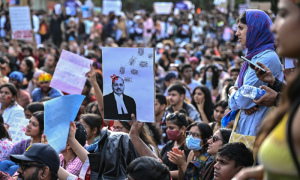
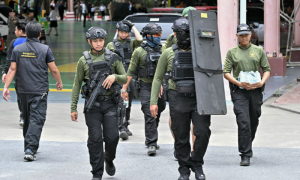
Freedom of peaceful assembly has also come under increasing pressure. In April 2026, police were accused of using excessive force during a protest by factory workers in Noida, Uttar Pradesh, who were demonstrating over low wages and poor working conditions. More than 300 people, including several activists, were subsequently detained.
Authorities also used excessive force at a protest on July 20 by the Cockroach Janta Party (CJP), a youth-led protest movement seeking education and employment reforms.
Read Also: UN Voices Concern Over Gross Human Rights Violations in India
A growing international critique
The Modi government has faced mounting international criticism for its human rights record, with the United Nations, the European Union and human rights organisations expressing alarm at the shrinking civic space.
Critics argue that the government’s actions are inconsistent with India’s constitutional guarantees and international human rights obligations. The Bharatiya Janata Party (BJP) government has dismissed the criticism as foreign interference, but the CIVICUS Watchlist designation adds a credible, independent voice to the growing chorus of concern.
Read Also: Human Rights Violations Against Minorities Surge in India under Modi
CIVICUS Monitor Watchlist: A Reference Point
The CIVICUS Monitor Watchlist, released twice annually, tracks the latest developments in civic freedoms across 198 countries and territories. The Watchlist highlights countries where civic space has significantly deteriorated, serving as an early warning system for human rights violations.
According to the CIVICUS Monitor, India’s rating of “Repressed” means that the civic space is significantly constrained, where active individuals and civil society members who criticise power holders risk surveillance, harassment, intimidation, imprisonment, injury and death. Although some civil society organisations exist, their advocacy work is regularly impeded, and they face threats of de-registration and closure by the authorities.
With 50 countries now at the “Repressed” level, India’s inclusion signals a worrying trend in the global state of democracy and human rights.
🔎New Watchlist looks at deterioration of rights in:
🇮🇳Broad legal measures to jail activists
🇧🇫Military dismantles NGOs & political parties
🇧🇭Sweeping crackdown on dissent
🇬🇪Jail & heavy fines for protesters
🇪🇨Govt extends & expands emergency powershttps://t.co/DYYUKT1R80 pic.twitter.com/5Ai0w0wJre— CIVICUS (@CIVICUSalliance) August 3, 2026
The Modi government has shown no signs of reversing course. With a parliamentary majority and growing authoritarian tendencies, critics fear that the situation will only worsen in the coming years.
The CIVICUS Watchlist serves as both a condemnation and a warning, a recognition that India’s democratic credentials are under serious threat. Whether the international community and domestic civil society can reverse this trajectory remains an open question.