


KABUL, Afghanistan: Afghanistan’s Taliban regime has sought tens of thousands of dollars to fund a propaganda campaign against armed resistance groups, according to an internal intelligence letter, as resistance fighters intensified attacks across the country’s north-east.
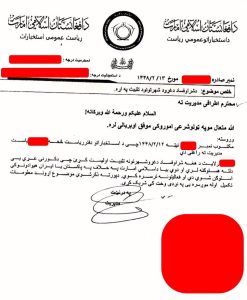
The Taliban regime’s General Directorate of Intelligence (GDI) has sought approval to reimburse US$61,000 spent on a coordinated media and psychological campaign aimed at countering growing armed resistance across Afghanistan, including misleading propaganda to portray anti-Taliban groups as being backed by Pakistan.
The Taliban regime’s director of intelligence, in a letter, stated that the intelligence unit prepared “Plan No. 9023” after the temporary fall of Yaftal district in Badakhshan province and a series of attacks by anti-Taliban groups, particularly the Afghanistan Freedom Front (AFF), in Zebak district.
The letter was signed by the Director of Intelligence Unit 015, Muhammad Khalil Hamraz, and addressed to the leadership of the Taliban regime’s General Directorate of Intelligence.
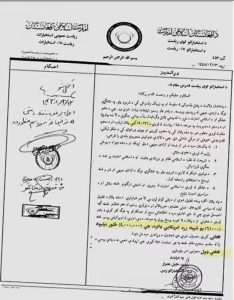
The letter states that the increased media activities of the resistance groups had caused concern among both the public and members of the Taliban regime as armed resistance groups intensified attacks against the Taliban regime forces in recent days.
The letter states that the plan, prepared by Directorate 015 and approved by senior Taliban regime intelligence officials, was designed to strengthen “psychological warfare” and improve media management amid increased resistance.
The document states the propaganda campaign included publishing articles in domestic and foreign newspapers, producing television reports and arranging interviews to shape public opinion.
According to the letter, the intelligence unit instructed its collaborators to focus on four key themes.
These included portraying the Afghanistan Freedom Front and other anti-Taliban organisations as being supported by Pakistan and its military, arguing from an Islamic perspective that armed resistance against the Taliban regime was illegitimate, creating divisions among opposition groups through social media campaigns and promoting public support for the Taliban regime leadership.
Taliban regime involves religious scholars and journalists in propaganda campaign
The document states that most of the propaganda campaign plan had already been implemented and that the operation remained ongoing.
It further claims that political analysts, religious scholars, journalists and social media activists working as intelligence sources and collaborators were involved in implementing the propaganda campaign.
According to the letter, the intelligence unit spent US$61,000, equivalent to four million Afghanis, from its operational budget to compensate those involved in the propaganda campaign. The Afghan intelligence requested final approval from the Taliban regime leadership to reimburse the expenditure through the relevant department.
Meanwhile, in another letter, the Taliban regime’s General Directorate of Intelligence instructs district administrations across Afghanistan to identify Afghan nationals involved in anti-Taliban activities.
The directive orders local officials to collect information on individuals whose families remain in Afghanistan while they themselves are based in Pakistan or Iran and are engaged in activities against the Taliban regime.
The document instructs district authorities to submit the information to the intelligence agency without delay.
Armed resistance intensifies across Afghanistan
The reported intelligence documents have surfaced as armed resistance against the Taliban regime has intensified across several provinces, particularly in northeastern Badakhshan.
The latest fighting in Zebak district has marked one of the most significant episodes of armed resistance in the province since the Taliban returned to power in August 2021.
Last week, the Afghanistan Freedom Front claimed responsibility for a rocket attack on a Taliban regime military convoy travelling from Kabul to Badakhshan through Baghlan province.
In a statement posted on its official X account, the resistance group said seven Taliban regime personnel were killed and six others seriously wounded after its fighters tracked the convoy from Kabul to the Northern Salang area before launching the attack in Doshi district.
On Saturday, the Afghanistan Freedom Front also claimed it had ambushed a group of foreign militants supporting the Taliban regime near Zebak district, killing at least two and wounding three others.
The resistance group said the militants had been travelling to reinforce Taliban regime positions in Badakhshan.
Resistance groups expand operations
The National Resistance Front (NRF) has also reported a series of operations against Taliban regime forces.
In a statement issued on Tuesday, the NRF said its fighters attacked a Taliban regime checkpoint near Faris district in Herat province, killing one Taliban regime member and wounding three others.
The resistance group said it seized four weapons before withdrawing without casualties and that no civilians were harmed.
Meanwhile, former Afghan army general Sami Sadat announced the launch of military operations by the newly formed Afghanistan United Front.
In a video message released while wearing the uniform of the former Afghan National Army and holding the former republic’s tricolour flag, Sadat said the front had authorised attacks against Taliban regime fighters, bases and senior leaders.
He described the campaign as a “war of liberation”, arguing that negotiations with the Taliban regime had failed and that appeals by Afghan civil society had gone unanswered for nearly five years.
Attack on Taliban regime army chief’s residence
Meanwhile, local sources reported that unidentified gunmen attacked the family residence of Taliban regime army chief Fasihuddin Fitrat in Wurduj district of Badakhshan province last week.
According to the sources, the attackers opened fire from a nearby mountainside using light and heavy weapons. The regime fighters guarding the residence returned fire before the attackers withdrew.
It remains unclear whether Fitrat was present during the attack.