
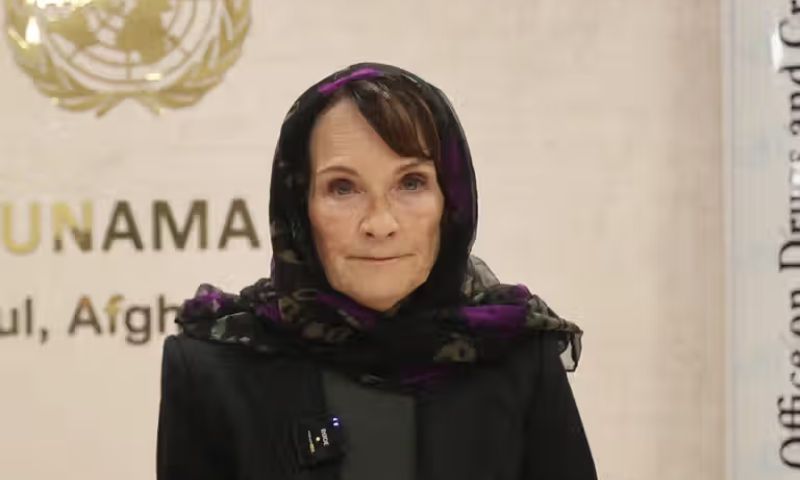



KABUL: The United Nations has renewed its call on the Taliban to lift restrictions on girls’ education, urging the authorities to allow Afghan girls to return to classrooms at all levels.
Georgette Gagnon, acting head of the United Nations Assistance Mission in Afghanistan (UNAMA), appealed during a visit to Istalif district in Kabul province, where she toured a girls’ primary school and met local Taliban officials and community elders.
According to UNAMA, Gagnon discussed the district’s economic and educational challenges and emphasised that girls should be able to continue their education and contribute to Afghanistan’s development and long-term progress.
She also visited a computer laboratory established with UN support at a girls’ primary school, highlighting the importance of equipping girls with digital and information technology skills.
The Taliban suspended secondary education for girls shortly after returning to power in August 2021 and extended the restrictions in December 2022 by barring women and girls from attending universities.
ALSO READ: Attack Targets Taliban Army Chief’s Home in Badakhshan
Afghanistan remains the only country in the world where girls are prohibited from accessing secondary and higher education.
According to the United Nations Educational, Scientific and Cultural Organization (UNESCO), more than 2.5 million Afghan girls are currently deprived of education. The agency has warned that the number could exceed four million by 2030 if the restrictions remain in place.
The United Nations Children’s Fund (UNICEF) has also cautioned that continuing the ban could leave Afghanistan without more than 20,000 female teachers and 5,400 female health workers by the end of the decade.
UNICEF says prolonged restrictions on girls’ education increase the risk of early marriage, weaken the country’s education and healthcare systems, and contribute to higher maternal and infant mortality.