Key Points
- Only 6 per cent of the workforce has formal vocational training
- Beijing pledges 3,000 training opportunities by 2029
- Skills push targets EVs, AI and advanced manufacturing
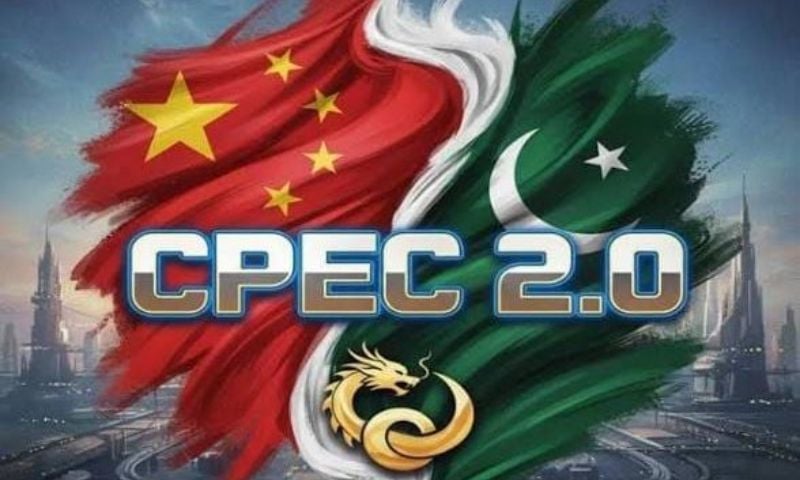
ISLAMABAD: Pakistan is expanding technical and vocational education with Chinese support under the second phase of the China-Pakistan Economic Corridor (CPEC), to bridge a chronic skills shortage that has constrained industrial growth and labour productivity.
The initiative, aligned with Pakistan’s National Economic Transformation Plan (2024–2029), is shifting from infrastructure-led cooperation towards workforce development.
It covers sectors including electric vehicles (EVs), renewable energy, advanced manufacturing, artificial intelligence and information technology, according to a report published by China Economic Net (CEN).
The report highlights the experience of Ameer Hamza, a graduate of the University of Agriculture Faisalabad Community College, who completed the Sino-Pak Dual Diploma Programme in Modern Agriculture Technology at Beijing Bailie University in 2022.
After returning to Pakistan, he joined a local company working with Chinese suppliers and now earns around Rs 140,000 a month, well above the average income for vocational graduates.
Pakistan’s skills deficit remains substantial. Planning Minister Ahsan Iqbal recently said only 6 per cent of the country’s workforce holds formal vocational qualifications. At present, annual enrolment in technical and vocational education stands at about 458,000 students.
Research cited in the report indicates that only 2.5 per cent of young Pakistanis receive structured workplace training. Meanwhile, formal TVET reaches fewer than 15 per cent of the roughly three million people entering the labour force each year.
CPEC accelerates Pakistan-China economic cooperation by developing modern infrastructure and industrial corridors. Its current phase focuses heavily on building a highly skilled workforce to drive technology transfer and manage Special Economic Zones.
ALSO READ: China and Pakistan Reaffirm Strategic Ties, Back CPEC 2.0 Expansion
The shortage is becoming increasingly significant as Pakistan pursues industrial modernisation.
Under the National Electric Vehicle Policy 2025–2030, the government aims for electric vehicles to account for 30 per cent of the domestic market by 2030.
It would require skilled workers across battery manufacturing, recycling, maintenance and after-sales services.
China-backed vocational infrastructure has expanded across Pakistan under CPEC 2.0.
China funds skill development in Pakistan
The Pakistan-China Technical and Vocational Institute in Gwadar, funded through a Chinese grant, is training technicians for Gwadar Port, the New Gwadar International Airport and special economic zones.
Other initiatives include the Luban Workshops, the China-Pakistan New Energy Vehicle High-Skilled Talent Training Centre, the National Centre of Excellence for New Energy Vehicles, the Silk Road Digital Trade Institute, the Panda Workshop and Kaiwu Workshop.
The establishment of the China-Pakistan TVET-Industrial Centre of Excellence (CPTICE) in late 2024 has also created a permanent institutional platform to link vocational training with industry demand.
Pakistan and China reaffirmed their commitment to expanding defence cooperation, strengthening strategic coordination, and promoting long-term regional stability through their enduring all-weather partnership. pic.twitter.com/8fkCGuIgwB
— Vision Point (@VisionPointPK) August 1, 2026
National Vocational and Technical Training Commission (NAVTTC) Chairperson Gulmina Bilal Ahmad said the partnership had evolved from isolated projects into a more structured framework. It has been designed to address regional industrial requirements and improve workforce readiness, she added.
Looking ahead, Beijing has committed to providing 3,000 training opportunities for Pakistan between 2025 and 2029 under a bilateral agreement announced in May 2026.
Pakistan has also identified 21 priority sectors for Chinese investment, including heavy industry, renewable energy, semiconductors, information and communications technology, mining, artificial intelligence and intelligent manufacturing.
Officials from both countries say deeper cooperation in technical education is expected to strengthen Pakistan’s industrial competitiveness, generate skilled employment and support long-term economic growth.