


For decades, Afghanistan’s political discourse has been dominated by one convenient narrative: that outsiders are solely responsible for the country’s endless cycle of war, instability and state collapse.
Foreign interventions might have deepened Afghanistan’s suffering, but they did not ignite the first spark. The roots of the Afghan tragedy lie much closer to home.
The Monarchy: Afghanistan’s Lost Era of Stability
Before Afghanistan became synonymous with conflict, it was a relatively stable state under King Mohammad Zahir Shah. During his four-decade reign (1933–1973), Afghanistan maintained internal cohesion, pursued gradual development, and carefully balanced relations with competing regional and global powers.
While the country was far from perfect, the monarchy provided continuity, legitimacy and a national institution that transcended tribal, ethnic and ideological divisions. It served as the centre of gravity of the Afghan state.
That equilibrium was shattered not by a foreign invasion, but by Afghans themselves.
The 1973 Coup: The Beginning of Political Collapse
The first decisive blow came in July 1973, when Mohammad Daoud Khan overthrew his cousin, King Zahir Shah, in a military coup while the monarch was abroad.
The abolition of the monarchy removed the one institution that had held Afghanistan’s diverse society together for decades. It opened the floodgates to a politics driven by force rather than constitutional legitimacy.
The turmoil accelerated only five years later.
The Communist Revolution and the Road to Soviet Intervention
In April 1978, Daoud himself was overthrown and killed during the communist Saur Revolution led by Nur Mohammad Taraki. Within little more than a year, Taraki was removed and murdered by his own deputy, Hafizullah Amin, in yet another internal power struggle.
The bloodletting among Afghanistan’s own ruling elite had become the defining feature of the state. The Soviet Union invaded in December 1979 only after Afghanistan had already descended into chaos.
Afghanistan’s Internal Power Struggles Before the Soviet Invasion
Moscow did not overthrow a stable government; it intervened in a country already consumed by coups, assassinations and ideological warfare among Afghans themselves.
Babrak Karmal was installed after Soviet troops entered Afghanistan, but the political collapse had begun years earlier.
In the span of just six years, Afghanistan had five rulers. The monarchy had been dismantled, republican rule had collapsed, communist factions were murdering one another, and state institutions had virtually ceased to function.
Those who seek to blame Pakistan for Afghanistan’s suffering conveniently ignore the country’s own history. Between the fall of the monarchy in 1973 and the Soviet invasion in 1979, Afghanistan was destabilised not by Pakistan but by a succession of coups, assassinations and internal power struggles orchestrated by Afghan leaders themselves.
Internal Rivalries
It was these internal rivalries, ideological conflicts and relentless pursuit of power that first pushed the country into chaos.
Ironically, Mohammad Daoud Khan, who had long pursued an aggressive posture towards Pakistan over the so-called Pashtunistan issue, eventually recognised geopolitical realities.
During his visits to Pakistan in August 1976 and March 1978, he significantly softened his position and reportedly accepted the Durand Line as the international border in principle. Before any formal agreement could be concluded, however, he was killed in the communist coup.
Victory Without Peace: Mujahideen Civil War
The Soviet invasion in December 1979 undoubtedly transformed Afghanistan into one of the principal battlegrounds of the Cold War.
Soviet forces entered the country to rescue a collapsing communist government after executing Hafizullah Amin and installing Babrak Karmal as the new leader. Yet it is important to remember that the Soviet intervention came only after Afghanistan had already been destabilised by years of coups, assassinations and internal political rivalries.
The withdrawal was widely celebrated as a victory for the Afghan resistance and marked the end of one chapter of foreign intervention.
But peace never arrived.
Afghanistan descended into another devastating civil war. Rival commanders, including Burhanuddin Rabbani and Gulbuddin Hekmatyar, fought bitter battles for control of Kabul.
The capital was reduced to rubble as rockets rained indiscriminately on civilian neighbourhoods. Tens of thousands of Afghans were killed, not by foreign occupiers but by fellow Afghans competing for power.
This period remains one of the darkest chapters in Afghanistan’s modern history. The opportunity to build a stable post-war state was squandered by factional rivalries, personal ambitions and ethnic divisions.
The Rise of the Taliban and the Collapse of the Afghan State
The absence of a unified national leadership convinced many exhausted Afghans that the country needed a force capable of restoring order at any cost.
It was this vacuum—not simply foreign interference—that paved the way for the emergence of the Taliban.
Drawing recruits largely from religious seminaries and promising security, justice and an end to warlordism, the Taliban rapidly expanded across Afghanistan. By September 1996, they had captured Kabul and established the so-called Islamic Emirate.
Many Afghans initially welcomed the Taliban, believing they would end years of bloodshed. However, the movement soon imposed an uncompromising interpretation of Islamic law, eliminated political pluralism and transformed Afghanistan into an internationally isolated state.
On 27 September 1996, after capturing Kabul, the Taliban abducted former President Dr Najibullah and his brother, Shahpur Ahmadzai, from a UN compound, tortured and killed them, and publicly hanged their bodies from a traffic light pole.
Al-Qaeda, Terrorism and the 9/11 Turning Point
Later, the Taliban’s decision to shelter Osama bin Laden and provide Al-Qaeda with a haven proved catastrophic. Afghanistan became the operational base for international terrorist networks, culminating in the September 11, 2001, attacks on the United States.
Those attacks triggered another foreign military intervention, this time led by the United States and its allies.
The Bonn Agreement and Afghanistan’s Democratic Experiment
Following the collapse of the Taliban government, the Bonn Agreement laid the foundations for a new Afghan political order. Hamid Karzai first headed the interim administration before serving as Afghanistan’s president until 2014.
Hamid Karzai’s presidency (2001–2014) was widely criticised for rampant corruption that weakened state institutions, squandered billions of dollars in international aid and eroded public confidence in the government.
Corruption, Weak Governance and the Failure of State-Building
The 2010 Kabul Bank scandal, involving nearly $900 million in fraudulent loans benefiting politically connected elites, became the defining symbol of systemic corruption during his tenure.
He was succeeded by Ashraf Ghani, whose administration inherited an increasingly fragmented political system, endemic corruption, contested elections and an insurgency that steadily expanded despite massive international military and financial support.
For two decades, billions of dollars flowed into Afghanistan to build democratic institutions, strengthen security forces and revive the economy. Yet the country’s political elite remained deeply divided.
Personal rivalries, ethnic competition, corruption and weak governance repeatedly undermined state institutions. Instead of forging national unity, successive governments often became arenas for competing power centres.
The Fall of Kabul and the Return of the Taliban
The dramatic collapse of the Afghan Republic in August 2021 exposed those structural weaknesses. As international forces withdrew, state institutions disintegrated with astonishing speed.
Many political leaders fled the country, security forces abandoned their positions, and the Taliban returned to Kabul with minimal resistance. The speed of the collapse demonstrated that Afghanistan’s greatest vulnerability was not merely the departure of foreign troops but the fragility of its own political institutions.
Afghanistan Under Taliban Rule: Isolation and Militant Sanctuaries
Since returning to power in 2021, the Taliban have ended much of Afghanistan’s large-scale internal fighting, but peace has not translated into stability or international legitimacy. The country remains diplomatically isolated, economically fragile and heavily dependent on humanitarian aid, while severe restrictions on women, political freedoms and civil society have drawn global criticism.
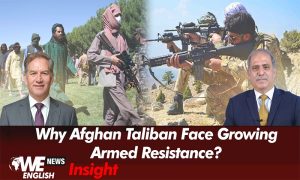
At the same time, Afghanistan continues to face accusations of serving as a sanctuary for multiple militant groups, including the Tehreek-e-Taliban Pakistan (TTP), Al-Qaeda, Islamic State Khorasan Province (ISKP), the East Turkestan Islamic Movement (ETIM) and other regional extremist organisations.
Pakistan has repeatedly blamed TTP safe havens in Afghanistan for cross-border attacks, while China and other neighbours have voiced concerns over anti-China militant groups.
The Real Roots of Afghanistan’s Endless Tragedy
Afghanistan’s modern tragedy is therefore rooted not only in foreign intervention but also in decades of internal power struggles, fractured leadership, institutional collapse and the failure to prevent militancy from flourishing.
The first blows against Afghan statehood were delivered by Afghans. One coup invited another. One assassination justified the next. One faction’s victory became another faction’s rebellion.
Conclusion: A Nation Undone from Within
Afghanistan’s modern tragedy, therefore, cannot be explained solely through the prism of foreign interference. The country’s history is equally a story of missed opportunities, destructive power struggles and repeated failures of political leadership.
Until Afghanistan’s leaders place national cohesion above factional interests and decisively prevent their territory from serving as a sanctuary for militant organisations that threaten regional and international security, the country is likely to remain trapped in the same cycle of instability that has defined much of its modern history.