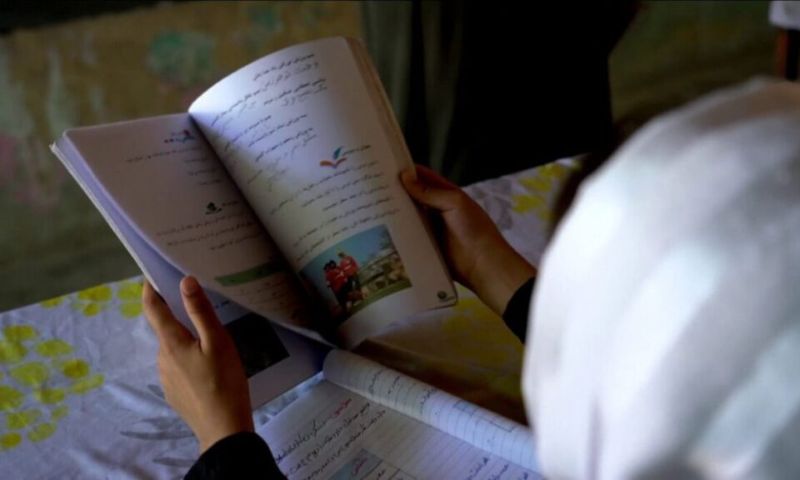
KABUL, Afghanistan: A 16-year-old Afghan girl died by suicide after spending years barred from attending secondary school under the Taliban regime’s restrictions on girls’ education, her family said, in a case that has renewed international concern over the psychological toll of the regime’s education policies on young Afghan women.
The girl, identified as Fariba, had hoped to return to school after the Taliban regime banned girls from attending secondary schools in 2022, according to her mother, who spoke to The Associated Press. She said Fariba left home each day believing schools might reopen, only to return disappointed when they remained closed.
Her mother told the AP that Fariba became increasingly withdrawn after losing access to education and spent much of her time alone in her room. She said her daughter’s mental and physical health deteriorated in the months before her death.
According to the report, Fariba left a note before her death saying she could no longer endure her circumstances and describing the hardship of being a girl under the Taliban regime’s restrictions.
The case has renewed concerns among human rights advocates over the mental health consequences of the Taliban regime’s policies towards girls and women.
Rights groups say the continued closure of secondary schools and universities has deprived millions of Afghan girls of education while contributing to rising psychological distress, early and forced marriages, domestic violence and growing hopelessness among young women.
Several Afghan girls interviewed by Amu TV said they continue to struggle with uncertainty over their futures after spending years outside the classroom.
Taliban’s education restrictions
Since returning to power in August 2021, the Taliban regime has progressively imposed sweeping restrictions on women’s and girls’ rights.
Girls have been barred from secondary education since September 2021, while women were later prohibited from attending universities, making Afghanistan the only country in the world where girls are officially denied access to education beyond the primary level.
UNESCO estimates that about 2.2 million adolescent girls are now excluded from secondary education in Afghanistan, warning that the prolonged ban is undermining the country’s development and depriving an entire generation of educational opportunities.
Growing international concern
The United Nations, UNESCO, UNICEF and various foreign governments have repeatedly urged the Taliban regime to reverse the restrictions. The Taliban regime has so far refused to lift the bans despite sustained international pressure.
A UNICEF analysis published this year warned that if the restrictions remain in place, Afghanistan could lose up to 20,000 female teachers and 5,400 female health workers by 2030, while the country’s economy is already losing an estimated US$84 million annually because girls and women remain excluded from education and the workforce.