ISLAMABAD: Pakistan said on Thursday that negotiations between the United States and Iran remained underway despite a sharp escalation in hostilities, with Washington launching what it described as a “heavy wave of strikes” against Iranian targets following fresh attacks targeting Jordan.
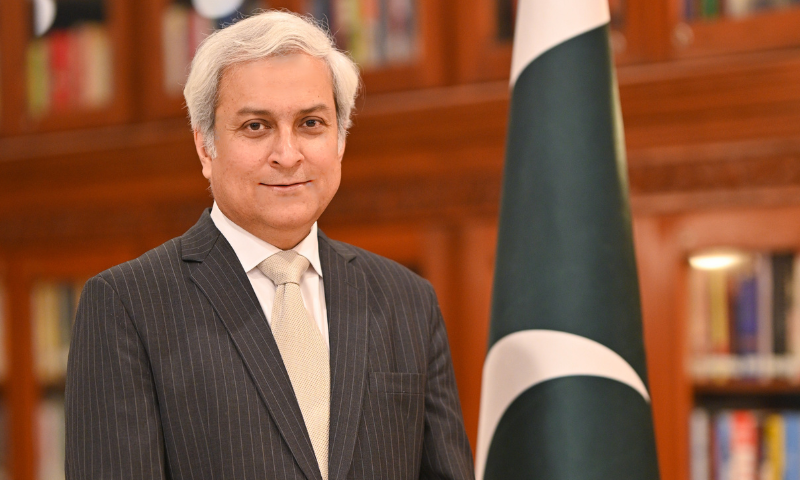
“Let me add that the negotiations between parties are ongoing to normalise the situation, particularly the situation in the Strait of Hormuz, as well as to de-escalate,” Foreign Office spokesman Tahir Andrabi told reporters in Islamabad.
The remarks came as the United States and Iran exchanged fresh military strikes, raising fears of a wider regional conflict and renewed disruption to one of the world’s most important energy corridors.
🔴LIVE: Spokesperson’s Weekly Press Briefing 30-07-2026 at Ministry of Foreign Affairs, Islamabad https://t.co/2VazEzza1f
— Ministry of Foreign Affairs – Pakistan (@ForeignOfficePk) July 30, 2026
Andrabi reiterated Pakistan’s support for dialogue and diplomacy, maintaining that it remained the “only viable path forward”.
“We welcome all efforts aimed at sustaining cessation of hostilities and resumption of dialogue between Iran and the US,” he said, adding that Pakistan remained engaged and will continue to do so.
Pakistan Reaffirms Mediator Role
Pakistan says it continues to play an active diplomatic role aimed at bringing both sides back to negotiations after helping broker the Islamabad Memorandum of Understanding (MoU), signed in June to end hostilities and lay the foundation for a permanent peace agreement.
Andrabi urged both the US and Iran to exercise “maximum restraint and fully adhere to their commitment to resume technical-level talks” in line with the Islamabad MoU and the Pakistan-Qatar joint statement.
He added that Pakistan was doing its “utmost” to bring the two parties back to the Islamabad MoU “so that all irritants can be removed in the light of the spirit of the agreement and the Pakistan-Qatar joint statement on June 22”.
The Islamabad MoU was signed on June 18 by US President Donald Trump, Iranian President Masoud Pezeshkian and Pakistan’s Prime Minister Shehbaz Sharif after Islamabad facilitated a ceasefire between Washington and Tehran.
Under the agreement, the United States and Iran committed to halt military operations, reopen the Strait of Hormuz to commercial shipping and negotiate a comprehensive settlement covering Iran’s nuclear programme, US sanctions and a permanent ceasefire within 60 days.
Fighting Intensifies
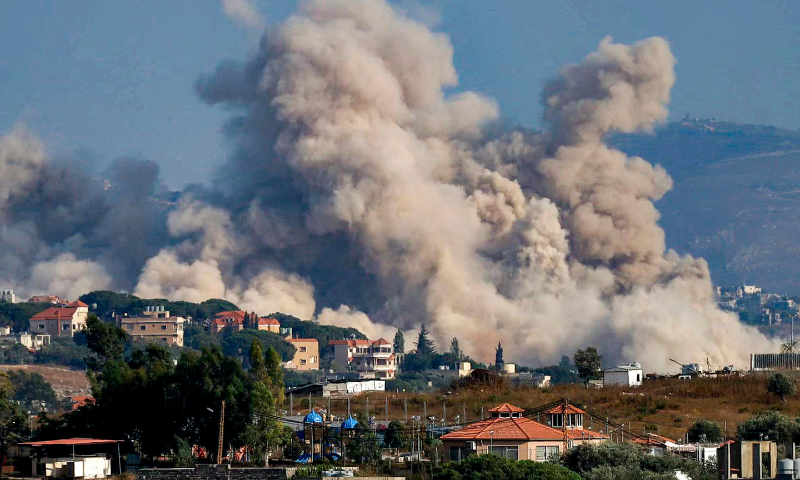
The latest diplomatic efforts come as military confrontation has intensified once again.
Earlier on Thursday, the US Central Command (CENTCOM) said American forces had “successfully completed a heavy wave of strikes against Iran”, targeting dozens of Revolutionary Guard facilities, including military command centres.
Also Read: US Launches Heavy Strikes on Iran as Middle East Conflict Escalates
US President Donald Trump had earlier vowed to hit Iran “hard” following Tehran’s latest attack on Jordan.
Iran’s state news agency IRNA reported that several locations in the southwestern province of Khuzestan, along with Qeshm Island in the Gulf, had come under attack.
U.S. Sailors monitor F/A-18E Super Hornet fighter jets launching from the USS George H.W. Bush (CVN 77) while sailing in the Arabian Sea. pic.twitter.com/l5XFbEf5v7
— U.S. Central Command (@CENTCOM) July 30, 2026
According to the agency, areas around Abadan, Shadegan, Arvandkenar and Ahvaz were among those struck.
Meanwhile, Jordan’s military said it intercepted five Iranian missiles fired towards the kingdom on Thursday morning, reporting no casualties.
Kuwait’s Defence Ministry also condemned what it described as a “heinous” Iranian attack that “targeted a building belonging to a Chinese company in the north of the country, resulting in the death of one worker and causing severe material damage”.
Pakistan Calls for Restraint
Prime Minister Shehbaz Sharif this week reaffirmed Pakistan’s commitment to promoting peace and stability in the Middle East during a meeting with Iranian Interior Minister Eskandar Momeni, who is on an official visit to Islamabad.
Expressing concern over the renewed violence in the Gulf, the prime minister urged all parties to exercise restraint and avoid steps that could further destabilise the region.
He assured the Iranian delegation that Pakistan would continue to play the role of an “honest and sincere mediator and facilitator” in efforts to reduce tensions and encourage dialogue.
The prime minister also reiterated Islamabad’s commitment to supporting diplomatic engagement, saying Pakistan remained determined to work with regional and international partners to preserve peace and stability across the Middle East.
Despite the renewed violence, Pakistan maintains that dialogue remains the only viable path to a lasting settlement and says it will continue diplomatic efforts to bring both Washington and Tehran back to the negotiating table.