
JOHANNESBURG: Scientists have identified a new dinosaur species in Zimbabwe dating back around 210 million years, a discovery they say sheds new light on the early evolution and spread of dinosaurs across southern Africa.
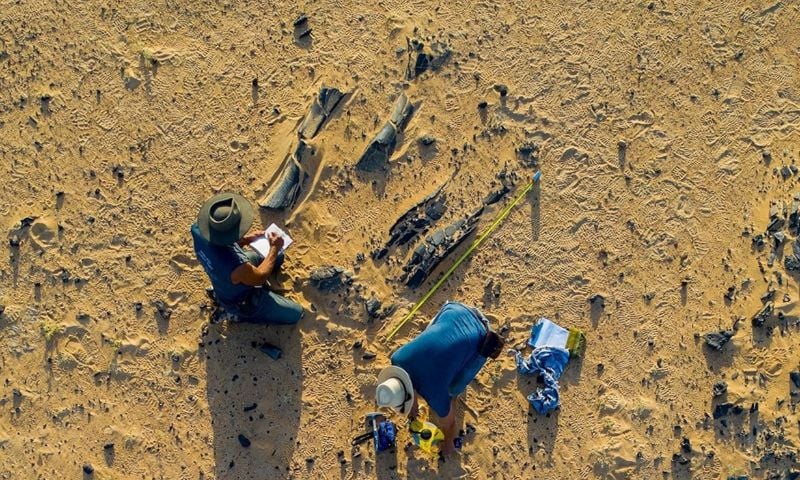
The newly identified species, Musango matusadonaensis, was discovered from a remarkably well-preserved skeleton excavated in 2018 near the shores of Lake Kariba in northern Zimbabwe. It is the fifth dinosaur species to be identified in the country.
An international team of palaeontologists said the dinosaur lived during the Late Triassic period, when dinosaurs were beginning to diversify but had not yet become the dominant land animals on Earth.
Unlike the giant long-necked dinosaurs that appeared millions of years later, Musango was a lightly built animal measuring about 4.5 metres in length and weighing an estimated 222 kilogrammes.
Researchers named the species after the Shona word “musango”, meaning “living in the bush”.
ALSO READ: Google Faces Fresh Lawsuits After EU Antitrust Ruling
The findings, published in the Journal of Systematic Palaeontology, suggest southern Africa was home to several distinct ecosystems, each supporting different dinosaur species, rather than a single uniform environment as previously believed.
The fossil includes much of the dinosaur’s spine, ribs, limbs and feet, making it one of the most complete skeletons of its age ever found in Zimbabwe. Scientists estimate the animal was about eight years old and nearly fully grown when it died.
Although its skull has not been recovered, researchers believe Musango was likely a herbivore or omnivore that fed on vegetation along rivers and streams.
The discovery follows the 2022 identification of Mbiresaurus raathi, Africa’s oldest known dinosaur, also found in Zimbabwe.