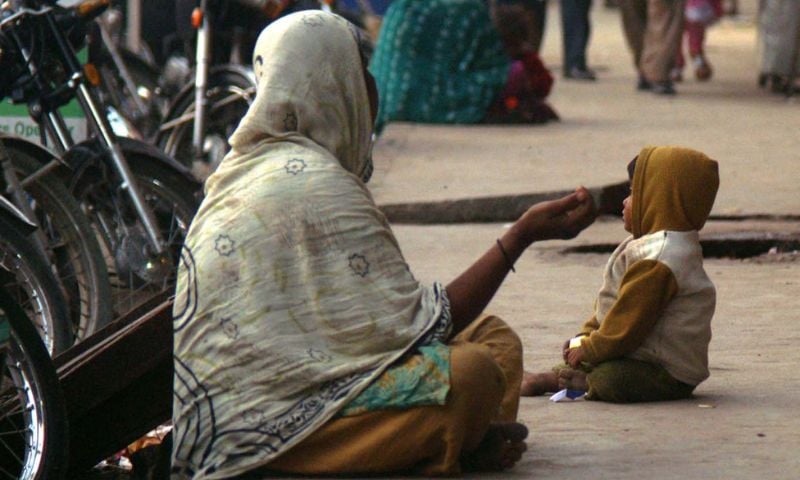
LAHORE: Pakistan’s Punjab province has taken a transformative step towards eradicating the scourge of professional begging by launching a pioneering rehabilitation initiative that seeks to empower deserving individuals with skills development, soft loans, and sustainable livelihood opportunities, marking a significant departure from traditional punitive approaches.
The Lahore Traffic Police, under the leadership of Chief Traffic Officer (CTO) Syed Abdul Rahim Shirazi, has joined forces with the Punjab Small Industries Corporation (PSIC) and the Alkhidmat Foundation to develop a comprehensive framework for the socioeconomic reintegration of vulnerable individuals engaged in begging, with the ultimate vision of establishing a “zero-begging Punjab” across Pakistan’s most populous province.
Read Also: Pakistan’s Punjab Assembly Passes Bill to Make Begging Non-Bailable Crime
Pilot project to provide soft loans and vocational training
During a high-level meeting chaired by CTO Shirazi, attended by PSIC Managing Director Mobeen Elahi and Alkhidmat Foundation Project Director Muhammad Sanan, the stakeholders agreed to launch a pilot rehabilitation project.
Zero tolerance for beggary is a good initiative, but without coordination between cities, it may simply shift the problem elsewhere. Public awareness is also needed: giving alms can unintentionally sustain professional begging networks.https://t.co/5du4h5FKXu
— Zofeen Ebrahim (@zofeen28) July 28, 2026
Under this initiative, the Alkhidmat Foundation will identify 10 deserving male and female beneficiaries in the initial phase, who will then be facilitated by the PSIC with soft loans of up to Rs500,000 each to establish small businesses and transition towards dignified and sustainable sources of income.
The participants further agreed to establish “Jhuggi Schools” in informal settlements across Lahore to promote access to education and social rehabilitation for underprivileged children.
Additionally, deserving women, children, and transgender persons will be provided with vocational training, including beautician courses, tailoring, embroidery, and other employable skills, in collaboration with partner welfare organisations.
Comprehensive strategy to dismantle organised begging networks
Speaking on the occasion, CTO Shirazi emphasised that volunteers from the Alkhidmat Foundation would assist the traffic police in the mapping, profiling, and socioeconomic assessment of individuals engaged in begging.
He added that a comprehensive strategy would also be implemented to identify and dismantle organised professional begging networks and their handlers, with strict legal action to be taken against individuals involved in organised begging rackets and human trafficking under the relevant provisions of the Punjab Vagrancy Laws and Anti-Human Trafficking legislation.
Elahi observed that such collaborative interventions would not only contribute to curbing professional begging but would also facilitate the social and economic rehabilitation of vulnerable families, addressing the root causes of the issue rather than merely treating its symptoms.
Enforcement action against begging
It is noteworthy that the Lahore Traffic Police has taken enforcement action against more than 3,500 beggars during the current year, reflecting the department’s commitment to addressing the issue through both enforcement and rehabilitation measures.
Read Also: Interesting Gallup Report on Begging in Pakistan
The new initiative represents a paradigm shift in approach for Pakistan, focusing on addressing the underlying socioeconomic factors that drive individuals to beg, while simultaneously cracking down on organised criminal networks that exploit vulnerable persons for profit.