NEW DELHI: India’s youth-led Cockroach Janta Party (CJP) has given Prime Minister Narendra Modi’s government until Tuesday to withdraw criminal cases against protesters and release those detained during recent nationwide demonstrations, warning it will resume its agitation if the commitments are not honoured in writing.
The ultimatum comes days after the movement ended its 36-day sit-in at New Delhi’s Jantar Mantar following the resignation of Education Minister Dharmendra Pradhan and government assurances that pending criminal cases would be withdrawn, families of students affected by examination controversies would receive compensation, and no further punitive action would be taken against demonstrators.
Cockroach movement seeks written assurance
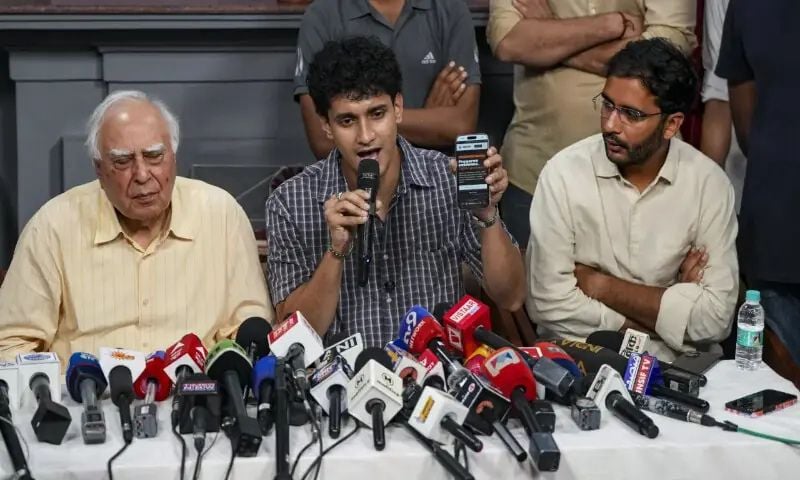
Addressing a press conference in New Delhi on Monday alongside Rajya Sabha member Kapil Sibal, CJP national spokesperson Ashutosh Ranka said the movement was still awaiting the government’s promised written agreement confirming the withdrawal of first information reports (FIRs) against protesters and organisers.
“In the third round of talks, we had agreed that all FIRs filed against protesters and organisers across the country would be withdrawn and no new FIR would be filed against any organiser and protester,” Ranka said.
“The deadline is tomorrow, release all students or else we resume protest” pic.twitter.com/8ZwiyU3MWX
— Cockroach Janta Party (@CJP_for_India) July 27, 2026
He warned that the movement would restart its protests if the government failed to honour the agreement.
“If the government does not honour the agreement and release everyone detained or arrested, we will be compelled to resume the protest,” he told reporters.
Students remain in illegal detention
The Cockroach movement said it had received reports that students remained in illegal detention, particularly in the states of Assam, West Bengal and Bihar, and accused the government of reneging on its assurances that protesters would not face punitive action.
According to the movement, at least 100 people have been arrested across the country, many of them facing non-bailable charges.
CJP spokesperson Saurav Das said the organisation had established a legal fund to assist protesters facing criminal proceedings.
एंटी-पेपर लीक बिल पेश होते ही INDI गठबंधन के सांसदों ने सदन में हंगामा किया और “NO! NO!” के नारे लगाए।
इस बिल में पेपर लीक के दोषियों के लिए ₹10 करोड़ तक का जुर्माना, 10 साल तक की जेल और 3 महीने में फैसला देने के लिए फास्ट-ट्रैक कोर्ट का प्रावधान है।
पहले विपक्ष ने कहा— पेपर… pic.twitter.com/Vf3Yc29caF
— Gagan Pratap 🇮🇳 (@GaganPratapMath) July 27, 2026
The youth movement, founded in May by 30-year-old public relations graduate Abhijeet Dipke, has attracted millions of followers on social media and led one of the largest student protest movements in recent years.
Also Read: India Youth Movement Demands Release of Detained ‘Cockroach’ Activists
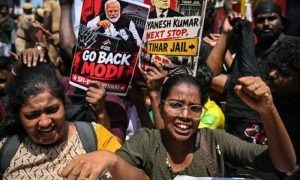
Tens of thousands of demonstrators, most of them students, took part in rallies in New Delhi and other cities demanding Pradhan’s resignation and sweeping reforms to India’s examination system.
Police violent crackdown under scrutiny
The protests turned violent on July 20 when demonstrators attempted to march from Jantar Mantar towards Parliament.
Police fired tear gas and used batons to disperse the crowd, leading to clashes and widespread detentions.
In Bihar’s Siwan district, a police official was suspended after using an assault rifle while dispersing student protesters on Saturday.
Journalist – Police in Siwan fired at youths with AK-47s.
SP – Yes, the policeman has been suspended.
Journalist – Was there an order to open fire?
DM – No, there was no such order. In fact, he was carrying an AK-47 and was heading somewhere else when he got caught in the… pic.twitter.com/N7HEogOTK2
— Cockroach Janta Party (@CJP_for_India) July 27, 2026
“He has been suspended, and the three people injured in the incident are undergoing treatment,” Siwan Superintendent of Police Puran Kumar Jha told AFP on Monday.
The police response has also come under judicial scrutiny.
According to local media reports, Chief Justice of India Surya Kant called for an independent investigation after a petition was filed in the Supreme Court alleging police brutality during the demonstrations.
Local media quoted the chief justice as saying that the “right to peaceful, lawful protest is absolutely guaranteed” under the Indian Constitution.
“If there is excess committed, it should be independently examined… discipline is integral to democratic process,” he was quoted as saying.
Opposition raises issue in Parliament
The controversy dominated proceedings in Parliament on Monday as opposition lawmakers repeatedly disrupted business, demanding a government response to last week’s police action against protesters.
It is one of the gravest assaults on Democracy in our history. Never before have students been beaten, dragged, and treated like criminals for raising their voices.
Home Minister Amit Shah must be held accountable!
In Bihar, reports indicate use of AK-47 against students.… pic.twitter.com/yDlkpfzU0I
— Mallikarjun Kharge (@kharge) July 27, 2026
Congress Party president Mallikarjun Kharge criticised the crackdown in a post on X.
“It is one of the gravest assaults on democracy in our history,” Kharge wrote. “Never before have students been beaten, dragged, and treated like criminals for raising their voices.”
मोदी सरकार की धमकियों से आज के हमारे युवा डरने वाले नहीं है। जिन युवाओं ने protest में भाग लिया उनको धमकियां मिल रही है। पश्चिम बंगाल और बिहार में बहुत सारे युवाओं को जबरन हिरासत में लिया गया है।
पहले युवाओं को लाठी-डंडे-pellet guns से मारा गया और अब जब protest ख़त्म हुआ है तो…
— Mallikarjun Kharge (@kharge) July 27, 2026
Despite the disruptions, the government introduced legislation in the lower house of Parliament proposing tougher penalties for examination paper leaks.
The CJP protests were triggered by a series of examination controversies that have undermined confidence in India’s education and recruitment system.
Public anger intensified after repeated examination paper leaks and irregularities affected millions of students competing for university admissions and government jobs, prompting nationwide calls for greater transparency and accountability in the country’s examination process.